Red Cedar
More apocalypse, less angst
Post #3127: Changing landscapes
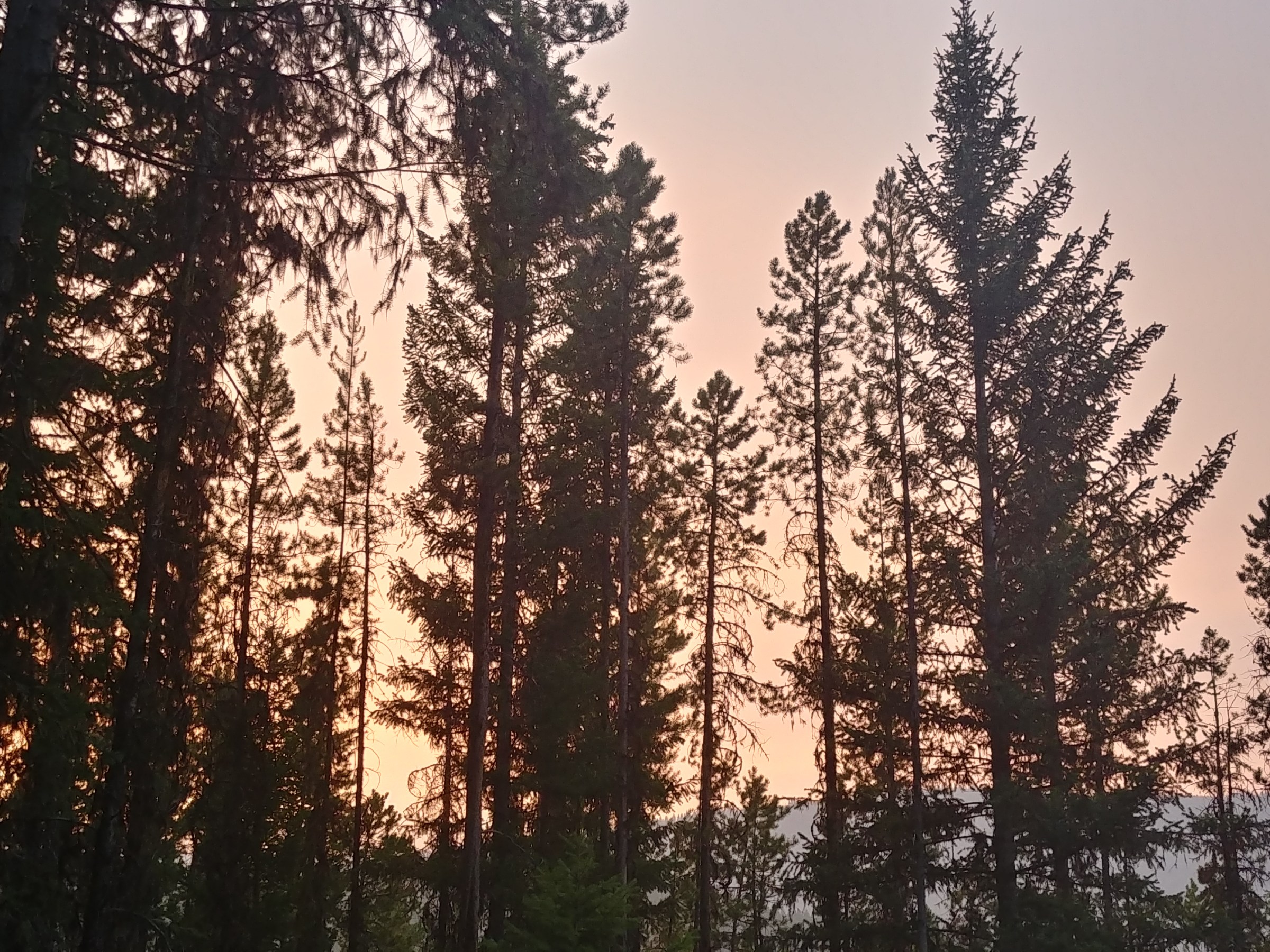
I remember the first time I saw the impact of pine beetle in British Columbia. It must have been around 1999 or so and I was driving on the number three highway through the southern part of the province with my mom. In between Manning Park and Princeton, BC there was a stand of what looked to be red-needled pine trees down in the valley just past Allison Summit.
I commented to my mother about the strange colour of that grove, standing out against all the green and she said – “Oh yeah, I read something about that in the newspaper recently. Some disease that’s infecting trees – I can’t remember much about it.”
As anyone who lives in this province knows, in less than three years, huge swaths of the forests in southern BC turned red and died, the result of decades of poor forestry practices (mono-cropped pine) and emergent warmer winters that allowed the mountain pine beetle to live year-round, with an unstoppable hunger for wood.
After I saw that first stand of dying trees, it wasn’t long before I saw the next and next stand over. By the early 2000s, the pine-beetle damage was continuous in long stretches from Hope all the way through to Princeton. From Kamloops through to Quesnel.
I was deeply involved in environmental activism at this time, and spent a lot of time out of doors – and I mourned the changing landscape deeply. Though it’s not that these were intact forests. Much of the southern province was logged right to the ground from the forties to sixties – this modern die-off was of the lodgepole pine plantings that had replaced the once mixed forests of the interior.
I’ve spent enough time in those pine plantings (including the ones around our cabin) to know that even without pine beetle, this was and is heavy damaged land. Unwell and unhealthy. Trees planted in such close proximity that they could only grow straight up, as thin as a rolled up newspaper in many cases. An understory choked by dense shade thrown by a single tree culture of that didn’t allow for any deciduous growth to provide annual nutrients in the form of leaf mulch to the forest floor. Those so-called forests were already sick; pine beetle simply finished them off.
The only answer to the crisis, according to the BC Forest Service, was to log it all again. Which has been done in many places, with replanting underway. In addition to logging, there have been numerous fires taking advantage of the dead and dry timber, which have lapped the bio-region from 2003 onward. It’s been twenty years of changing landscape in the interior south – a part of the province that I consider another one aspect of my homebase.
Forestry practices, pine beetle, and climate change are things I think a lot about when I’m up at the Link Lake cabin, not far outside of Princeton. It’s twenty years later and the damage is still evident here, even more so because this area wasn’t so ruthlessly salvage-logged due to the poor quality of the wood plantings in our area.
I’ve spent my most recent trip to the cabin reading works by Gary Snyder and Robin Wall Kimmerer – two great ecological writers – and doing work on the trails above our small cabin lot.
The skies are smoke-filled, as they are everywhere, due to massive fires from Northern BC to California. As I’m sure you all know from the news, we’re supposed to be surprised at this “sudden” turn to “Hothouse Earth” in the last couple of years, and somewhat indignant at how its ruining our summer vacations.
************************************************************************
We’ve owned this small plot of land for five years now, and have built a woodshed, an outhouse, and a cabin on it. It’s just 1/3 of an acre in size – tiny for a rural property – but big enough for a place to land a few of us for a week at a time. We are in lake territory which means swimming in the summer and ice-fishing in the winter, not to mention hunting, hiking and snowshoeing.
Although our lot is small, we are lucky to be surrounded by a significant amount of crown land. Thousands of hectares, all of it logged flat in the 1940s and replaced with shitty pine of a single variety. There are a few reminders of the massive old-growth forests which once stood here, including two ancient Douglas fir trees which stand just inside our property line. I’m not sure why they were spared, but I am glad to have them sentinel to our existence in an otherwise blighted forest.
Up the hill from us there are a few other spared giants, but mostly the hills are a chessboard of clear-cuts and dying reforestation attempts. Despite the heavy damage to the land, there is still a fair amount of wildlife in the form of deer, moose, cougar, black bear and even the occasional grizzly. We have followed their trails up into the cuts since coming here, finding our way to disused logging roads which have overgrown to the perfect footpath width. These human and wild trails have spurred us over the last few years to do small forest work of our own kind, assisted and encouraged by the efforts of our friend Will who is eternally land-tidying and trail-building.
This is not the mindless work of taking out whole acres of trees at a time, but of selecting the deadest standing and getting them out of the way in order to clear trail and create spaces for human-use (for walking and sitting), as well as providing the possibility for wild ecosystem to re-emerge.
The approach taken up here post-logging (which was still active the first time we came to look at this land), seems to be to allow the rest of the dead pine to die off naturally, and allow clear cuts to come back in their own time with a smattering of fir trees planted on dry hillsides. While we can do little to arrest the neglect of this land by the forest companies, we have seen what a small amount of tending can do for the ecosystem over just a handful of years.
For example, the old trails we have cleared of wood debris are now littered with the hoof prints of moose and deer, in a way that they weren’t when we first came here. Animals, like humans, will always take the path of least resistance – and human assistance in trail clearing is one way to give them passage.
Likewise, the spots in which we have cleared away deadfall – so thick you couldn’t walk over it without the possibility of breaking an ankle – have come back in green groundcover: kinnickinnic, wild strawberry, lupins and grasses which now have the potential to give way to aspens and alder before more conifers take hold.
On our own property, which many of us have worked to clear selectively and by hand, we can see how the native spruce and fir have rushed in to claim the space. There is no shortage of groundwater here to feed these species, but until now they have been crowded out and starved of sunlight by the malignant pine. Slowly and surely we can see that even our puny efforts have an ecosystem impact in the right direction.
*****************************************************************
It seems a bit futile though, to write about this even in the knowledge that this land will most likely be touched by fire in the next decade, no matter the attention that we bring to it. It seems at the moment that no part of western North America will escape as each year brings a fire season more frightening and widespread than the last. “It seems” being the operative here of course – as we do not know what things will happen and in what order exactly, and we could have 50 more years before this particular patch in this particular mountain range is touched.
It’s in the absence of this knowing, this ability to predict exactly, that we insert ourselves. The less fuel available among the live trees may help save them. Work to assist wetlands up in the hills may provide a respite for animals in the event of a forest-wide catastrophe. We don’t really know what will happen or what is possible – and despair only turns me inward, so it’s outward I must look.
This passage leaps out at me as I read late in the night:
“It is an odd dichotomy we have set for ourselves, between loving people and loving land. We know that loving a person has agency and power – we know that it can change everything. Yet we act as if loving the land is an internal affair that has no energy outside the confines of our head and heart.” Robin Wall Kimmerer, Burning Cascade Head (from Braiding Sweetgrass)
It’s an incantation that I have carried with me this week as I walk, slowly up the hill, with a machete, a saw and a picnic lunch for a day of trying to tend a forest back to life. Just like in human relationships, we do not know how our love will land and what impact it will have. We have to live with that uncertainty, I suppose, which is the order of the day no matter where we find ourselves right now.
Post #3126: The maker’s time

I put a new warp on the loom last week, after three months of not weaving at all. It was a tough decision as it meant cutting off a warp of tencel that I had only made one of three intended scarves from.
Peruse the Internet weaving forums and it becomes apparent that time economy is a popular subject. One way to cut down on set-up time is to warp for multiple projects at once – a notion I found quite captivating. Even non-production weavers value this approach as it means more time spent actually weaving, and less time spent on set up per item.
I have now tried this a few times in the last year – 8 tea towels, 3 scarves, etc. (For the record, these are not even particularly long warps – the most I’ve attempted is 8 yards at a time).
From these little experiments, I’ve discovered a couple of things – one, long warps are difficult to wind on evenly and two, I don’t like weaving the same thing for a long period of time. For both of these reasons, I have not finished weaving a long-ish warp thus far – I mostly end up with warp problems and because I’m bored with the weave at that point, rather than problem solve, I cut the whole thing off and start over.
Thus my tencel scarf warp – as much as I loved the pattern I was weaving, the warp had breakage problems and after weaving one scarf, I just couldn’t be bothered to go on weaving more. But because I had so much guilt about cutting off the rest of the warp I stopped weaving for three months rather than dealing with it.
Thinking about this last week, I’ve come to realize that I’m a much happier when I warp for one or two items at a time (four tea towels, one scarf) rather than pushing for larger production numbers on each warp.
**************************************************************
If I wove professionally, my feeling about long warps would change.
First of all, I’d have to learn to put them on properly, but also my time would literally translate into dollars per hour spent on a piece of finished work. It’s why a handwoven tea towel from a master weaver can cost as much as $30. Perhaps an hour of labour has gone into that (warping, weaving, finishing hems combined) plus materials cost, and the cost of upkeeping equipment such as looms and sewing machines. In this equation warping for 25 tea towels makes the most sense.
But I don’t weave (or sew, or knit, or crochet, or bake, or can food) for money. It has been often suggested by friends and family that I take commissions or sell my finished products (I think that’s considered a compliment in our culture – only if you can sell it does it mean it’s actually worth something) – but I already have a job that pays quite a lot more than I could make with handwork. The value for me is not what I can earn in dollars, but in the comfort created in outfitting our home and larder, and the reciprocity and community-building power of gifting handmade goods to people in our life.
This is an orientation in which time is not money, but instead, time spent on making is love.
It sounds cheesy right?
Time is love.
It’s the only way to explain my motivations at this point – as time-saving, and money-making would bring no additional pleasure in the making process. On the other hand, the contemplation and manifestation of the gift or the garment or the party or fancy dinner creates a thread connecting all the parts of my life in a joyous whole.
Time spent in the act of making (including the loom-dressing process) – is time spent in the act of loving my home and the community of people who warm it. When I make clothing for myself, it is time spent on self-care and nuturing positive feelings about my body. These are not things we need to economize on – something I need to remind myself when I am tempted to go against my instincts and rush this time in the studio to each product’s end.
How much is the focus on productivity (which exists among all the textile forms – sewists, knitters, weavers alike) a pernicious infection from the culture at large in which the quality of “fast” takes primacy over well-made, or ecologically-friendly? What happens when we give ourselves the respite of changing focus? How do we feel if we take up a small meditation each time we sit at the weaving or sewing bench and allow ourselves to feel the love that this time represents?
I don’t have an answer to these questions so much as an inkling that this gets at the root of the maker’s motivation. As the old poem tells us “work is love, made visible” – a meditation I work with daily as a guiding approach to making that I hope continues to inform my the choices I make in all my work.
Post #3125: No time like now

For the first time in two weeks, Brian and I woke up in a house without guests – a sensation relieving but also tinted with disappointment. It’s hard to give up the crowd!
Stranger still is that in the midst of visits and people to-ing and fro-ing, we had to put our dog Charlotte down last week after a massive stroke – and so we find ourselves suddenly without anyone to caretake, not even our constant companion of many years.
But the stillness does make me think about writing again – something I decided to put more time to a few months ago. It’s been hectic here since late spring, but the quiet of August’s heat, the heaviness of the smoke-laden air, have me convinced that perhaps I should free up the fingers on the keyboard and share my notes and fleeting philosophies with what few people read this.
A friend told me on the weekend that she appreciates this blog because I write things that she can relate to – something I am always glad to hear, for even a handful of people relating to each other is a positive event. But in any case I’ve had this nagging urge to write recently which is something I find difficult to ignore – so having readers is a bit besides the point.
I’m reading Ursula K. Leguin’s “No Time to Spare” – a collection of her blog posts from close to the end of her life – as a bit of inspiration right now. I would love to find my way to the occasional short essay, interspersed with posts about dress-making or weaving. The question is always – what do I give up in order to make time to write? Or perhaps I give nothing up but do less of one thing or another instead.
Whatever happens, I’m going to return to posting here after the last few weeks of nothing – I’ve had this blog for fifteen years or so – and I don’t feel like just now is when I want to abandon things here.
Post #3124: Unlocking new levels
In the last couple of months, I’ve leveled up my sewing on a few fronts – and the dress I’m showing off today is no exception:

This pattern – Vogue 8743 – from the Very Easy Vogue line is about as simple as it gets when it comes to sewing – princess seams from top to bottom which means no seam matching of skirt and bodice, and bias-binding for the finish (which I far prefer over facings). I even managed to omit the zipper since I can pull this one on over my head. The “fancy”element to the pattern is a pleat in the center which is a simple way to give the skirt extra volume and a wonderful shape.
In short – I am completely in love with this new dress – and it fits me near perfectly.
The leveling-up on this particular pattern comes with the finishing – which was all done by hand, using invisible stitches. This dress is the first garment I have made where no stitches are visible on the outside – and it really makes a difference to the overall look. Hard to tell in a photo – as it should be!
The hibiscus print fabric is from some yardage that I purchased in Maui a few years ago, and the remainder of the dress is made from Kaufman black broadcloth. I had originally planned to line this dress, but for summer wear I don’t want to add any additional layers and I made sure the inside finish was tidy. If I make this pattern again (very likely) I will french seam instead.
Other levels achieved recently include precision button holes as well as shirt cuffs and collars. More button up shirts and swimwear are on the list as well. I don’t know if I’ll get there before the end of summer or not – jeans and underwear are on the roster for the fall. I can’t say that my clothes look ready-to-wear because they don’t really – but it’s not really what I’m going for. Well made and well fitted – *that’s* what I’m going for.
Post #3123: Sewing all of the things in June
I have been pretty much Internet averse for the entire month of June. Very little instagram, no blogging, minimal Facebook. I guess taking a selfie everyday and posting so much in Me Made Made took a toll on me!
But I have been making things in the studio this month. The weather hasn’t been all that great, which has extended my sewing season a bit longer than normal and I’ve got a jump on a couple of fall things as well as dresses for various celebrations this summer.
So here they are – the garments of June (one more coming once I hem it this week):
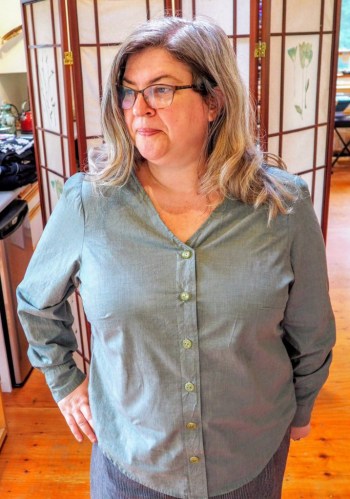
Starting with my least favourite make – here is the Aster top from Colette Patterns. There is nothing objectively wrong with the pattern, but shirt-making is difficult and I made a number of miscalculations along the way. If I ever make this top again:
- it will be a size larger
- I won’t bother with the fiddly cuffs since I roll everything up to 3/4 length sleeves anyway
- I will take more care easing in the sleeves so the gathers aren’t quite so tight
This shirt was a learning experience and I’m not sure I would make this pattern again. I’m partial to princess seaming – so I think I’ll make a go at a princess seamed shirt like the Harrison by Cashmerette instead of one with darts next time.

I made this dress out of a cotton and steel rayon from my stash using the Mississippi Ave dress pattern by Sew House Seven. I really like the fit of this dress, and the elastic in the back gives it some nice shape. I did not love how the neckline turned out – but it’s not really a noticeable flaw when I’m wearing it. I made this for a friend’s anniversary party that I attended this weekend and it was definitely the brightest dress there.

Here is my first version of the York Pinafore by Helen’s Closet – made out of a fairly heavy-weight denim. This is definitely a fall wear and it helps cover up the flaws of the Aster so if I wear the Aster at all, it will be with this over-dress. I’m happy with the fit, though I worry that the narrow bib isn’t overly flattering to my shape. In any case, this will get wear and I would like to try another version in a medium-weight fabric.
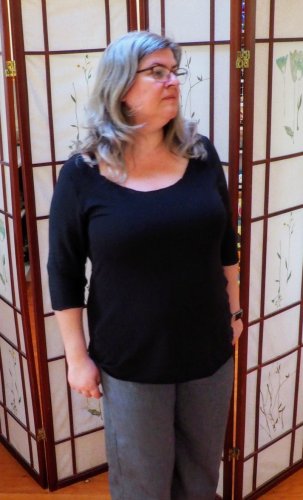
File this one under least-interesting/most useful. It’s a Concord T-shirt, made with some fabric I ordered as a test for another project. It turned out not to be very good quality fabric – but I do need more black t-shirts so here we are. I’ve got better t-shirt fabric in my stash and need to get on some more staples.

And finally – I made this at the beginning of the month and Brian has been asking for more like it ever since. Made with stash fabric and buttons – this is the Men’s Shirt pattern by Melly Sews. I am really happy with how it turned out.
That’s it! All of the things from June. I’m hoping the weather will turn soon and I’ll be spending less time in the studio for the remainder of summer – though, there are still so many things I want to make for fall 🙂


 Red Cedar