Red Cedar
More apocalypse, less angst
The perils of passion.
Although Emma Bovary is hardly a sympathetic protagonist, Madame Bovary is still one of my favourite novels. A little melodramatic in spots perhaps, but I assume that is the effect Flaubert was looking for in his condemnation of the new bourgeois and their destructive capacity for romantic narcissism. For it is a combination of self-aggrandisement and ridiculous romanticism which ultimately undoes the lovely young Emma, wife of a boring country doctor.
In brief, the plot: Emma Bovary marries (of her own choice) Charles Bovary, a country doctor and goes to live with him in a rural area that is barely even a town. Emma’s education has mostly been in the form of romantic novels, and she yearns for an exciting and romantic life such as have been depicted therein – but in the life of a country doctor’s wife she is bored and unable to find love in her marriage. A chance invitation to a ball in the nearest large town exposes Emma even further to a world she wishes to access and she is heartbroken by her life to the degree that Charles finds a new position in a larger village so she might be happier. It is here that despite now having a small child, Emma embarks on two affairs which each last for a few years, and in the process of trying to keep her lovers and the money flowing for their dalliances gets her household into deep debt, destroying her husband’s reputation and finances. Instead of facing what she has done in the end, Emma Bovary swallows arsenic and dies a horrible (unromantic) death, leaving her husband and child behind – a shell of a household.
As you can see, not very sympathetic – but for all that, Flaubert is not merciless to Emma and we are exposed to her motivations throughout the novel – chief being that she believes that life of women to be unfairly constrained. Throughout the novel she makes commentary on how men are free to do as they please, whereas she has never been free to choose her fate. Increasingly, this lack of freedom and choice choke Emma (literally, she comes close to dying from seizures and depression more than once), and she attempts to counterbalance it by acting as a man in her love affairs. In her first affair, she is very much controlled by Alphonse who has both money and an aloofness which puts her in his power, and yet still she at times seizes what she can by boldly coming into his house and disrobing before him. While she seeks to use her sex as the ultimate lure for Alphonse, she ultimately fails when she goes too far in pushing her agenda with him (to run away together), but in her second affair she takes a different tack all together. Because Leon is younger and has been enrapt by Emma for many years, she is able to take the lead in their relations and play the stronger character. In this role Emma is wild and mannish – she smokes cigarettes and drinks, eats heedlessly, borrows money recklessly and pursues sexual dalliances with Leon she ascribes to the masculine freedom she does have.
What Emma seems to really want from the world is the freedom to *be* her first lover Alphonse – a somewhat wild playboy who has enough money to live an exciting life. This is where she locates the passions – in fine food and drink, sex, smoking, beautiful clothing and accessories, and travel to large cities. In her home life of husband and child she sees nothing but tedium (not unlike Alphonse who recoils at the idea of becoming a stepfather) and chains. Interestingly, Emma doesn’t fixate on becoming one of the women in the high-flying community she seeks just above her – but is endlessly fascinated by the men and the access they could grant her to freedom.
Not unlike Edna Pontellier in Kate Chopin’s The Awakening, it is hard to sympathize with Emma – who is actually much more wicked than Edna in the devastation she leaves behind with her suicide…. but at the same time, we can recognize the madness created in a world of such social constraint. Emma’s recklessness comes from a place of surfacing – as though she is drowning and the moments in which she breaks surface it is all she can do to gulp the passions she desperately craves. Rather than thinking about the loans and papers being signed at the local moneylenders, she sees only the possibility for more passions being met rather than the decimation of her family and ultimately her own life. And in this she appears powerless, swept into the current of her beating heart crying out for a different kind of life. An unrealistic life. An unsustainable life. But Emma doesn’t have the self-awareness to see that every piece of silver eventually tarnishes – and she is as caged in delusion as anything else.
At the end of Madame Bovary Emma is frantic in her delusion – that she can raise the money to forestall the bailiffs coming to auction off their household possessions – and she tears from one lover to the next demanding that they find a way to give her what she wants. Here Flaubert draws precisely the lack of substance in Emma’s relationships, the ephemerality of passion which is loyal to no one once it wafts away. Emma’s own personality becomes as insubstantial as she vacillates between being horrified at the notion of prostituting herself (to the country lawyer), and being willing to give herself back to Alphonse if he can come up with the money (despising him when he claims to be short of cash) – desperate for Leon, at least to show his love by stealing from his employer to aid her. Realizing at last that no one will come to her rescue, Emma crams a fistful of arsenic into her mouth in the hope of a peaceful death. Even this is denied of course, as poisoning is anything but peaceful and it takes her more than 24 hours of vomiting blood before she does die. Horrible!
And so we are left with the struggle of women in bourgeois society to find meaning, a moral tale about where meaning is not to be found, a commentary on social hypocrisy, and a condemnation of the stolidity of rational life (for while we don’t blame Charles for what happens, we aren’t particularly enamoured with his lack of fire either). Flaubert’s novel is certainly no “romance” (as often classified) but it is an examination of romantic ideals popular in his time – and a critique of a social order in which the denial of passions (while simultaneously elevating them in popular culture) could turn out to be as damaging as the passions themselves.
I haven’t read this yet – but here is an article by AS Byatt in the Guardian (from 2002) about Madame Bovary which promises to be interesting.
The Family Christmas Card…..
Couldn’t resist the ridiculous this year – because after all, this whole holiday feels as surreal as a houseful of dancing elves.
xoxox
Ready for the holiday to begin….
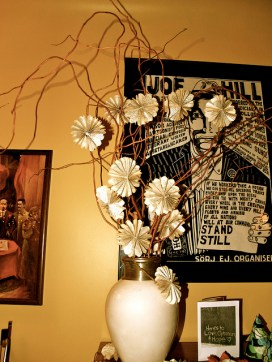
I haven’t got much to say as we round out towards Christmas, except am I ever ready for holidays. Energy levels have been low this week, and post-cold, my sinuses are acting up again. I just need a few days of sleeping in and not having to rush around… which starts on Boxing Day for me since everything up until then looks something like – clean house, travel (surrey), eat, presents, sleep, travel (victoria), presents, eat, visit. Between being blended family with split-time over the holiday, and the fact that B. and I have families on the island, there is a lot of running around that gets done at this time of year. At least this year B’s parents are coming down to Victoria to have dinner at my parents’ house.
From the tracking notice I got in my email this morning, it looks like my purple yarns will be here this afternoon – which also means that in addition to school reading, I will have a crochet project to take along during our travels. I’ve also been doing some cross-stitch again recently, and have a small redwork project in mind that might end up in my traveling bag. The sewing has really been at a lull recently, but I’m hoping that finishing up a sweater for a friend (just got it cut this morning before work) will inspire me back to the machine as the holiday passes. I have been feeling guilty about working on things for myself when a part of my feels that I should be working on things for other people: hence, working on nothing is the solution.
Christmas is such a weird time of year – so stressful and frenetic, which is the opposite of what you hope a holiday will be. I guess that the time in between Christmas and New Years is the real holiday…. I always grit my teeth until the 26th and only then do I feel the ability to relax. And I’m not even the one cooking a holiday dinner!
Anyhow, I’m not sure how much posting will happen here over the holidays, so I’ll just wish y’all a good season right now. The light is finally on its return, which means we’re through the darkest days once again!
Yarn! Spring! Skirt!
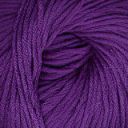


I just bought enough of the above colours for a crocheted spring skirt – part of yet another attempt to add more colour to my wardrobe – and also to learn to crochet garments beyond the cap and scarf sets I’ve worked my way up to over the last little while. While I normally buy my yarn at Baaad Anna’s, my neighbourhood yarn shop, I have to admit that for larger projects like a skirt (11 skeins of mercerized cotton in total), I tend towards Elann.com which is located close by in Point Roberts and has incredible prices. Previously I have bought yarn from them and received it by the next day – and they include all the correct BC taxes and stuff – which I also appreciate. Since the pattern I am using comes from the well-known book The Happy Hooker it is easy to find pictures of people’s projects online – here is my favourite online version of the skirt made in greens and here is the project on Ravelry.
I should actually be writing on Burke’s Philosophical Inquiry but this is such a good bit of procrastination I just had to share.
The Dancing Girl

I had to take a schwack of advil this morning to deal with some sinus pain and that has left me without much to say this afternoon – so instead I present to you my favourite ornament on the festive branch: The Dancing Girl. I bought her for $3.75 at The Bay in 2007 to attach to the first present I ever gave Brian (a beautiful cloth-bound 1947 edition of Leaves of Grass by Walt Whitman). She is hard plastic and a little heavy for the branch, but she has a long, fringey-skirt and there is something amazingly retro about her. It still seems a fluke to me that something so cool could have been for sale at The Bay. A little like how I ended up married to someone I met on Craigslist. Awesome and strange being hallmarks of my existence — the Dancing Girl is perhaps just emblematic.


 Red Cedar