Red Cedar
More apocalypse, less angst
Real book magic
On the theme of Sunday. E-books can’t do anything nearly this magical. Books aren’t just about what’s in them, they are a form of beauty unto themselves:
First dress of 2012.
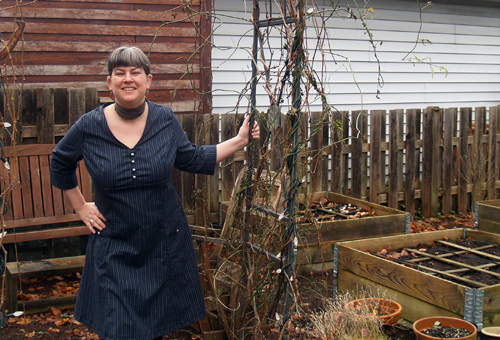
Ignore the goofy look on my face and behold the first dress for 2012. A total frustration to put together, but I learned a lot in the process as I re-did facings and set the sleeves no less than five times. On the other hand, I discovered that this pattern fits me particularly well, and I made a dress that’s a bit different for me in length and style. And it’s flattering to my shape! I’m planning another iteration of this dress in red wool crepe with short sleeves, so all the frustration of this version should be worth it when I whip the next one up in no time flat.
Book factoid
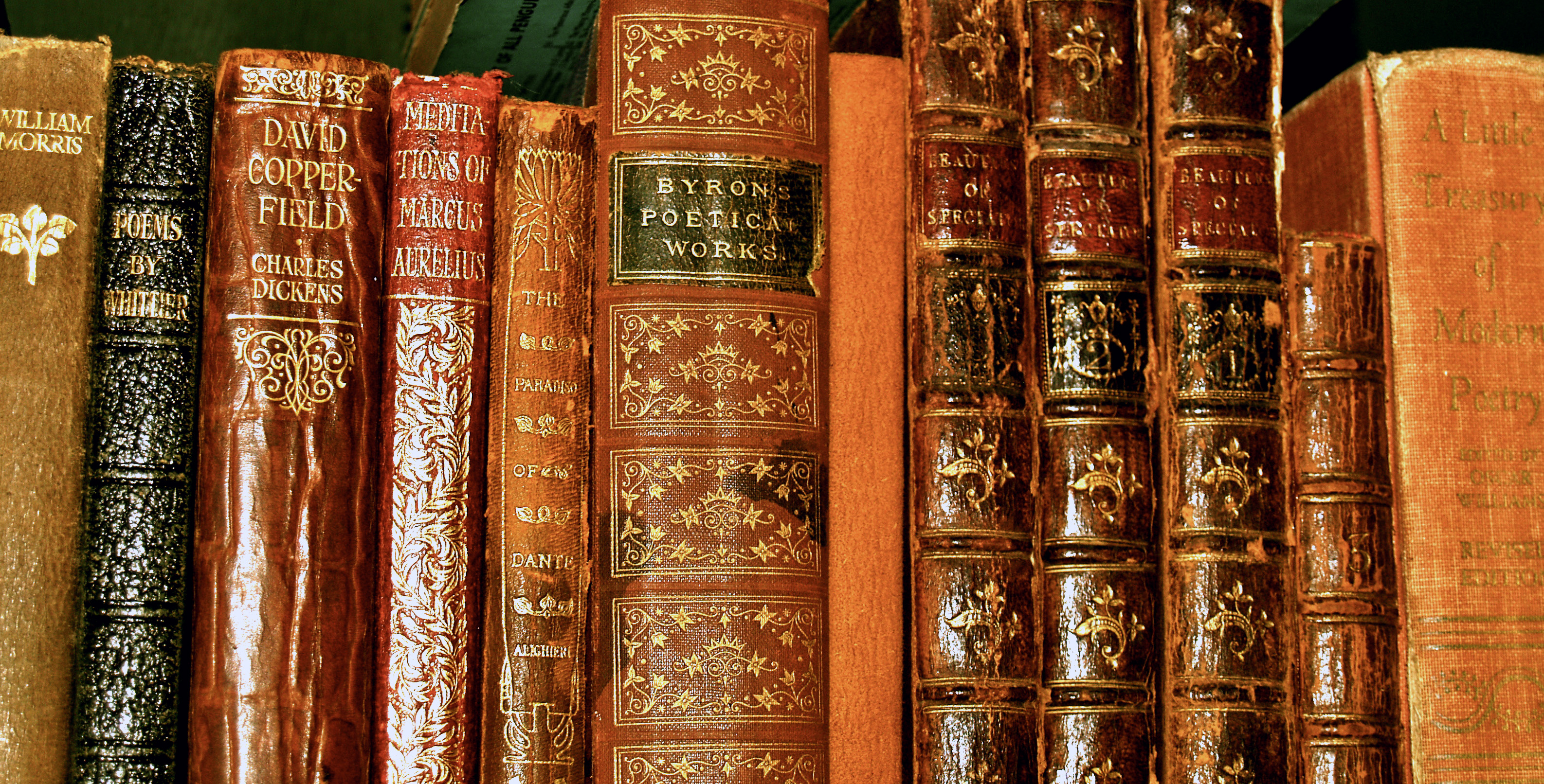 One more reason E-Books will never be as good as hard copy books:
“Lignin, the stuff that prevents all trees from adopting the weeping habit, is a polymer made up of units that are closely related to vanillin. When made into paper and stored for years, it breaks down and smells good. Which is how divine providence has arranged for secondhand bookstores to smell like good quality vanilla absolute, subliminally stoking a hunger for knowledge in all of us.”
Photo by me, factoid from http://www.youmightfindyourself.com/post/977906714/lignin-the-stuff-that-prevents-all-trees-from
Sublimity and mountaintops.
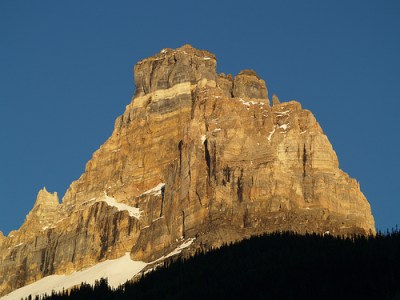
(Sadly, you can’t experience the sublime through a photograph.)
I’ve spent a fair bit of time hiking in and around mountains over the last several years – not as much as I would like, but enough to recognize that there is a distinction between nature’s “beauty” – as in “that is a beautiful flower/bush/etc” – and an entirely different feeling one gets when encountering the immensity of a mountain range, the heart-rumbling rush of water through a valley channel, or the fearful ridge precipice from which one can see a hundred kilometres in every direction. This second feeling – I used to describe as “being broken open” as in – “when I stood on top of that ridge between two mountain ranges I felt as if my heart was broken open”. An entirely different response than “isn’t that beautiful,” and one that implies a physical pain which I very much feel in those moments, as if I am being spread apart by something so awe-inspiring that I can not contain its existence within me. It is a pleasureable pain – one that allows for rhapsodic tears, and grand plans for rearranging life to spend more time in the presence of such grand landscapes (not to mention inspiring a resistance to all that would destroy the wild and untamed in us and in our environment).
“Whatever is fittied in any sort to excite the ideas of pain, and danger, that is to say, whatever is in any sort terrible or is conversant about terrible objects, or operates in a manner analogous to terror, is a source of the sublime; that is it is productive of the strongest emotion which the mind is capable of feeling.” — Edmund Burke
But until reading Burke’s A Philosophical Enquiry into the Origin of Our Ideas of the Sublime and the Beautiful a couple of weeks ago, I had no idea that this feeling was a) to some degree universal and b) a philosophical concept developed in the 18th century. That is the mutually exclusive distinction between the beautiful and the sublime – sublime being the experience I have described above.
To quote wikipedia, sublimity refers to “the quality of greatness, whether physical, moral, intellectual, metaphysical, aesthetic, spiritual or artistic. The term especially refers to a greatness beyond all possibility of calculation, measurement or imitation.” According to Burke, the sublime experience is a kind of “negative pain” which is distinct from positive pleasure but still brings on a kind of “delight” – and this sweep of emotion is the strongest feeling one can experience – far surpassing reverence, admiration and respect.
Why is it that the experience of the sublime – particularly in nature (sublime experiences also being possible in religion and art) – excites the human core in such a particular way? According to Burke:
The passions which belong to self-preservation, turn on pain and danger; they are simply painful when their causes immediately affect us; they are delightful when we have an idea of pain and danger, without being actually in such sircumstances; this delight I have not called pleasure, because it turns on pain, and because it is different enough from any idea of positive pleasure. Whatever excites this delight I call sublime. The passions belonging to self-preservation are the strongest of all the passions.
And having experienced some degree of sublime experience I read this as true – because so often I have felt that I could be swallowed up by such great mountains and rivers, that I am powerless if a wind were to come and push me into the precipice, and that timelessness of those natural artifacts is overwhelming to my individual ego. This is *not* the same as actually being in danger, which does not inspire sublimity but some much baser instinct to save oneself. Sublimity relies on the reflection of the possibility of danger, of the awareness of mortality as being close at hand without actually being present. As Burke notes, it is is the affecting idea of death which moves us.
But as pain is stronger in its operation than pleasure, so death is in general a much more affecting idea than pain; because there are very few pains, however exquisite, which are not preferred to death; nay, what generally makes pain itself, if I may say so, more painful, is, that it is considered as an emissary of this king of terrors.
Thus, a kind of delicious horror is produced in a sublime experience. This is nothing like beauty, Burke is right in drawing out their mutual exclusivity. This is nothing short of the experience that reminds us most of our human frailty and mortality – face to face with a mountain range that pre and post-dates our own existence by hundreds of thousands of years.
This is not the only exploration in A Philosophical Enquiry which seeks to describe, though Burke clearly gives a preference to the emotions produced by sublime experience over beautiful experiences. This shift in cultural thinking (which appears in many other writings starting in the late 18th century) is one of the entry points to the Romanticism which dominated 19th century philosophic and artistic thought. I’ve noticed that a number of the readings for this semester draw from this tradition – one in which the emotions are validated as an authentic source of aesthetic experience. This being a kindof counter-Enlightenment and to some degree a response to the Industrial Revolution.
Given that Burke describes a feeling many of us have had (particularly those naturey types I know – many of whom are motivated by just such emotional responses) – it strikes me that this writing marks a return to a particular kind of emotional honesty which was downplayed by the highly-rationalist Enlightenment. While Burke was horrified by the French Revolution, and is noted as a grandfather of modern conservatism, he is also one of the first to give voice the impassioned motivations in human nature. For sublimity is not only found in nature, and may serve as the foundation for the making of meaning – ie revolution – in ones own lifetime.
East Van’s secret hospital
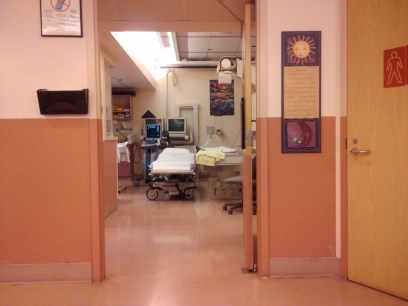
This is where I was yesterday. Minor medical test only, really nothing to worry about…. But I’m flagging it with this photo as an excuse to let you East Vansters know about Mount St. Joseph Hospital which is probably Vancouver’s best kept secret.
At Kingsway and Prince Ed (two blocks off Main at 14th), this is East Van’s only hospital and if you have to go somewhere for testing, day surgery or an emergency room, I would highly recommend this over VGH or St Paul’s both of which are frenetic day and night. I first became acquainted with St. Joseph’s when I took Brian in for cataract surgery last year – and so requested that my test be scheduled here when it came up with my Doctor. So much more relaxed than having to work one’s way through the maze of a giant hospital! Plus the staff here seem less stressed, and I have only had professional and courteous experiences the three times I have been (twice for B., once for me).
Super easy to get to, any bus up Kingsway or Main will drop you right there. And best of all? It’s in the hood which means closer than anywhere else for urgent medical care. I’ve noticed that most people have never heard of this hospital – as I hadn’t before B. had his surgeries scheduled there which is why I’m passing this on as good-to-know-info.
It *is* a Catholic hospital, which I recognize some people don’t use as a matter of principle on the whole question of abortion access (but so is St. Paul’s and they do some of the most progressive HIV research in North America) – but Vancouver has a clinic system for abortion and contraception so it would be rare to go to a hospital for these things anyway.


 Red Cedar