Red Cedar
More apocalypse, less angst
A manifesto, an action, a radical moment.
Job’s coffin looks down
At the day you shut your power down
You must out-create that destructive tendency
Let your fire starter hear the furyJob’s Coffin, Tori Amos
Last night was the Kierkegaard presentation, the one posted here a couple of days ago in which I concluded that although we might agree with Kierkegaard’s critique, we might not agree with his solutions to the crisis of passionless existence. The discussion last night was lively (and awesome) and as much as I didn’t take a strong position in my presentation, I found myself in a particular place during the discussion that was very familiar. That would be the place that advocates for action, for responding to the yearning – the need – for revolutionary and decision activity, and for the acceptance of radical action as part of the necessary spectrum of enacting social change. As much as I struggled through The Present Age, I discovered its resonance through the class discussion – which felt very relevant to the times and conditions we find ourselves in.
This morning I find myself going back over some of the discussion in order to clarify my own positions which perhaps were unclear (even to myself) last night, and it’s something of a comfort to me to discover that I haven’t given up on the principles which have fueled so much of my adult life and direction. Because of the terrible things which happened to my friends and movement back in 2006, and my subsequent difficulties in my own trade union, I thought perhaps I would be too cynical about the prospects for change to continue to be much of an advocate for struggle. But recently, things have started shifting into a more positive framework again and no small part of that is the reading of philosophy, history and literature I have been doing.
In any case, before I lose my thoughts from last night I want to record them here. These are headed under what I thought were some of the main points raised in the discussion…. and I do not pretend to be unbiased here, these are my responses to the points brought forward, not a reflection of the totality of the discussion.
The Leap of Faith (possibility)
Kierkegaard makes much of the “leap” we must make in order to take action (not to mention to possess faith), and in order to escape from the cynicism which pervades our reflective age. The danger of such a leap is that it does require more faith than knowledge. Faith that things are going to be improved by our actions, that we will somehow control the outcomes or at the very least be able to mitigate for any problems along the way. This is not unlike the faith that carries us into the arms of God, for it is impossible to know the future, just as it is impossible to know all of what makes for our human existence. All we can know is the present in which we struggle, in which injustice is writ large on the psychic landscape of the individual compelled to act.
As anyone who has been involved in resistance knows, an action’s stated objective is rarely met. Often it simply misses the mark, falling short of achivement – but sometimes the outcomes are much worse and we end up with the apparent opposite of what we were striving for. An example of this which I raised last night was that of WoodSquat, a squat and tent-city action which I participated in ten years ago in order to raise the issue of the need for more social housing in the DTES. In that year (2002), it had been seven years since the federal government had de-funded social housing as a national priority and at that time no new social housing had been built in Vancouver. Over ninety-two days, hundreds of people held the building and the sidewalks outside in the first visible show of resistance to the housing crisis that Vancouver had seen in decades. Thinking about it now, it was a pretty remarkable thing, even as the building which eventually emerged from the struggle was the antithesis of what we were fighting for. Rather than creating a bullwark in the fight against homelessness, the new Woodwards building (a blend of social housing, market condos, a university campus, commercial and social space) instead serves as a landmark of gentrification in an increasingly volatile community. It’s hard as a social activist to ignore that by putting pressure on the government, we helped to drive another spike into the death of the DTES and its resident population.
On the other hand, while it’s true that the Woodward’s building as it exists right now wasn’t the *intention* of the action – it is equally true that since that action, we have seen a lot more social housing built in Vancouver and in the DTES specifically. Not only that but everytime housing comes up as a crisis issue, the legacy of Woodsquat is drawn on as a symbol of resistance and of hope in moving forward in dignity.
This of course is a mild example, and the larger the leap is, the larger the potential for a much darker and dramatic outcome. But without action, we negate possibility and that demoralizes the individual (not to mention society), dragging our politics, arts and culture into a skidding halt. Taking the leap is no doubt terrifying because it is impossible to predict the future, and because when we do, we commit to putting our own bodies in front of the machine as a show of that faith.
Levelling (The lens through which we view history)
I am going to suggest that to cast the revolutionary projects of the past as “failures” is to engage in exactly what Kierkegaard argues against: Levelling. It is this levelling which casts Lenin as simply an opportunist rather than a key figure in building towards the Russian Revolution. It is this effect which denies the connection between the development of the modern welfare state and the revolutionary uphevals abroad and at home which influenced North American policy-makerrs (afraid of Communism coming to their own shores). It is this mantra of past failures which we are fed in all our mass media, our history classes, our public discourse – and which informs our fear to take action.
This is not an argument for blindly cheerleading the past as being essential to the present. Our critiques, however, have to be mature to the point of examining all the evidence and using our imaginations to extrude our inherited legacies of rebellion in full. To do so makes the “leap” a much harder one to take because we then have to critically own the possibilities of our action. But I think to do otherwise is intellectually cheap and it’s a dishonesty modern radical movements are frequently guilty of. We think we’re doing it because we don’t want to scare anyone off from making the leap, but this just reflects a distrust of “the public” and its ability to think and act with individual agency.
Using The Master’s Tools
With all due respect to Audre Lourde (who used this phrase in an entirely different context) – I disagree with the premise that the Master’s tools will never dismantle the Master’s house. And further to that, I see these types of arguments as a method of distancing which builds in a rationale for refusing to take action.
What I mean by this is the argument which goes along the lines of “Look, those anti-capitalists are using money – isn’t that hypocritical.” Or “Those environmentalists use computers, we can’t trust or join them.” And I know you might think that I’m setting up a straw man here, but I have actually seen and heard these arguments in online debates as recently as last week. Back in my younger environmentalist days I can’t tell you how many times I heard the critique that we couldn’t possibly be serious about saving trees because we printed things on paper for demonstrations.
When I hear these things I wonder how people think rebellions have happened in the past, or what type of action would be pure enough to be authentic and thus supportable. Of course every revolutionary movement starts out by using the master’s tools, and along the way (often completely unforseen), new tools are developed and added to the box at our disposal. It is simply unreasonable to expect that without the activity of resistance, a committee of people is going to have some kind of predictive control over what tools will prove useful in the future.
And by this I don’t simply mean physical tools or even the abstractions of currency and media – but the ideological tools we posseses are only tested in the practice of attempting to live them. Our new cultural tools only emerge when we are truly on the edge of paradigm shift.
But to get there? We start with what we’ve got and we hope that through the process of acting we create, rather than overthinking to the point of doing nothing (which is exactly Kierkegaard’s critique). I’m not sure this works with everything (like using Facebook to protest technology, that might be a bit of a stretch), but suggesting that social justice activists shouldn’t use money or computers isn’t fair, and ultimately this search for “hypocrisy” in others is a cynicism that will be pervasive right up until the revolutionary movement comes (and frankly, during it for a fair chunk of the population – revolutions are typically made by less than a third of the citizenry).
Gradualism
Last week I wrote about Weber’s critique of the “ethics of conviction” in a post called The Gradual Road to Nowhere – so I don’t want to belabour the point here (since we’re now at 1600 words and this is supposedly a blog post, not an extended essay). But I am highly suspect of the argument that slow reform of the system is the most responsible method for making change. I definitely agree that gradualism is one mechanism by which change is made, but without periodic conflagrations, that slow process grinds to a halt. And when that happens, the result can be bloody and cost human lives. I underscored this point last week in my discussion about the mill workers of Burns Lake who did not exercise their right to refuse unsafe work when workers smelled a gas leak earlier in the day. This is what happens when we buy into the myth that things are fine, that someone is looking out for us, that we do not need to take our own radical action in order to save ourselves.
I’m not sure what gradual change means when you are outside the halls of power. Currently we have a government taking decisive action on labour rights, human rights, old age pensions, public services, taxation and corporate handouts and many other things. This is what we mean when we talk about changing the system from inside it seems – get elected and then ignore the will of the majority, essentially shutting the door on anyone who disagrees. This works particularly well in an age where the cynicism has raised us to believe that “everyone is only in for themselves anyways” and where we would decry the worker who refused unsafe work by calling them “lazy”. Workers who go on strike, do so as a mechanism within the system of reform, but if it goes on for more than three days, the government passes legislation thereby outlawing the worker and subjecting them to police bruality, financial fines and possible jailtime. Environmental organizations that involve themselves in consultations against the pipeline – a sanctioned activity within the system – are called radicals and terrorists and the government threatens their funders with sanctions if they don’t pull back.
This is the difference between those in power and the rest of us. Our attempts to reform the system from within – as good workers or good citizens, as public servants even – are thwarted by those taking decisive action at every turn while we mumble around and try to reason our way into social change.
A full spectrum of activity
Having said that, I have worked inside the system for too long to discount the work that people do inside in order to effect progressive, positive and democratic change. It’s truly amazing to see the dedication with which people attempt to move environmentally positive issues and policies through the system in the face of an increasingly hostile government – and I would never discount that work as unimportant. But the interplay of forces which persuade change is complex and if we are to accept gradualism as one end of the spectrum, we must admit that at the other end we have certain kinds of radical activites which polite activist society would rather not talk about. I think the key to moving society forward is ensuring that no matter which part of the spectrum one draws from, there is ample support for the end goal.
This, of course is a challenge when we are dealing with the manufactured sentiments of a public (in the Kierkegaardian sense) who may ideologically ally with the digital opinions of particular pundits and politicians believing that somehow this formless leadership is representative. But in the end we must “leap” to the belief that our fellow worker has both a rational and a responsive side which can not be forever squeezed and/or lied to.
But the fact of the matter remains that no matter how much we philosophize or organize, talk or march in the streets – true radical moments take us all by surprise, both in when they erupt and in the forms which they take. We might feel like “this age is good, it gives me everything I need” and yet still find ourselves swept into history’s army by a series of personally touching events. We might find that even as our lives are comfortable, the dispossessed living one postal code over don’t believe that opportunities for change within the system are there for them. Similarly, we can wonder how Canadians can watch a radically conservative government strip the country of fundamental human rights and hand off its tax dollars to their corporate cronies without rising up in a roar? The truth is, we don’t get to choose our moments. But we do have to be ready for them. We have to be ready to lead and fight and follow and march. We have to have organic communities in which we live and can fight from. We have to be ready with our ideas and just as ready for them to change.
Which means the revolution is now and always, irrepressible even though we might never see it in our lifetime – we still hold on to our moments of rebellion as belonging to our true selves.
Welcoming Grace!

I completely forgot to mention here (though I did post on Facebook) that last Wednesday (that would be January 25th) I became an Aunt for the second time! My niece Grace was born while I was in class that night. Techically I have nieces and nephews through Brian’s side of the family, but there haven’t been any new ones since I arrived on the scene, so it’s an entirely different thing. Grace is pictured above with my nephew Nicholas who is almost 2 and a half now. Sweet babes! Lucky me, I get to visit them this weekend 🙂
Health care fun times.
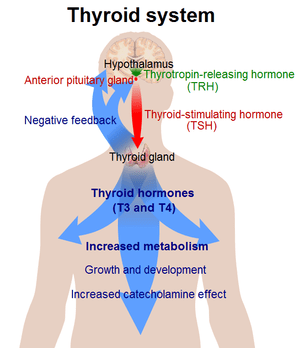
It probably doesn’t get more existential crisis-ey than reading Kierkegaard while listening to Max Richter while sitting in the waiting room of a decrepit hospital while waiting to find out about possible cancer results. But there I found myself yesterday, at St. Paul’s, in a cramped waiting area with 25 other stressed out people, waiting to see a surgeon about some interpretation of a thyroid biopsy I had done at the beginning of January.
And like any good crises of the heart and mind – the results are still inconclusive. Cancer isn’t likely at this point, but then again the Doctor doesn’t really know, so more tests. Another ultrasound, another needle biopsy (which in case you don’t know, involves needles in the throat) to be scheduled in a month or so.
What’s struck me about the whole process is how incredibly efficient the system can be when there is an actual health crisis afoot. I mean, you want it to be efficient, but at the same time it’s a bit frightening how you can be having your annual physical one month, and within weeks be in an entirely different examination room talking to a surgeon about the possibility of getting a major part of the body’s hormonal system removed.
In any case, it’s not much of a worry except that there are some atypical cells going on, but with no visual malignancy of any kind – so there’s a good chance these are just nodules that need to be monitored. But it’s still a big drag for someone like me who has never had a health scare in my life. I suppose it’s practice for being reflective when I get older. Or just practice for being a better human? I’m not sure but I certain it’s not a “gift” or “fate” either. It just is.
Individual suffering for the common (but not lowest common denominator) good.
I have included the above video in these presentation notes for my class because I think that Zizek is advancing a Kierkegaardian argument about abstraction in “The Present Age” but with different conclusions. What follows is a discussion presentation I am giving on Wednesday. I have to admit that I found this reading difficult, and that attempting to characterize Soren Kierkegaard in simple terms is nearly impossible – so dense, complex and complete are his personal, philosophical and theological writings. Still and all I think I made a bit of a breakthrough in my own understanding by undergoing some reflection on this work, and ultimately am satisfied that at least in some small part I “get it” though I am not convinced this means anything for understanding more of Kierkegaard generally.
***********************************************
Soren Kierkegaard was a Danish philosopher who lived from 1813 until 1855, and is often referred to as the Grandfather of Existentialism.
I think it’s safe to say he was a complex personality who courted a certain kind of solitary and pious lifestyle throughout most of his existence. Although he came from a well-to-do family, I have always thought of Kierkegaard as an ascetic – though materially he lived like others of his class and social position – he was certainly an emotional ascetic. Not only did he break with his father (with whom he was very close and thus crushed when he discovered the hypocrisy of the premarital sex which begat Soren), he maintained few intimate friendships in his life. His one love affair – with Regine Olsen – resulted in a broken engagement which Kierkegaard was loathe to explain, even in his private journals. While he writes that he believed his “melancholy” made him unfit to be a husband, one wonders if he was motivated more by the belief that living a contemplative life required an unencumbered and uninterrupted home. Personally, I think that Regine really dodged a bullet on that one, as I doubt life with old Soren would have been much fun.
A frequent critic of his society, the church and with other idealist philosophers of his own day, Kierkegaard was a prolific writer who published under several pseudonyms in a dialectical relationship to one another. Some of his chosen names were ridiculous (Johannes de silent, Constantin Constantius, Hilarius Bookbinder, Anti-Climacus) which makes one suspect that he did not choose them in order to masquerade against his own authorship, but as various aspects of his own intellectual currents, to be set beside and against one another in public discourse.
Kierkegaard was mainly concerned with the question of existence, and specifically the ability to live an individual life of meaning drawn from experience. This individual experience extended into his theological work which explored the difference between objective and subjective arguments for Christianity, including the individual’s relationship to Jesus Christ and to God which could come only through faith. An incredibly pious individual, some of the most powerful writings I have read by Kierkegaard include his spiritual writings on faith – and I have to admit being shaped in my perspective on faith (even as a non-believer) by his writing.
Kierkegaard rejected the theological rationalism of Hegel which posited that one could know God through human reason, and explored the concept of the “leap” into faith which must be made in order to accept the paradoxes inherent in Christianity. It is through this leap that we can know the loving God, and accept the suffering the comes along with our human experience.
And with Kierkegaard, suffering is not only to be borne, but seen as an essential link between the individual and his ability to know God fully. To strive with God, as he puts it in his lament to Job in his work Repetition:
“Why were you silent for seven days and nights? What went on in your soul? When all existence collapsed upon you and lay like broken pottery around you, did you immediately have this superhuman self-possession, did you immediately have this interpretation of love, this cheerful boldness of trust and faith? Is your door then shut to the grief-stricken person, can he hope for no other relief from you than what miserable worldly wisdom poorly affords, lecturing on the perfection of life? Do you know nothing more to say than that? Do you dare to say no more than what professional comforters, measure out to the individual, what professional comforters, like formal masters of ceremonies, lay down for the individual, that in the hour of need it is appropriate to say: “The Lord gave, and the Lord took away; blessed be the name of the Lord-no more, no less, just as they say “God bless you” when one sneezes! No, you who in your prime were the sword of the oppressed, the stave of the old, and the staff of the brokenhearted, you did not disappoint men when everything went to pieces-then you became the voice of the suffering, the cry of the grief-stricken, the shriek of the terrified, and a relief to all who bore their torment in silence, a faithful witness to all the affliction and laceration there can be in a heart, an unfailing spokesman who dared to lament “in bitterness of soul” and to strive with God.”
I include this here as a link to our earlier discussion on Job as I think it illuminates a certain kind of existential questioning in the Bible, not to mention picking up on the individualism which Kierkegaard priorizes in our work for this week (The Present Age). Here we see a condemnation of society pitted against the individual (“professional comforters, measure out to the individual”), and that individual becoming emblematic of the greater torment of human kind.
It is no wonder that elsewhere Kierkegaard wrote:
“If I had not Job! It is impossible to describe and to nuancer what significance he has for me, and how manifold his significance is. I do not read him as one reads another book with the eye, but I read this book as it were with my heart, with the eye of the heart I read it, understanding as in a state of clairvoyance every particular passage in the most various ways…. Every word of his is food and gladness to my ailing soul. Now one word rouses me from my lethargy, so that I awaken to new disquietude; now it quiets the fruitless fury within me and puts an end to the horrible feeling of mute nausea produced by passion. You surely have read Job? Read him, read him over and over again.”
Now, to our reading this week – The Present Age (1846) – which seems to start off as a very non-theological work, one concerned mainly with society. As mentioned in Kaufmann’s introduction, this was originally part of a longer essay which comprised a critique of the book Two Ages. The two ages being the French Revolution and Kierkegaard’s present.
I have to admit that I found this work, as brief as it is, quite challenging – both to my conception of Kierkegaard’s theological perspectives, as well as to my own assumptions about the self in relation to society.
The work characterizes the two ages thusly:
The Revolutionary Age: Action-oriented, individually satisfying, priorizing the individual, great leaders, experiential, concerned with emotion, decisive
The Present Age: Passionless, levelling (lowest common denominator), focused on reflection, leadership by committee, nihilistic, concerned with reason over experience, illusory ethics, full of abstraction (money, consumerism).
Essentially, although Kierkegaard acknowledges that his present age is one in which more knowledge is held than ever before – he says that the abstraction of it (intellectualism, money, etc) impedes us from acting in any decisive way. And thus we wallow in indecision and are imprisoned by the levelling effect of misdirected attempts at social equality. This is characterized in the particular image of skating on thin ice:
“If the jewel which every one desired to possess lay far out on a frozen lake where the ice was very thin, watched over by the danger of death, while, closer in, the ice was perfectly safe, then in a passionate age the crowds would applaud the courage of the man who ventured out, they would tremble for him and with him in the danger of his decisive action, they would grieve over him if he were drowned, they would make a god of him if he secured the prize. But in an age without passion, in a reflective age, it would be otherwise. People would think each other clever in agreeing that it was unreasonable and not even worth while to venture so far out. And in this way they would transform daring and enthusiasm into a feat of skill, so as to do something, for after all ‘something must be done.'”
Ultimately this fear of falling through the ice holds us back and prevents us from living in a fully-realized individual state and instead we are tempted into the abstractions of purchase – even to the degree that we “bargain buy” our salvation through a misunderstanding of what the individual sacrifice of Jesus Christ means and are thus impeded from discovering the notion of true suffering through experience.
What I think is important to recognize in this discussion is that while many of us (in this class and in our society generally) can agree with much of Kierkegaard’s assessment of his present age (and by extension our own present age) which amount to the following:
- only through suffering can the individual be reawakened to a passionate awareness of his own existence
- radical individualism is socially beneficial because the refusal of assistance to others helps them achieve their highest destiny
- we need to return to the authority of leaders, those who are individually and exceptionally living their destiny to drive society forward. Ultimately this means God.
I think if we return briefly to the Book of Job we can see that these conclusions in The Present Age fit with the experience of Job in his suffering. Not only is Job awakened to his life through the terrible events which befall him, but he is maligned by his society while passing through his most tragic hours. Ultimately it is his faith in the authority of his God which restores him – and he is able to move away from the questioning of existence back into the activity of living.
Kierkegaard closes off with the following statement: “In our times, when so little is done, an extraordinary number of prophecies, apocalypses, glances at and studies of the future appear, and there is nothing to do but join in and be one with the rest. Yet I have the advantage over the many who bear a heavy responsibility when they prophesy and give warnings, because I can be perfectly certain that no one would think of believing me.” Which I think is a lovely nod to not taking oneself too seriously (though it seems that SK was a pretty serious guy), and certainly not pretending to prophecy God’s future.
************************
“Reflection is and remains the hardest creditor in existence; hitherto it has cunningly bought up all the possible views of life, but it cannot buy the essentially religious and eternal view of life; on the other hand, it can tempt people astray with its dazzling brilliance, and dishearten them by reminding them of all the past. But by leaping into the depths, one learns to help oneself, learns to love others as much as oneself, even though one is accused of arrogance and pride — because one will not accept help — or of selfishness, because one will not cunningly deceive people by helping them; ie by helping them to escape their highest destiny.” (32)
This is an interesting trick that Kierkegaard pulls here in essentially making a social argument for individualism. That is, to be individually concerned is to allow each person to achieve their destiny and thus live in a society of true equals – rather than one which is levelled (brought down to the lowest common denominator.
Design Notebook: Not my favourite dress…..
 This dress is supposed to be a copy of this dress but it didn’t turn out nearly as cute as I hoped it would. I mean, it’s wearable – especially with a cardigan to cover up the overly-large sleeves – but I’m not nearly as thrilled with it as I hoped I would be.
Now the summer pants I finished today? That’s another story, but I can’t share that photo just quite yet because I have to wait until they appear on the sewing blog I contribute to first.
In any case, this dress is made of wool crepe, which is a bit itchy without a lining (which I failed to make) or a full-length slip (lucky me, I own one). It’s not the last of the cooler weather clothing that I’ve got planned, but we’re getting close as the shops are now stocking up on spring and summer-weight fabrics. Total cost for this was $30 – which is about $110 cheaper than the one on the website I linked to up above. So, you know, I’ll take the savings and just wear a cardigan to cover up the less-than-flattering bits.


