Red Cedar
More apocalypse, less angst
Approaching eschatology
 I am very close to finishing my semester – in fact I should be working on my term paper right now – and already I’m thinking about summer “projects”. Which things to focus on for the next four months that I’m out of school? Is it going to be working on develping a meditation practice, or a greater emphasis on exercise, or time spent thinking about a project on which I can complete my masters degree, or some combination of all the above? Plus, sewing, gardening, reading for fun, taking holidays and cooking as many new and interesting things as possible.
It’s not like I get a ton of time off work suddenly or anything, but the end of the school term brings with it the lifting of a certain mental weight. The “I should be….” that looms over each semester as I fall behind in my reading or look towards writing the end paper with deep foreboding. As much as I love my decision to return to university last year, it does bring with a certain feeling of time pressure that I remember from leaving things to the last minute during my undergrad 15 years ago. Even though I have much better time management skills now, school produces a particular feeling of anxiety because there is always something one should be doing.
With that in mind I am wondering about how to finish my master’s degree over the next two years. My program allows for one of three ways to finish: coursework (2 classes above the 6 required), a project (not necessarily a thesis), or two extended (30-page) essays. Up until now I have been pretty sure that I wanted to finish on the coursework option, though I have been open to the idea of something else if I go so inspired.
And would you believe that last night I got inspired while drinking gin in our backyard hot tub? Don’t ever doubt, that’s where most of my good ideas come from.
Apocalypse has always been an interesting theme, and one of my goals when I entered the program was to perhaps find ways to tackle that theme through my courses. To some degree I have, though not in any focused sense. And I’ve worried that the whole apocalypse topic has been done to death in academia. But from a conversation with Brian and another friend last night I see another angle that might be interesting to explore. Not only that, I would get to do interviews! And read post-apocalypse fiction (my favourite!) And think and write about some kind of fantasizing that I have strongly identified with at different points of my life.
And! As I told Brian this morning – I could then call myself an Eschatologist (which I know, sounds dirty, right?) which means someone who studies the end of the world (origins are in theology but I don’t think the field only applies to religion any longer).
As I struggle with getting fifteen pages on neuroplasticity out on paper, I do wonder if I really have it in me to write 60 pages. I’m pretty sure the answer to that is yes, but then the question is – do I want to?
Design notebook: Bandanas for summer
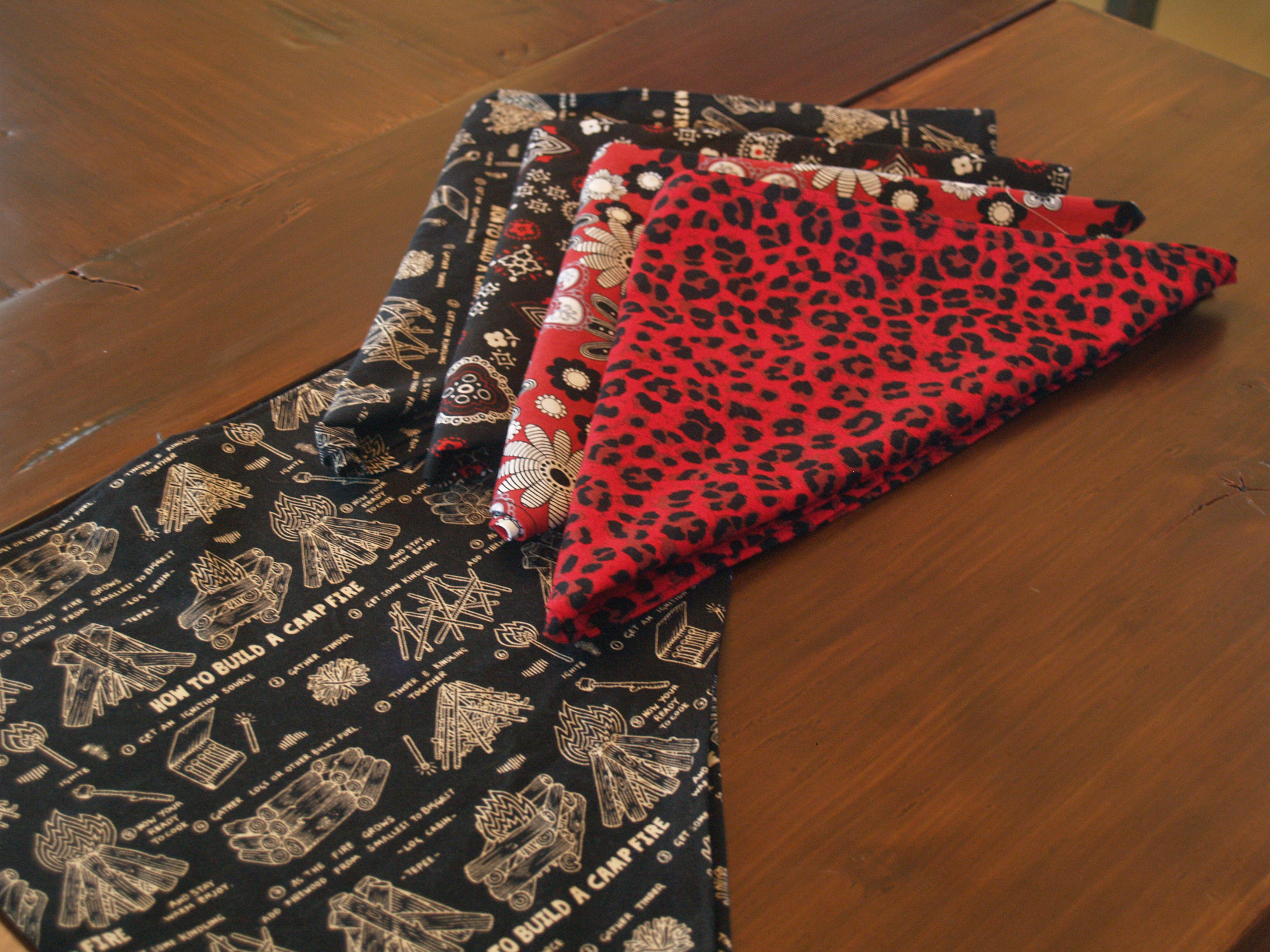
I’m on day six of no-wheat and I’m feeling murky and strange – so what better day to talk about something as simple as the bandana!
There is nothing I love to have in my camping arsenal more than a good, triangular bandana. Tied around the neck for easy access, the bandanna can be used as a napkin, a sweat-mop, a bandage, a face cloth, a head-covering against the sun, a dish cloth or drying towel, not to mention toilet paper in desperate times.
Since my much-beloved ‘kerchief has pretty much become a rag over the past few years – I figured it was time for some new ones. Talk about a low-barrier, quick gratification project! With just 2.5 metres of fabric (bought in 1/2 metre increments) I now possess a bevvy of bandanas! (Two of them are going to Brian and Mica – but that still leaves three for me.)
Particularly appropriate is the How to Build a Campfire fabric discovered at Spool of Thread when I went in to get some otherwise-boring white fabric for quilting with a few weeks ago. It really does illustrate the building of a good campfire so if you’re out in the woods and forget…. you get the idea.
Looking forward to rocking these neck-kerchiefs on a trail sometime soon! That would be sometime after I write my term paper that is due in two weeks. And sometime before I get started on my bathing suit project (please vote on my fabric choice in yesterday’s post if you haven’t already).
Summer! I’m ready for you! (Almost).
Design notebook: A swimwear poll.
So. After some thinking and conversing on Facebook yesterday, I think I am going to attempt my own swimwear this year. But not just any swimwear! Specifically I am after an old-school swimdress with a separate (or possibly attached) bathing suit bottom. I have chosen this pattern:
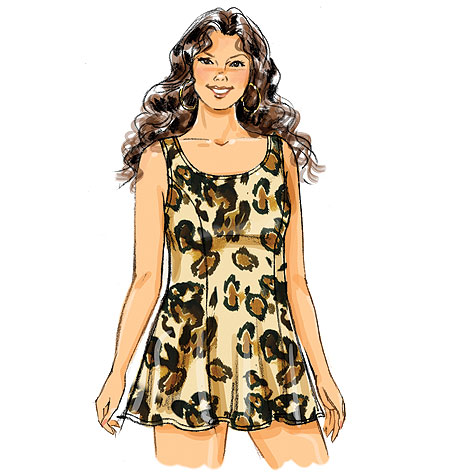
It has been pointed out that there are very cheap swimsuits available at Costco and at the new dollar store near Ugo and Joe’s, and also at Joe Fresh – which is great (and I will probably purchase a cheap suit at some point in the near future for using in the hot tub on those rare occasions where I wear a suit at all) – but really, I want something in which I feel comfortable hanging out in and that isn’t uber-constricting. I really hate the tightness of bathing suits, not to mention the elastic that cuts into the inner thigh. The answer is obviously the old-school bathing dress with swim trunks.
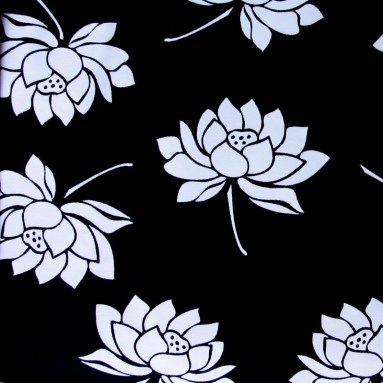
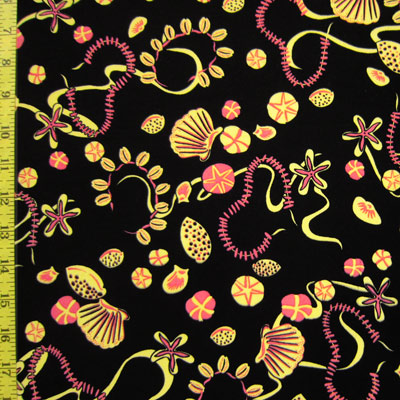
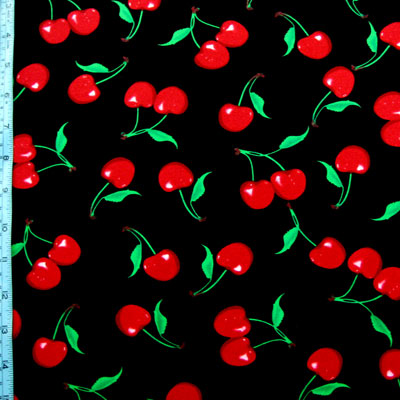
So. I’ve agreed with myself that after I finish writing my term paper, I get to go to FabricLand and buy the above pattern and then order some fabric to go with it. I intend to make the side panels black, with a printed-pattern on black in the center panel.
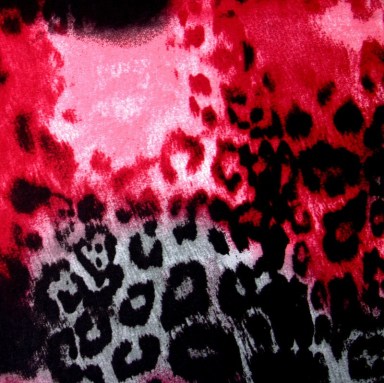
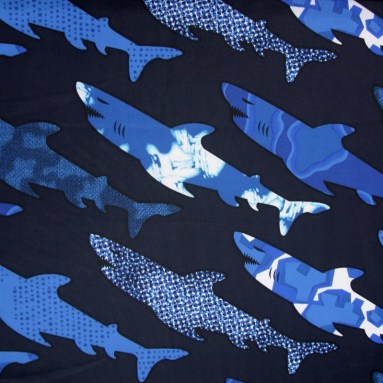
Thus far I have found several potential bathing suit fabrics – and now I’m looking for help! If you don’t mind helping me make up my mind here, please scroll down and look at all five choices and then vote for your choice. If you vote other, please leave a link to the other fabric possibility in the comments. Thanks!
Small changes and a canoe trip.

One small change really can trigger a host of others.
Just a few weeks ago I set a hiking goal for the first week of July (and convinced several people to come with). Since then I have re-entered the gym for regular workouts, taken up pilates, had several outdoor hikes and plus started periodically walking to work. This week I booked an appointment with a trainer for posture and alignment analysis and I cut wheat from my diet.
My goals have expanded from just being able to do a 5-day hike again to overall health, posture and diet – not to mention getting the thyroid nodules under control and boosting its function. And now that I am re-engaged on a path of wellness, I can acknowledge that I also want a better body at the end of it all. A more energized and more youthful body, not to mention a slimmer one. Or at least a more toned one.
This is not a first-time endeavour for me – not by a long shot. I have been in better and worse and better and worse shape for the last twenty years. It’s a bit of a cycle, as it is for all of us who don’t naturally gravitate towards athletics (and those of us who like bread, cheese and wine a little too much). This brings a bag of mixed feelings each time I re-enter the gym.
On the one hand, I’ve got myself in shape before, so I know it can be done. On the other, I’ve got myself in shape before and then got out of shape again, so what’s the point?
I think the point is not letting the out of shape become the rest of my life slide into poor health by the age of sixty. And also, I got more hiking to do!
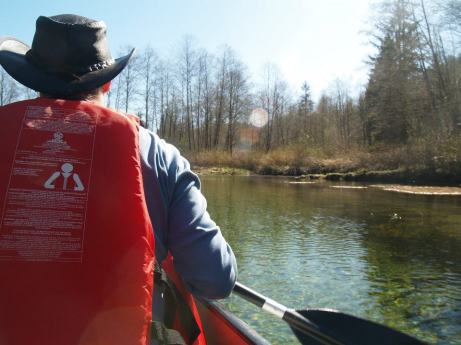
This past Easter Sunday, Brian and I grabbed a friend and drove out to Pitt Lake where we canoed up Widgeon Slough and then hiked 6 km to Widgeon Falls and back. Brian dislikes hiking unless there is a “point” – ie, something of an adventure or a picnic at the end – so combining a canoe trip with a hike *and* a picnic is something he can get behind. Turns out, the falls are an incredible place to have lunch – some of the nicest I have been to with lots of great smooth rock face for picnicking on. And the canoe trip up is pretty sweet too.

It’s a process, this getting back into the body, and it’s important to pepper that with reminders of what is out there to see and do. We’ve had such amazing weather on the coast these past two weeks – which has certainly aided my mood to get outside and hit the trails – and I’m taking advantage of all the great resources I have around me in order to stay positive and increasingly ramp myself back up to speed.
While I am not making any big pronouncements or promises – I am hopeful that the shot at the head of this post will become a “before” shot reminder of where I started. Happy yes! Mobile and somewhat agile – yes! But also not in the shape I want to be. At forty, I know I can do a lot better.

Pretty things and bad moods.
Despite having a fabulous weekend full of everything I most enjoy (hiking, playing music, gardening, sewing, friends, household organizing and so forth), I went to bed last night and woke up this morning in a terrible mood. Or maybe it’s better to say an odd mood. Anxious and a bit depressed for no good reason. Plus I’ve got a knot in my right calf that won’t come out despite stretching and massaging. Not only is it wearing on my last nerve – it’s making me all angry inside!
*sigh*
Right, so we all have these days and I’m pretty sure mine is linked to end of term stress + busy week + body aches reminding me that as I get older I need to stretch more as I work out. Oh, and I guess it might also be related to yesterday being my first wheat/gluten-free day. It could be that too.
But just knowing why we might feel crappy isn’t enough to turn it around – so I’ve got three strategies for shifting my mood today:
- immerse myself in work
- go to a therapeutic stretch class at the gym
- buy 2 yards of fabric to make a new skirt that I had a dream about the other night
In shorthand that is – productivity, movement, and creativity. Simply typing those three words makes me feel slightly better without doing anything else – because I’m imbuing my grumpy self with potentials rather than more limitations. Limitations are where I get stuck on days like this, and those turn into anxieties which turn into thoughts I don’t want to share here…. and so on.
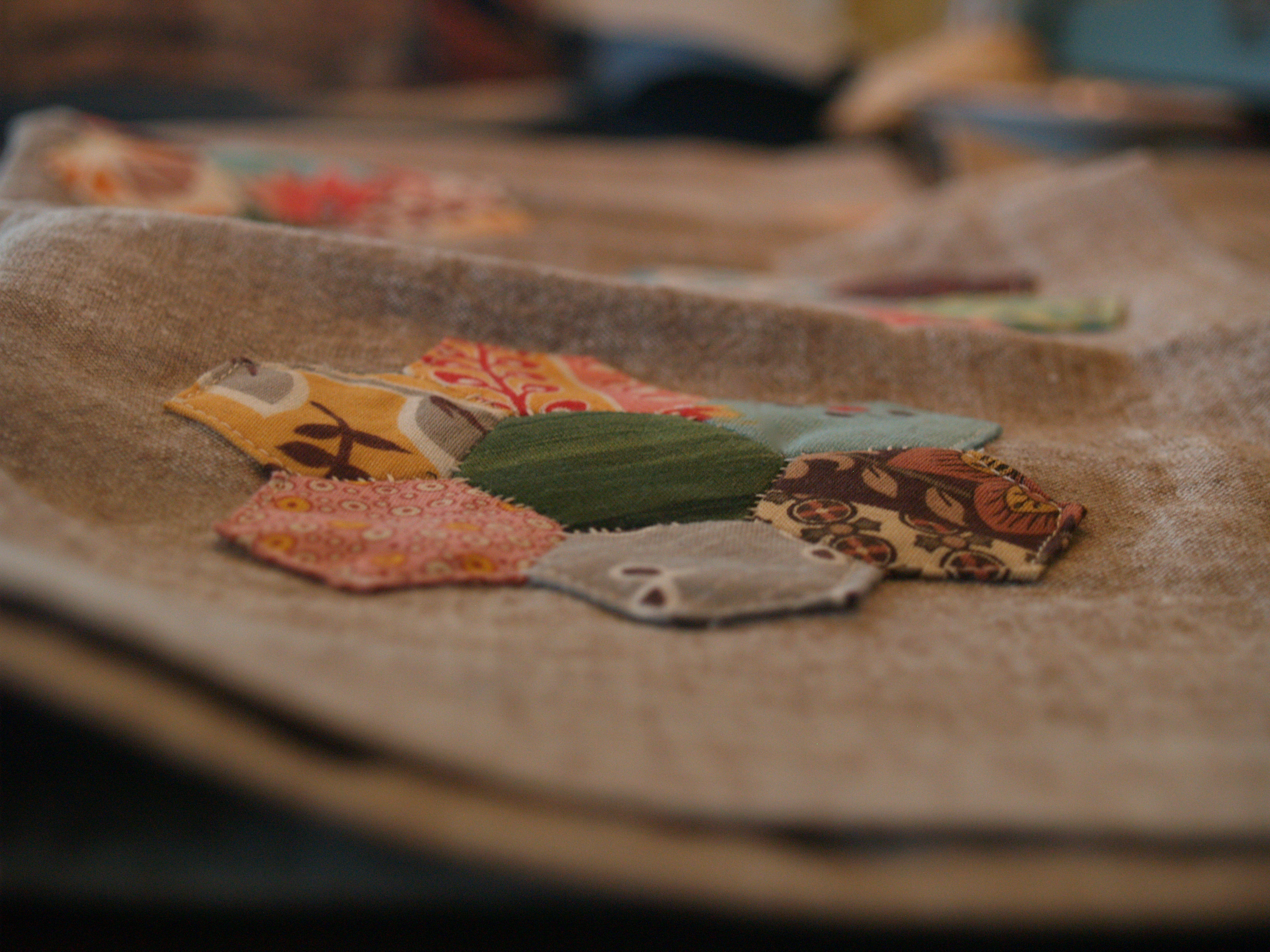
One other thing that makes me feel a little brighter is looking at this hexagon flower appliques on a set of napkins I made as a housewarming gift for a friend:
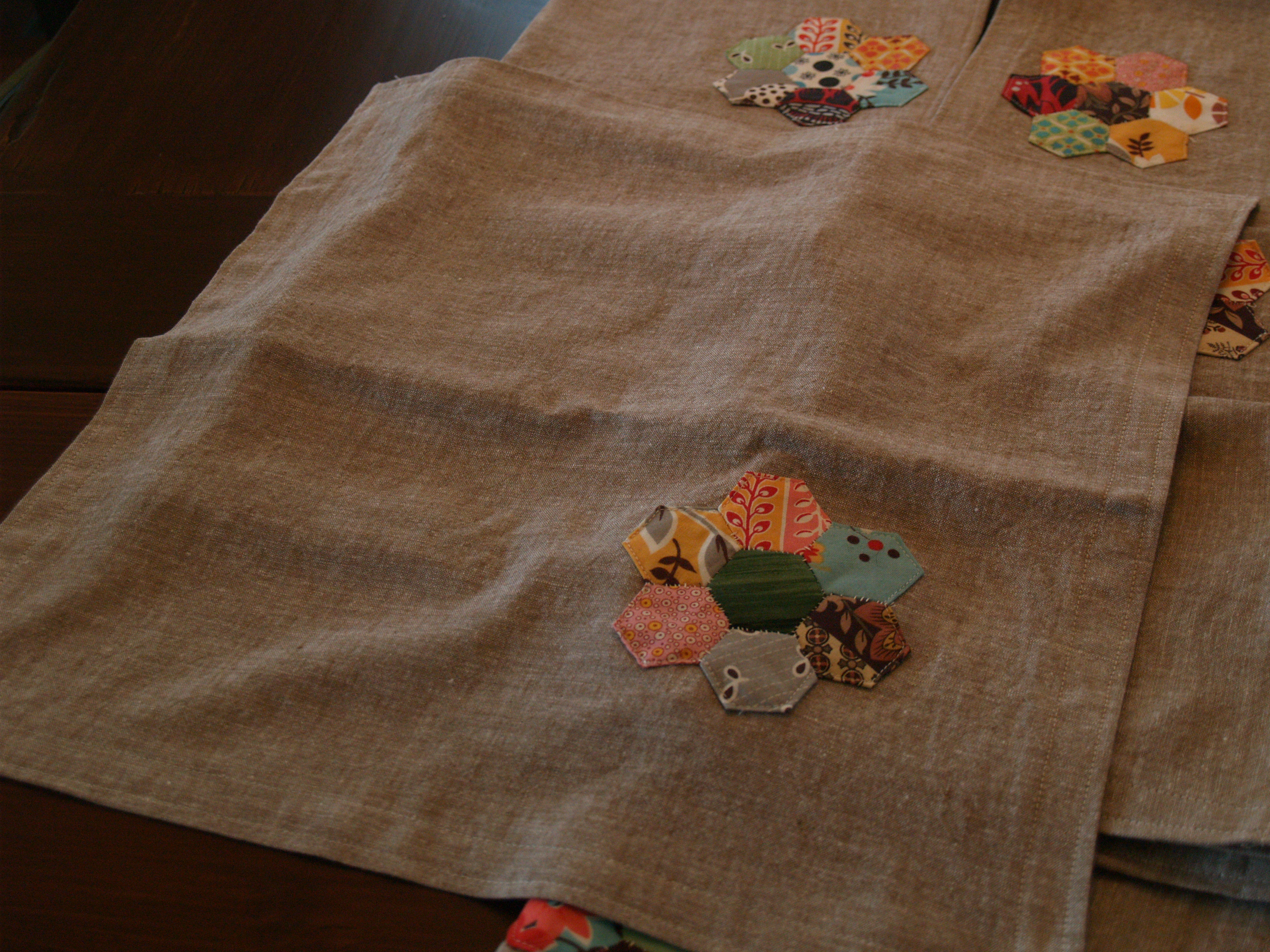
There’s something about their patchwork and wonkiness (my mitered corners didn’t turn out quite as square as I would have liked) that makes my heart lift a little. Which I suppose is the point of making pretty little things.
There was a time in my life when I could see no point to much that wasn’t functional – which lead to an impulse to make things that were primarily for use (as opposed to decoration). The more I delve into what actually makes my heart glad, the more I want to bring colorful touches to every object I wear or use in my home. Which is part of living in a better headspace overall, isn’t it?
It’s a trip, this body-mind thing we’ve got going on – and I’m looking down all available avenues for living the best life possible. Not a perfect life, but one in which my bad moods can be floated out by the things I do, the people I know, and the recognition that we all have days that start out bad, but we don’t have to get stuck in them.


 Red Cedar