Red Cedar
More apocalypse, less angst
Bloom!
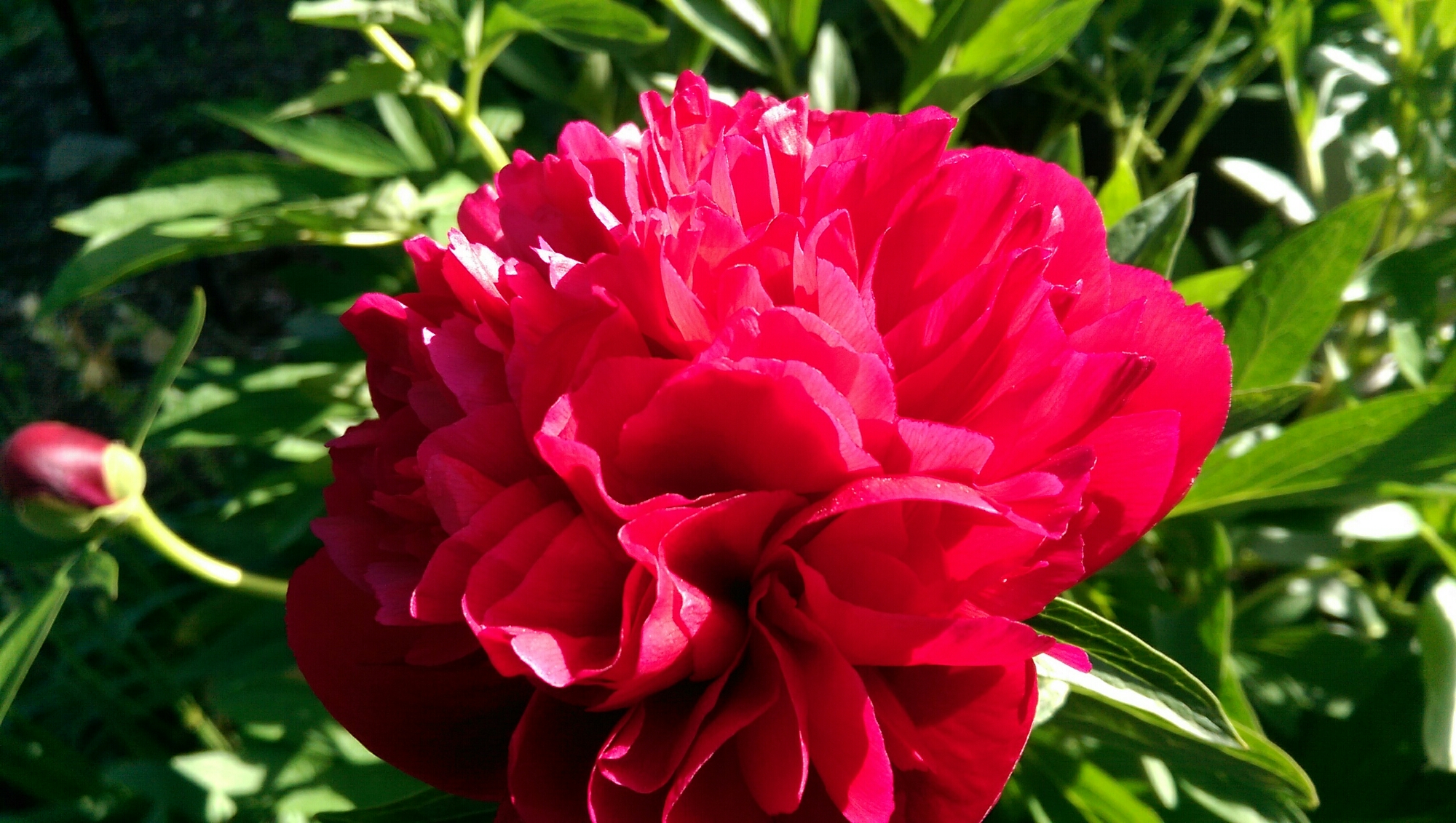
Left this morning for a quick trip to our property outside Princeton, but before I did I noted that the warm weather in Vancouver forced the peonies into full, brilliant bloom. My blueberries are going like gangbusters too!

Now that’s an ice cream cake!

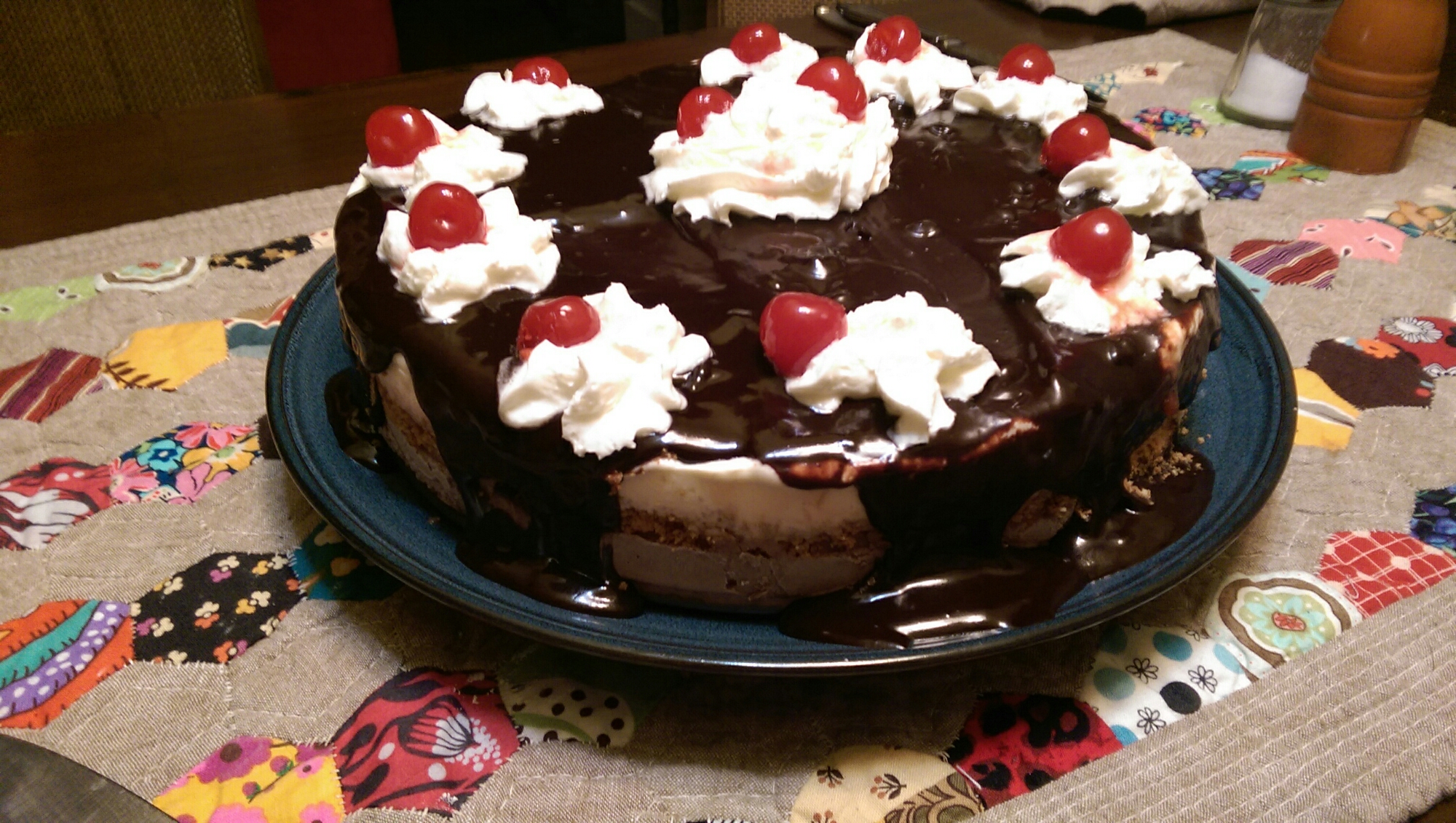
I don’t quite know what got into me but this year for Brian’s birthday I decided to make an ice cream cake. From scratch.
As you can see from the photo, and we had the pleasure of tasting last night, this turned out to be an unqualified success!
I used the Smitten Kitchen recipe for Hot Fudge Sundae Cake with the minor alterations of store bought almond cookies for the crust and whipped cream out of a can. And you know, it really wasn’t that difficult to pull off. The main thing is starting a couple days ahead of time so all the ingredients get enough cooling and freezing time.
If the idea of making a treat like this float s your boat then I highly recommend this recipe. It really is as good as it looks!
A festival of grievances
I can really only describe my meditation of this morning as a “festival of grievances” – the phrase which popped into my head mid-meditation as I pulled myself back (for the thousandth) time from thoughts about people who aren’t doing what I want them to do. My step-daughter didn’t acknowledge me on Mother’s Day, one of the members of my work team isn’t very flexible, I’m annoyed by my supervising professor from last semester for not providing comments on my essay, there’s a guy back east who is going to make updating an aspect of our intranet really difficult. Etc. Etc.
Once I owned up to the nature of my distraction, I was then distracted with thoughts about this post by my friend Carmen over at Bicycle Buddah in which she describes a meditation epiphany centered on the root of the dissatisfaction she is experiencing with her practice: “I am hoping that the experience will change. I am hoping that I can fix the problem. I am believing there is a problem to be fixed, and that there can only be one really satisfactory outcome….”
Which of course is the same item at issue with my own practice this morning. I am aggrieved with people because I *wish* or *hope* they would behave differently than they do. This is the heart of it. When I am angry with myself, it is because I wish I had behaved differently and I *hope* I can change myself in the future. It’s the crux of it when we’re unhappy – is that we wish it were otherwise. As I discussed with my counselor on Monday – the problem with my relationship with a certain family member is that I wish it were different. If I just accepted it as it is, and myself as having the relationship that I do – I would not be nearly so anguished about it.
Of course knowing something intellectually and accepting it in the heart-sense are two totally different things and the gulf separating those states is an awful lot of practice. Which is what I am doing every morning before work as I sit on my cushion and direct/redirect my thoughts towards my breathing. Being with what is, watching the emotions rise and move through me, knowing that the feelings are okay but they aren’t the whole of me, don’t have to rule me or my reactions, or complicate the present. Practice, practice, practice.
When I got off the bus downtown this morning I put that practice into action, raised my head and focused on my breath as I met the morning head on. And so much, as I attend to my work this morning, I am so much more accepting of what is. What is right now and not what should be.
Blueberry Lavender Mead Step Two
 Step two in the mead-making process happens 24 hours after the campden tablet is added to the honey-juice. The recipe in True Brews calls for a liquid mead in a tube, but I ended up with a different mead yeast that was liquid but required steps that involved leaving the yeast sealed in the bag while activating it and I missed that entirely. I am sad to say that even though I dutifully mixed it up with my boiling water and honey this morning, I came home to some very dead yeast (you really can tell when a yeast mixture is dead in that the liquid looks flat, has no bubbles and the yeast has sunk to the bottom).
Fortunately I had a couple packs of red wine yeast kicking around so I dumped one of those into a cup of the juice from my ferment – and within an hour it activated:
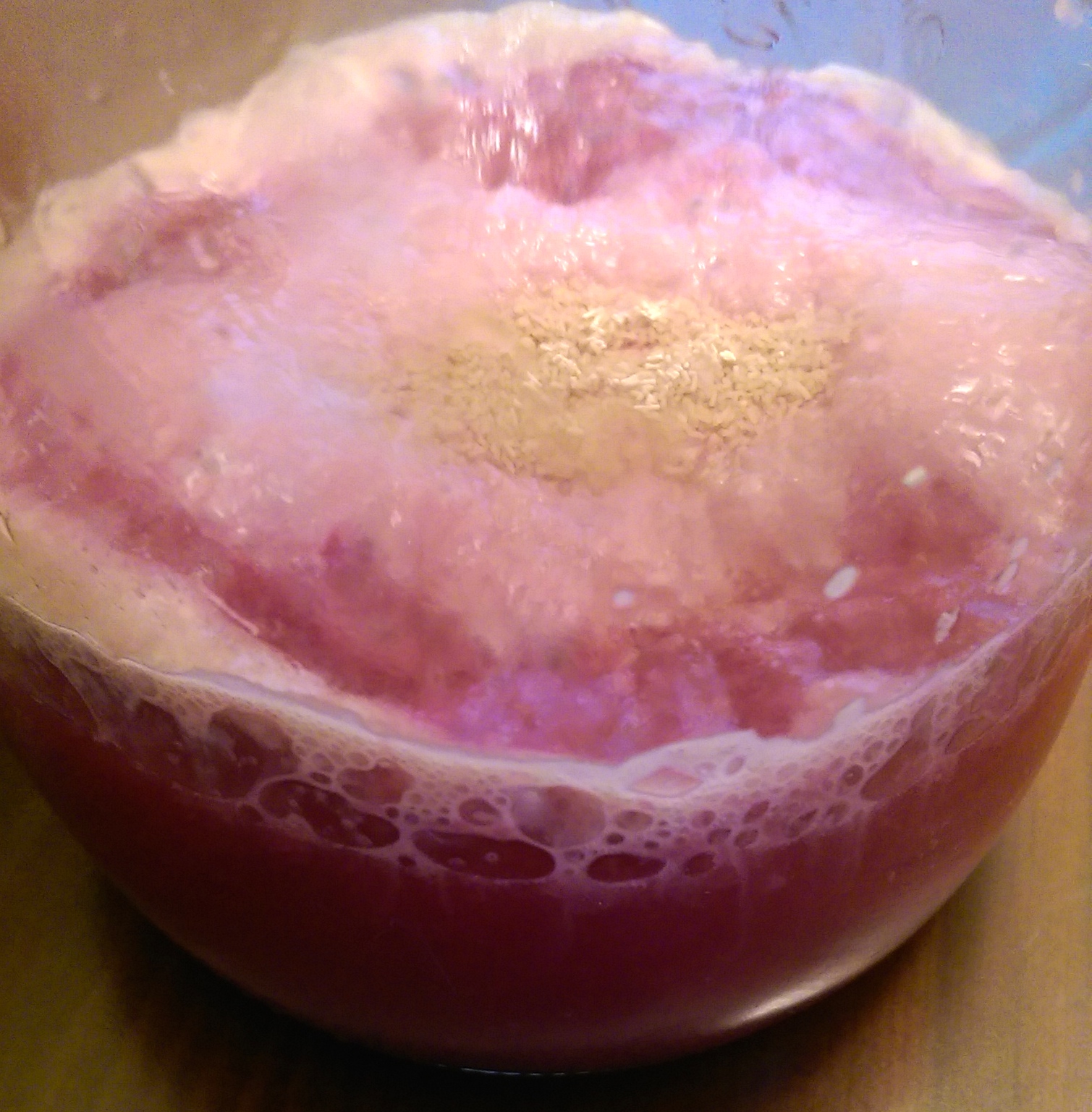 As I write this, the yeast is in activation mode – after about three hours of that I will add it to the honey-juice mix and then reattach the airlock. For the next week afterward I’m going to stir it once a day and otherwise leave it alone to do its thing.
The truest prayer I know.
“This is what you shall do: Love the earth and sun and the animals, despise riches, give alms to everyone that asks, stand up for the stupid and crazy, devote your income and labor to others, hate tyrants, argue not concerning God, have patience and indulgence toward the people, take off your hat to nothing known or unknown, or to any man or number of men—go freely with powerful uneducated persons, and with the young, and with the mothers of families—re-examine all you have been told in school or church or in any book, and dismiss whatever insults your own soul; and your very flesh shall be a great poem, and have the richest fluency, not only in its words, but in the silent lines of its lips and face, and between the lashes of your eyes, and in every motion and joint of your body.” ~ Walt Whitman


 Red Cedar