Red Cedar
More apocalypse, less angst
Post #3157: Loom talk
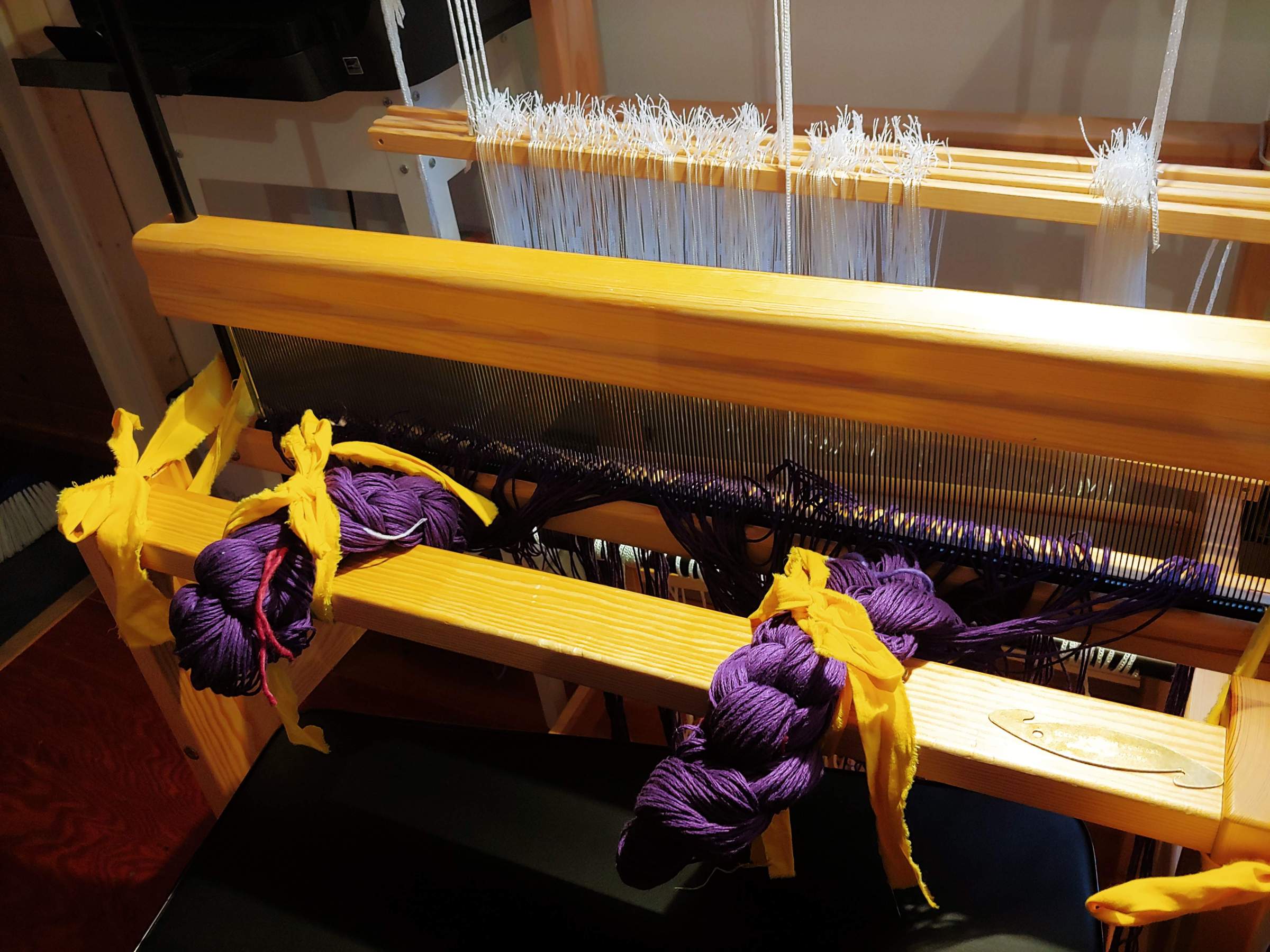
I started warping my loom for the first time in ages yesterday. Problem is, I decided to use a warping technique I’m not overly familiar with and I made a mistake right out of the gate. Fortunately, my warp chains are salvageable and I’m able to warp front to back which is the way I know best. Though I keep wanting to nail back to front, no matter which way I’ve tried, it doesn’t come easily to me. I think I might just be one of those weavers with a very strong preference.
I’m just hoping that while dealing with my mistake I didn’t get my warp chains too out of order. At least it’s a rug warp, and not delicate if and when I have to work through a tangle.
I haven’t put anything on the loom in several months because it’s seemed like so much work, and honestly, weaving is something I’m not very good at. While my sewing has improved to the degree where I’m happy with my skill level, the same is not true with weaving. I have a throwing technique that abrades my warps and breaks them, and my selvedges are wobbly. And while I know that these things are just a matter of practice, getting a warp on only to have finished pieces come out so-so is a bit of a downer.
So I’ve got to adjust my expectations, step back to see that sewing is something I’ve done for sixteen years now, and weaving not so much.
My plan is to get this warp on by the weekend so I can start weaving again. I’m also inclined to get a warp on my big loom soon since I have only warped it once since restoring it. I’m a bit afraid of it to be honest, and I have thoughts about getting rid of it in favour of an easier-to-warp jack loom. I think I need to work with it more before making that decision.
Post #3156: Things keep happening

You might have missed this on Friday, but I sent out March’s Comfort for the Apocalypse mailing titled Shelter in Place.
If you haven’t read it yet, I encourage you to do so and to subscribe if you like what you read. The monthly mailing is my attempt at writing longer reads on a theme – quite a different offering than this blog.
The month of March, particularly the latter half was a bit of a rush. I was in Vancouver for a week, then in rehearsals and the studio with Brian (and many others) for five days, I got sick, and then I had a union-related trip to Masset (in Haida Gwaii). I’ve been home for a few days now, with visits from friends, and I am so glad to have landed for a bit! Hearing the sea lions and watching the sun rise from my home office are grounding forces, and what connects me to a feeling of place in this turning of the season.
Through all of this I have somehow managed to keep up daily yoga, and meditation, and to some degree a regular creative practice. At least enough of a creative practice that I turned out an essay this month. My plan for April is lots of textile studio time. I’ve got plans to get one of the looms warped with a simple project, plus lots of sewing and textile collage ideas in mind.
Also – I have a large deck on my studio building that goes unused (except for the occasional time that Brian and I sleep on it). I’m planning to build a couple of work benches that will fit under the eaves and house an outdoor dye studio where I can experiment with plant-based dyeing of fabric and yarn. My goal is to have enough length so that I can paint warps if so desired, but also have a workspace for multiple people to come together for a workshop or learning event. To this end I’m going to build two tables with wheels that are 8 x 3 feet. These will store nicely under the roof overhang for the winter months, but can be pulled out and placed either end to end or side by side to create a long table or a square. Having not done much dyeing, I’m not sure how far down that path I’ll go – but work benches are always useful and all other supplies (buckets, pots, utensils, a coleman stove) are being sourced from the local recycling centre. It’s not a big investment except for in the time it will take to build the benches (a couple of days).
I’m home for all of the month of April (with a couple day trips to Nanaimo/Victoria) – so hopeful I can make some studio headway for the first time in awhile!
Post #3155: Keeping the doors open

This has been a bit of a week, but here I am and it’s Friday and I’m leaving the city in a few hours to go back to Gabriola Island where I will work on a recording project with my husband and others for the next few days. You know, in that other life where I am also a musician.
Yesterday was my union AGM, where I was re-elected president of my union local, and also facilitated the election of a full slate of other union officers. I have a love-hate relationship with this role, but at the moment there aren’t a lot of takers for such roles. We ran elections for seven positions yesterday and every one of them was acclaimed (no one ran against any of the candidates who put their names forward). Such is true of all voluntary organizations these days.
I woke up to hear the body count in the mosque killings in New Zealand this morning and I am really heavy about that at the moment. Such a loss of life at the hands of white-supremacy is shocking, not to mention the despicable nature of shooting people in prayer. Compounding that is what it exposes in a country generally regarded as moderate (I speak as a Canadian here). That is, though we have a surface culture that is polite, educated, and gun-controlling, there are other identities and behaviours seeping around the edges. This is not unlike attacks we’ve seen in Canada – mosque shootings, incel attacks on pedestrians, and the like. To those of us raised in the mores of a liberal and educated population, it feels fundamentally as though it comes from elsewhere. But when we reckon with it, of course we know that it doesn’t.
Working in my union capacity, I encounter people all the time who are struggling. Perhaps they have a pay issue, or a sick kid, are going through a divorce, or have a boss who is harassing them. All of these things arrive at my desk because ultimately they all impact how people generally show up in the world, and that includes work. Almost always I can do a little thing, even if its just lending an ear or providing a bit of advocacy support. Sometimes I can do a bigger thing like save someone’s job. But what I have mostly come to understand in this role is that *everyone* needs help at some point. The people I represent are unionized, have health benefits, and decent-paying jobs – we are privileged in all of those senses – and yet still we struggle, because everyone does. Whenever I get a really sad or difficult case I wonder, “what would happen to this person if they had no advocate, no good job, no extended health benefits to get them through this?” Because that’s most people. Most people don’t have these things and they suffer just the same hurts, but also bear the burden of poverty, social marginalization, exclusion from dignified work and so on.
The level of social alienation that must exist out there is staggering, and its precisely there that hateful and dangerous ideologies take root. Of course, not always, and not even mostly – but when alienation blossoms, it can bear a poisonous fruit. In some way it’s no wonder that these angry white shooters so often attack places of social cohesion – religious centres, schools, etc. While at first glance these attacks are motivated by anti-Muslim feeling (and I don’t want to downplay the racial dimension of this attack), but I wonder how much these are really sprung from a deep lack of connection to anyone else – a sickness born out of profound isolation fueled by Internet rage.
I wish I could end this post with some kind of an answer, a suggestion of where we look to fix this broken thing. Of course it’s not one thing, and it’s not that simple. It’s heavy right now. It’s intense. It’s a world we don’t quite understand anymore. All I can do is keep opening my door to people – my union door, my house door, my creative door, my religious door – and invite them in. There isn’t much I can do about these young men raised on porn and video games, growing up into adults who squirrel themselves away in their bedroom caves only to emerge in self-pity infused rampages. I suppose the rest of us have to become more numerous, more welcoming, and more open – if only so that we can be a majority in loving this world. Easier said than done.
All my love to those suffering this tragedy. I stand with Muslim people everywhere in opposition to Islamophobia and hatred.
Post #3154: A new tote for a new season
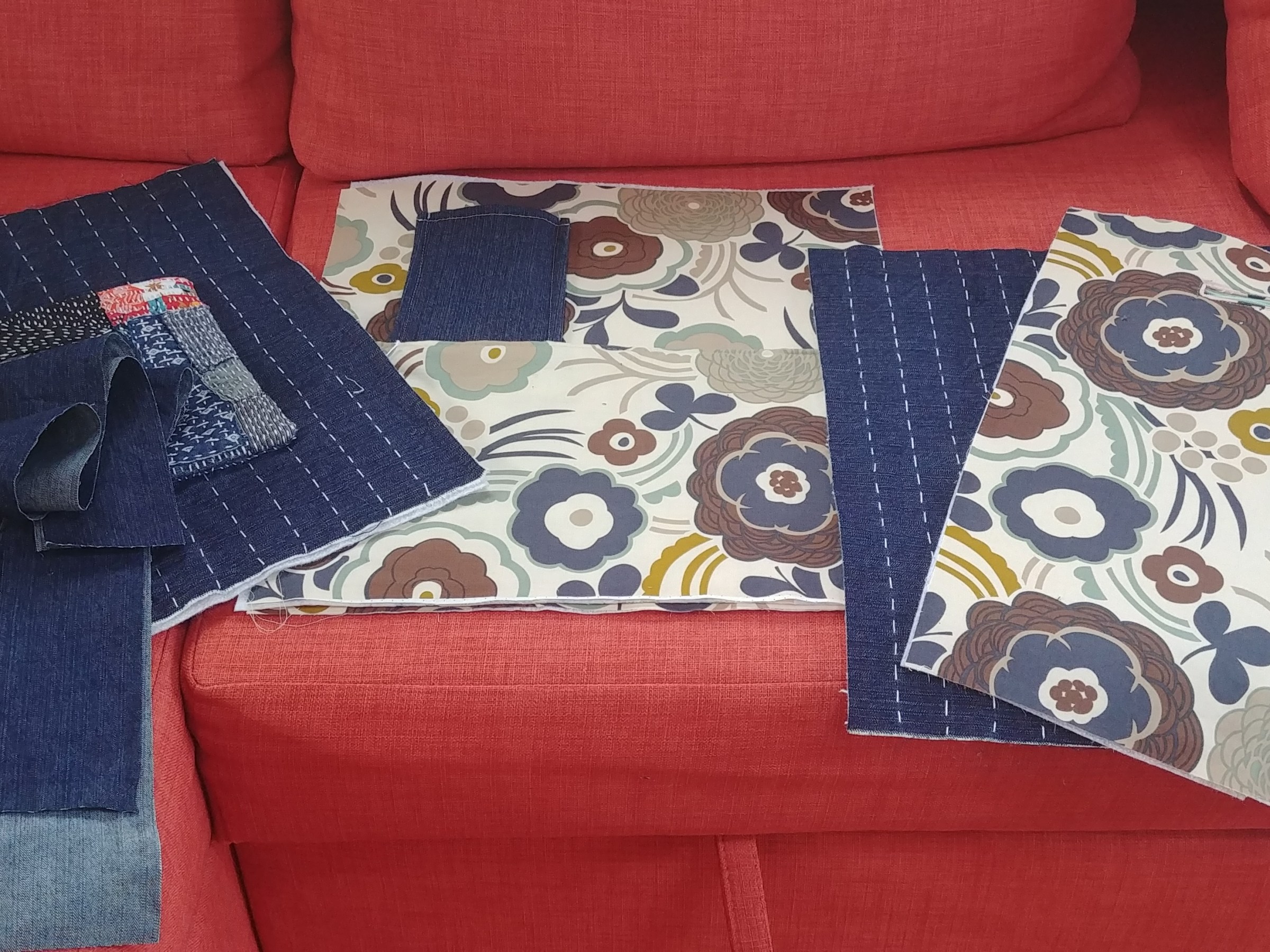
I’m heading into Vancouver for a few days which is not a by-choice kind of thing. I’ve got meetings, dinners and a trip to the Zendo planned which is all fine, but most days I would rather just be in my studio.
On the weekend I finished a new bag, which has been in the works since the late fall when I hand stitched the outside panels and made the boro piece which is now serving as an outside pocket.
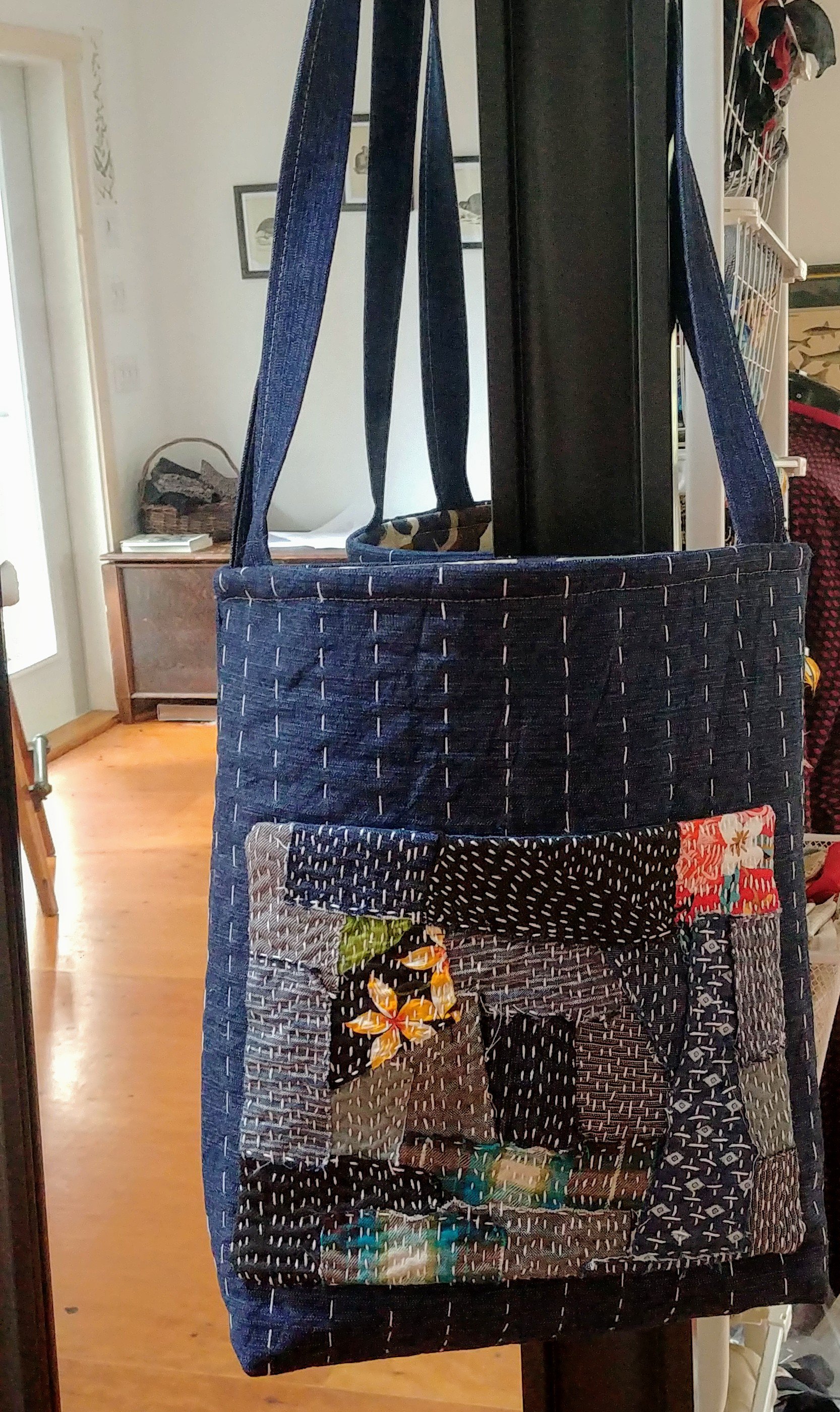
All materials in this piece except the lining are leftover from sewing garments for myself and my partner.
Inside I installed a zip pocket and a cel phone pocket. I also hella interfaced everything so this bag has a lot of structure.
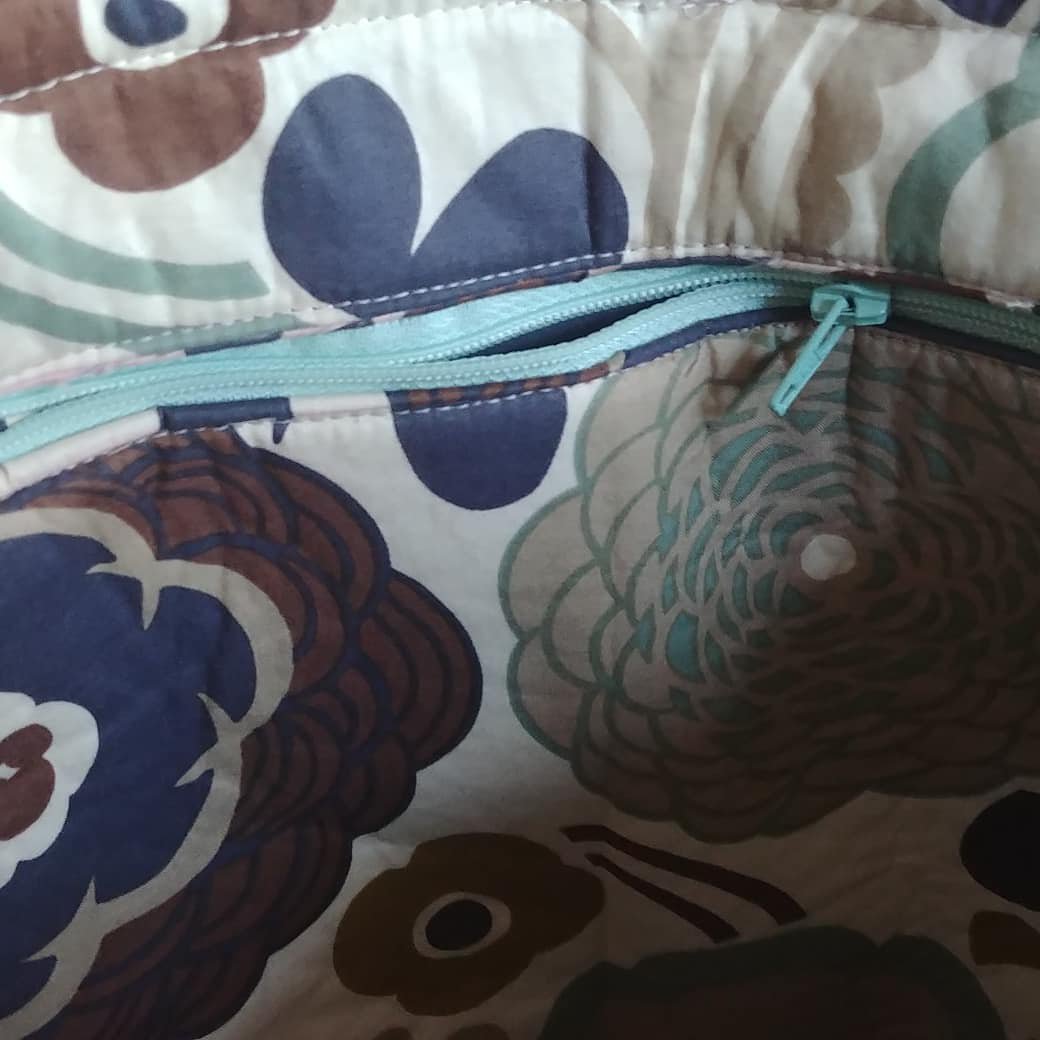
I carry a tote around as my main purse most of the time because I’ve so often got a change of clothes for the gym, an iPad, or a knitting project with me.
Since finishing it on Sunday, I’ve transferred everything into this bag and it’s travelling into the city with me today. A new catchall that reminds me of my studio wherever I go.
Post #3153: Making jeans (and the trouble with “denim”)
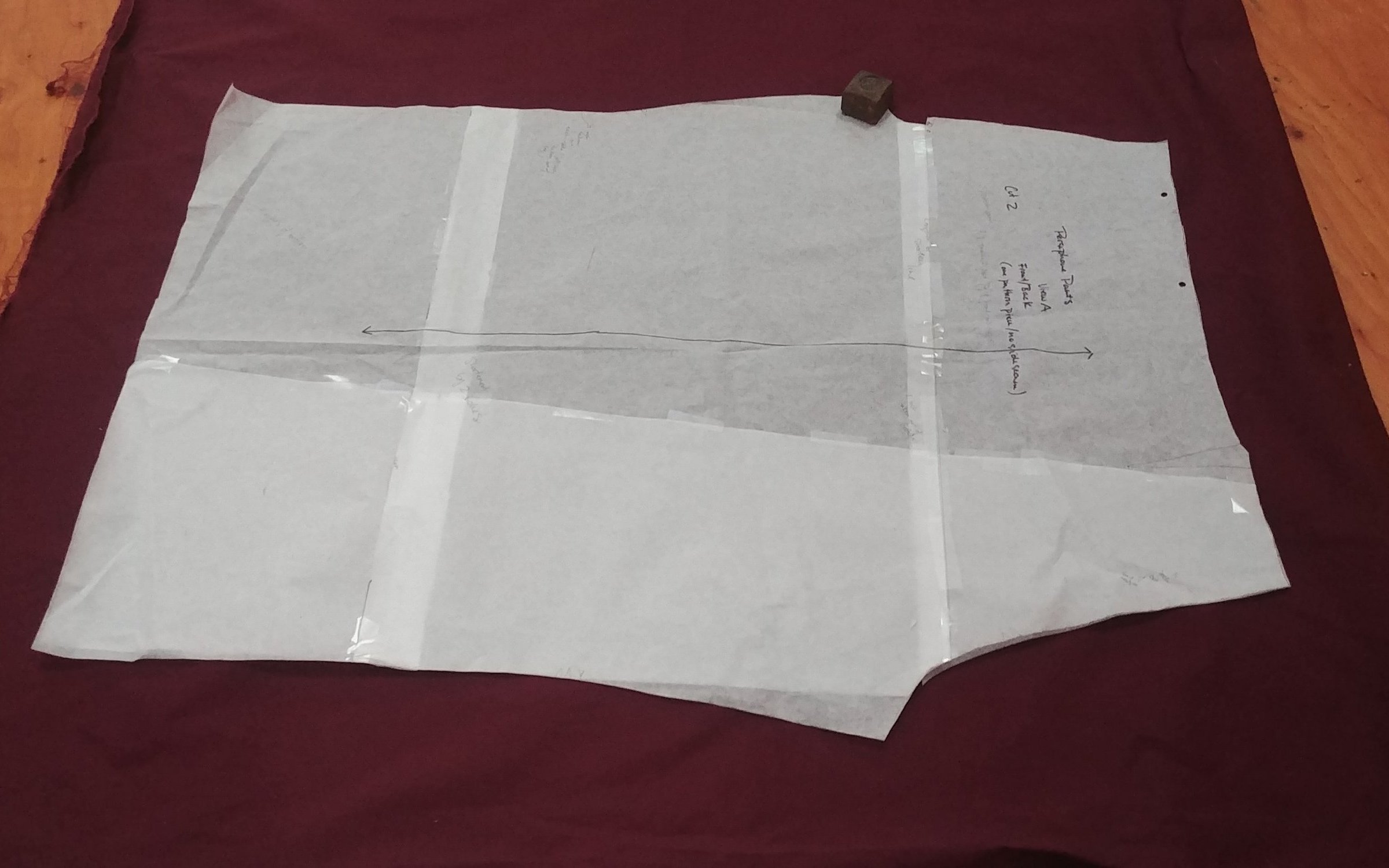
I made my first pair of jeans last week – albeit without all the contrasting stitching and rivets. The Persephone Pants have been on my list, and I decided to make my wearable muslin out of some inexpensive denim in my stash before cutting into the burgundy cotton twill I have envisioned them in.
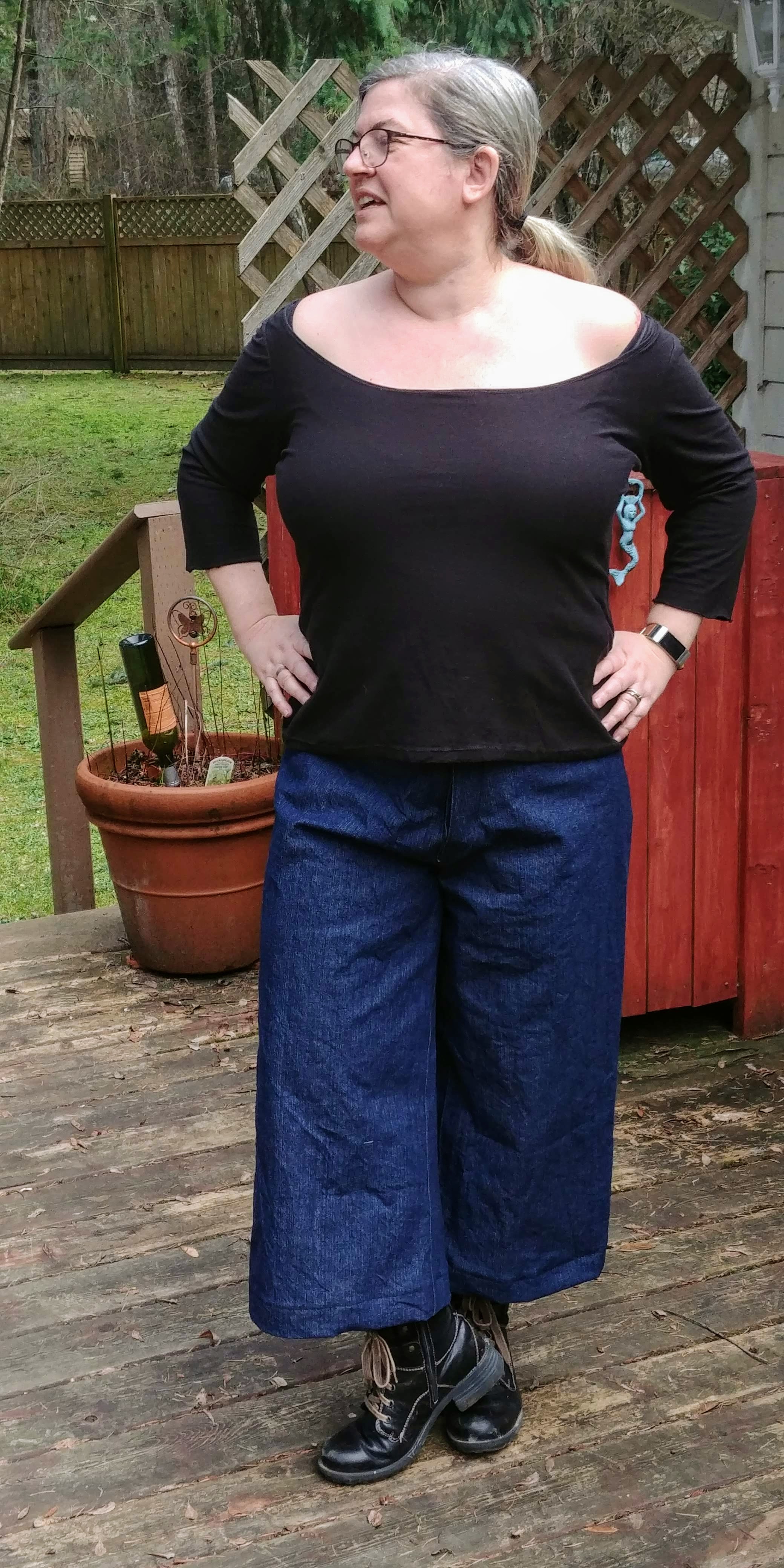
I’m pretty happy with how they turned out for a first try. Though you can’t see in this picture, they have a button fly, in-line pockets and belt loops! They are also really high-waisted which I think is flattering to my shape since I don’t have an overly-defined natural waist.
I have re-cut the pattern for my next attempt, taking out an inch of length in the crotch, a half inch out of the back waist, and an inch out of the leg width. I’m hoping these small tweaks will give me a better fit. I could have gone down a full size, but worried that might bring the waist in too much for comfort, so I tweaked instead. I’m cutting the fabric for the next pair today, and looking forward to working with a contrasting top-stitch thread and fine-tuning as I go. The Persephone is great in that there is only one piece per leg (no outside seam), and not complicated to put together as a result.
I have gotten interested in making pants lately, jeans in particular, because of the decline in quality in the ready-to-wear market over the past several years. It’s gotten so bad that even my partner Brian, who doesn’t sew or think much about clothes at all, has noticed it! I believe this turn is in large part due to the introduction of elastane (lycra) into almost all denim available to the consumer market. While this was initially driven by the consumer desire for skinny jeans, “stretch” or “flex” (depending on your gender), seems to have made its way into all fit types.
What this means is that a pair of denim jeans no longer lasts more than six months before the fabric puckers, or stretches out in funny ways. I started noticing this about four years ago. First it was a jean skirt, then a pair of everyday jeans – suddenly every denim item I purchased would get strange puckers within only a few months of use.
Recently Brian and I went into a mall in Vancouver, both of us in search of a pair of jeans that did not contain elastane. We went to American Eagle and a couple of other mall stores, and could not find a single pair that did not contain stretchy plastic. At one store we got into a conversation with the clerk about this, and he said “well, your problem isn’t the elastane – it’s because you are putting them in the dryer and the dryer breaks down cotton.”
Clearly, this piece of bullshit was delivered by someone who knows nothing about fabric properties, and was too young to remember having to “break in” a pair of blue jeans through many turns in the washer/dryer cycle. While it’s true that dryers do break down fabric, a good cotton fabric can stand up to many rounds in the dryer without falling apart.
The issue with modern “denim” is the introduction of plastic into the textile which creates many problems:
- both the spin cycle in washing machines, and the heat in a dryer, breaks down the plastic, destabilizing the fabric
- even if you never washed, or dried, your elastane-infused jeans, the simple act of wearing them will stretch out the elastane to the point of warping or breaking
- if you purchase jeans with stretch that have been distressed in the factory, this process of breaking down the elastane has started before you even purchase your new pants
- fabrics with elastane or lycra release microplastics into the sewer system (and thus the waterways of our world) every time they are washed
- fabrics with elastane do not fully biodegrade
The upshot? By putting plastic in our denim, companies have ensured that our clothing lasts a very short period of time, and then is not fully disposable when we throw it out after barely wearing it. Honestly, consumers should be appalled at this state of affairs – but because we’re all looking for “comfort” we tend to disregard the fact that we get less and less life out of our garments.
Some jeans manufacturers, such as Levis, and Calvin Klein, are still using standard non-stretch denim (and even selvedge denim in some cases). In case you are looking around and interested in high quality – look for Japanese-made denim. Denim mills in North America have largely been bought out by Japanese manufacturers, so that’s where you look for good quality denim fabric these days.
In general, the state of ready-to-wear clothing is nothing short of deplorable. Fabrics are of poor quality, construction is rushed, and almost everything is made in Bangladesh, a country where workers trying to unionize the textile industry are being imprisoned, beaten, and killed. If you try to go the other way and source ethical fashion, the garments are not affordable, and it’s impossible to know if companies are telling the truth of what’s happening in the factories they outsource to.
Gone are the days when people spoke proudly about the amount of wear they got from a garment. That talk has been replaced by “what a good deal” was had on a tank top of pair of jeans.
Every time I go into a clothing shop, these realities are staring me in the face, and so I almost always leave empty-handed. Being able to sew for myself is a privilege of time, space, and equipment – which I realize I am lucky to have. This gives me the ability to make some choices about the fabrics I wear, and the kinds of clothing I make for myself. I still have to be careful however, because the consumer fabric market has some of the same issues of poor-quality and adulterated fabric, that the ready-to-wear market has.
After the next pair of Persephone pants, I plan to make the Morgan jeans. My hope is to find a couple of patterns that work for me so I can be free of the poor choices on the rack, and create long-wearing bottoms that can be worn and mended for more than few months.
Want to see a video of the modern jeans-making process? I found this fascinating but stressful to watch because of the volume of material being pumped out into the world every day:


 Red Cedar