Red Cedar
More apocalypse, less angst
Bookish: Are we living on a new planet?
Following a long foray into fiction to the exclusion of anything else, I’ve had a spate of non-fiction come into my life this month – thanks to the Vancouver Public Library online ordering system which spit several books out to me just as my union/work schedule was getting quiet. This is the first of three I am reviewing this week. The other two (both) by Rebecca Solnit will come tomorrow.
Eaarth: Making a Life on a Tough New Planet
There are a number of quotes peppering the bookjacket that impress upon the reader the need to read this book, which made me wary at first. I have grown a bit tired of the “you have to read this” work on climate change, peak oil, and environmental collapse in general – particularly after coming out of some fairly radical environmental work. I’m pretty sure I know all the stats and I worry that reading more of them will just trigger me in ways that are stressful rather than energizing. But I picked up Eaarth anyway – and was compulsed to read it to the very end.
McKibben makes a forceful argument that the world we grew up in exists no longer, that climate change and resource depletion have combined in ways that are *right now* altering everything about our existence, even if we don’t realize it quite yet. This changed planet is so different from our old one that it needs a new name – hence the title Eaarth. His statistics and anecdotes are well-researched and hard-hitting – I found myself both incredulous and outraged for the first two chapters of the book as McKibben unrolls proof after proof of the planet’s changing ecosystems, the refusal of government decision-makers to take the crisis seriously, and what this potentially means to the future of human and animal life. But at the same time he doesn’t shut the door on the possibility of change, or the possibility of survival on the planet.
A friend of mine described hearing McKibben on the radio talking about the book and his organization 350.org as “presenting the most humane and compassionate argument I have heard on this subject” – which is the way he writes this very hard reality. In Eaarth, the ways in which we might change our approach to each other and our global habits are outlined in ways that seem practical – almost do-able. If only we can convince communities to act together to bring change on the macro level. If only we can work in our neighbourhoods to bring change right now on the micro level. It means a global commitment to bringing carban dioxide emissions down below 350 ppm and staying there. I means a local commitment to equality, community, and valuing life in everything that we do. It means more bicycles and less cars. It means more solar and community gardens. It also means ensuring that the message gets up through the chain that the people won’t support governments who don’t support life any longer. Which is all a tall order, but as McKibben argues, an essential one if life is to continue on the new planet Eaarth.
Even McKibben isn’t sure if it’s all too little, too late which is one of the things I appreciate most about his writing. He has the same doubts many of us have about our ability to do the things we need in order that to survive. But at the same time he understands the need for positive hope in examining the communities that are already working towards the change required for survival. Getting off the grid, producing more food right at the doorstep, developing networks of community support. There is a growing movement of this sort in North America and Europe – and there are growing movements of pressure in less-developed nations on the industrial world to change now, or else. Which is the small candle we need to hold to our future prospects.
I can’t recommend this book enough, for the importance of its argument and clarity of vision. For its compassion, and its hope. At first I was going to say – activists everywhere need to read this – but I think this is a book for everyone who wants to know where things stand and where they could end up if we don’t work together. If we don’t evolve towards a kinder, smaller, world.
Favourite Green 2010: Amish Deer Tongue

Even at almost-bolting, this is by far one of the most beautiful veggies in the garden right now with it’s tongue-shaped leaves curling out from the center stalk. Chosen on a whim from the West Coast Seeds catalogue, this is for sure a keeper in future gardens and I would highly recommend it for the following:
- super-crunch, crisp salad and sandwich lettuce
- bolt-resistant
- it’s edible even when it starts to bolt (not too bitter)
- it’s beautiful to look at
- it’s an heirloom veggie that you won’t find in the grocery store
Getting married.
In case you were wondering, yes. We are still getting married at the end of September though until this last two weeks we have done almost nothing about it. Really, it’s a wedding in two parts, with the most planning needed for the smallest (official) ceremony with the family – so what else do we need to do besides book a place and get an officiator?
Well, of course there’s rings and dresses and wine and food planning and – oh yeah – the marriage license…. which we’ve got on a long list of details we have to check off. Oh, plus we have to choose/write vows that aren’t cheesy or religious or embarassing.
But at least I’ve now got two of my biggest stresses over with – the dress (last weekend), and the rings (ordered yesterday). Because some of you have asked, and because I’m feeling showy – here are pictures of the rings and the dress (thank-you Internet). Now we just have to buy wine, the marriage licence and finish up the vows. Oh, and food for the after ceremony bit. At least it’s a small wedding!

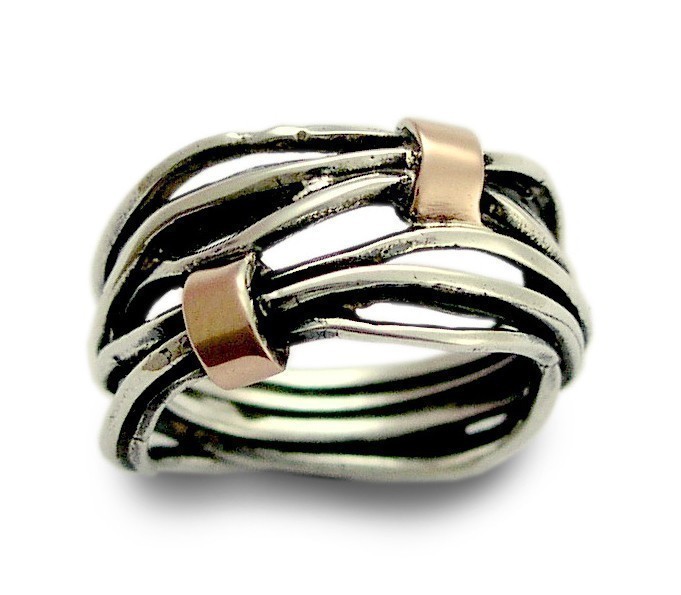

Subscribers. And Amazon.
I’ve noticed recently that notifications haven’t been going out to subscribers which I thought was the result of a wordpress upgrade and my failure to backup some aspect of my old folders. Turns out, it was a database error which only got worse until everything was fully corrupted. Yesterday someone in my collective restored everything, and I noticed last night when I was fooling around with an older post that my post-notifications are working once again!
The post I was fooling around with was an old book review post because I’ve finally decided to take a small step towards monetizing my blogs with the Amazon Associates program. I’m coming clean here so that you know when you purchase a book via one of my Amazon links on this site, I get a credit towards book purchases. That doesn’t mean I’m going to do more book reviews than I already do, or recommend things I normally wouldn’t, but I the links in my reviews and articles will go back to Amazon if you are interested in purchasing the books I talk about. I’m not expecting to get rich by this or anything, but it would be nice to support some of my terrible reading habit through my blogs if at all possible!
Beekeeping 101. (Top-Bar-Hive-Style)

So much going on in the garden and I haven’t had any time to write about it! Things coming out, things going in. I’ve got some new photos coming shortly of the end of July garden so you can check them out in the next day or so. In the meantime, I’ve got beekeeping tales to tell.
Despite my bee swarm disaster earlier this spring, I am still hellbent on having bees in our backyard, but I’ve decided that rather than just taking another swarm on without any preparation or experience (which wasn’t my plan last time, they really were just thrust upon me) I would like to learn a little bit about them first. So I’ve been hunting around for just the right type of course – one that wasn’t full already, and even more difficult, one which incorporated some other methods of beekeeping besides Langstroth. Specifically, I’ve had a bit of a fascination with Top-Bar-Hive beekeeping ever since my friend Kyla introduced me to the The Barefoot Beekeeper
So was I ever tickled to find out that Ward Teulon at City Farm Boy and Brian Campbell at Blessed Bee Farms were offering a Top Bar Hive Course right here in East Vancouver over the weekend! And not only that, my friend Sam and I ended up being the guinea pigs of the workshop and having all Brian’s expertise (and Ward’s top-bar hives) to ourselves for the day.
Brian Campbell runs a Community-Supported-Apiary out in Richmond and is a certified bee-master and master gardener – and without a doubt one of the most knowledgeable people I have ever met on the subject of plants and bees. Additionally, he practices and teaches ethical beekeeping, stressing that while urban hives need management and intervention, it is to assist rather than exploit in the pursuit of healthy urban bees. Which is exactly what I’m looking for in backyard bees – while the honey is nice, I’m more interested in raising the stock of urban pollinators and having a healthy hive.

The course covered bee biology, bee population dynamics, integrated pest management, potential pests and predators (of which we are numero uno) neighbourhood plant survey, and the basics of the top bar hive (plans for these hives are online, so we didn’t talk construction of them much). Plus we had sideline conversations about the politics of commercial beekeeping, the history of beekeeping in North America and a ton of other things. And of course, there was the hands-on part where we donned bee hats and looked into the hive, handled the frames full of wax, honey and bees, did surveys of the brood cells, pollen and honey – and as a “test” – picked up a bee by the wings with our bare hands (drones don’t sting – and they are really easy to tell apart from the workers).
Also, because of a little accident, we ended up eating some honeycomb straight from the hive, though that wasn’t really supposed to be a part of the course. All in all, it was pretty awesome, and I’m pretty sure about two things now:
- I am totally, even more, into having bees in our backyard.
- There is so much to know about beekeeping!
And as much as I’m going to go with top-bar-hive to start (it just seems like good bee practice, and I don’t need 200 pounds of honey), while leafing through a book from Brian Campbell’s library – The Quest for the Perfect Hive: A History of Innovation in Bee Culture
In any case, the course was really worthwhile, and I learned enough to get started without being too overwhelmed. Ward was a great host and Brian was such an awesome teacher (he is great at making analogies to explain things, covers the material thoroughly, and doesn’t make you feel stupid when answering your really basic questions – plus he’s really accessible) – that I would highly recommend any of these bee-school courses at Ward’s place. It’s great to be able to get this kind of training only a bike-ride away from my house rather than going all the way out to Langley or Abbotsford as so many of the agri-learning courses are.
I’m going to build my TBH this autumn in preparation for bees next March – and I am more than a little “buzzed” at the prospect!


 Red Cedar