Red Cedar
More apocalypse, less angst
Irreducible existence.
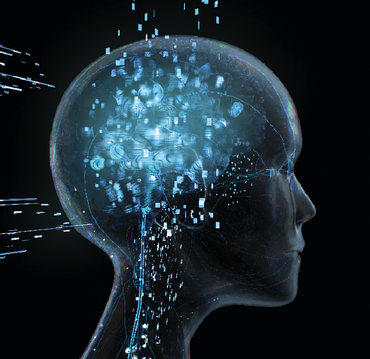 I’m afraid that my post on Descartes’ Discourse on the Method of Rightly Conducting One’s Reason and of Seeking Truth in the Sciences (1637) is going to be a bit tangential. And perhaps a bit of a cheat, because I want to focus entirely on his maxim: I think therefore I am and what I feel about that statement in light of notions of technological singularity and the futurism of the brain. That feels like cheating to me because I am not mining the text for some gem of insight – but really I don’t feel like delving into whether Descartes’ “proof” for the existence of God has merit or not at the moment – so there we are.
“I think therefore I am” is probably one of the most famous maxims in western thought. First posited by Descartes’ in Discourse on the Method, it forms the basis for his philosophical proof of existence and is an expression of his mind-body dualism. In this conception of human existence the mind and body are separate from each other – “I think therefore” not only proves existence – but it squarely places existence in the mind rather than the body. Another way of putting this is expressed in the term by British philosopher Gilbert Ryle “ghost in the machine,” whereby the human body is merely the mechanical cage which houses the immaterial mind. Or to put it another way, we are all just brains in a pod a la the film The Matrix which is about as Cartesian in outlook as it gets.
As is technological singularity – which came up on my Facebook wall this week (in relation to something really tangential from this whole topic) – a nice serendipity while I was re-reading Descartes’ Dicsourse. During our Saturday class, one of my peers made the comment that they did not understand how the mind could be seen as independent from the body since the mind would disappear when the body had physically ceased to be, making them the mind dependent on the body and not separated. And here is where “the singularity” would take Descartes to the next logical level – this would be the futuristic study and development of the mind-machine merge. In this future, not only would machines develop higher intelligence than humans currently hold, but a fusing of the biological with the programmable would allow for humans to possess that higher intellectual capacity. Not only that, the upload of minds into actual (not metaphorical) machines would give humans a kind of immortality that Descartes could never have dreamed of. Of course there is more to “the singularity” than this, but for the purpose of this post I am going to stop here for the discussion.
Rather than arguing about whether or not the technology forecast by the futurists is a possibility, or would ever be made accessible to us garden-variety humans – I am going to go back to the dualism of Descartes and probe this a bit further. What we are basically looking at here is “substance” dualism which divides mind and matter into two fundamentally different substances. Because of this substance division, the mind can never be reduced to the physical body and its mechanics. This is quite a lot like the religious conception of the soul which also views the body as the material substance which houses the ephemeral being. The problem with this of course is the question of how the material could have an impact on the immaterial, and also how the immaterial could impact the material. How does the mind/body intersection work if we are rendered of two completely different substances?
As strange a problem as that seems to be, watching a film like The Matrix (1999) reminds us of the prevalence of this idea in our culture. That we could believe in humans imprisoned in pods by their robot overlords and hooked up to a computer which synthesizes human life, belies our acceptance of the idea that our experience does rest solely in our minds. Watching that film we don’t say – “that’s preposterous” because so much of rationalist discourse is predicated on this very belief. And its this belief which gives hope to the futurists who wish to transmit that ephemeral mind into a different machine when our own physical bodies “give up the ghost”(pun intended). (Unlike Descartes, the film posits emotional existence as part of the mind, which the philosopher had reduced down a reasoning device only).
On the other side of things – the material body side – remember the human genome project? That was the gene-mapping project that scientists promised us would get to the bottom of “what makes us human”. By mapping the genes of animals and humans alike, we were supposed to discover what fundamental genetic building blocks separated us from each other – a definitive proof for human existence on the physical side. What we actually discovered is that humans have two more chromosome pairs than rats. Okay – we found out a lot more than that – but when it actually came down to the divisions between one species and the next, counting chromosomes didn’t turn out to tell us much more about what makes a human, human and what makes a rat, rat.
Like the human genome researchers, the futurists promoting technological singularity rely on Cartesian dualism in their optimism. But I’m afraid that like the genomic researchers, they will only be disappointed if they believe this is the path to immortality. I have a hard time understanding how this type of division is supportable with all the science of the past two decades showing that intelligence and “the brain” is located throughout the body, that our nervous system informs our emotional well-being in complex ways, and – most important at all – that our emotions are not separate from our rational beings. (At the end of this course we are reading Antonia Damasio’s book Descartes’ Error: Emotion, Reason and the Human Brain which I haven’t read yet – but does examine the faults of dualism from a scientific perspective.)
Of course Spinoza argued way back in 1677 that the mind and body were one continuous and seamless unit – but of course that would have contaminated the notion of “pure reason” and so his perspective was set to the side. This has allowed all sorts of fantasy notions about human reason, now (through the genome project and the singularity) informs fantasies about ultimately discovering humanity through one side (or other) of the duality that is supposedly comprises our composition.
None of this is really gets to the correct philosophical response to Descartes, of course. I am not using logic to out-argue the sentence “I think therefore I am.” Nor do I believe that the statement itself is off-base. One of the ways we understand that we exist *is* through our thoughts. But it is also through our feelings. And while we may know of our existence through our thoughts, this does not leave them unsullied by the neurological impulses of our beings. Not that one could expect Descartes to have understood that in the 17th century (after all, as he noted, he couldn’t possibly perform *all* the scientific experiments himself) – but I am challenged by the notion of mind-uploaded-to-computer equals immortality. I am also challenged by why anyone would want to live on indefinitely, or why anyone would want to live purely in the intellect when there is so much great physical pleasure that we would miss out on – and no, I don’t believe that is programmable.
PS. I should very quickly note before breaking off here that I do believe that super-intelligence is possible with machines – and I don’t reject the singularity futurists outright – but I do question the continuation down the Cartesian path when so much of our current science challenges us to think otherwise.)
PPS. You know what else the singularity futurists make me think of when I see headlines like Time Magazine proclaiming immortality by 2045? Flying cars. It seems to me that flying cars have been a promise of the future for some decades now, but as far as I can tell we’re nowhere near those either.
PPPS. Also, I don’t think the problems on the planet are due to a lack of intelligence (the singularists super-intelligence is supposedly going to save us all from ourselves). We know full well *what* to do, we just don’t want to do it.
Okay. Enough!
Two-faced Folly

It’s interesting how our attitude towards a work shapes our understanding of it. Last month, I picked up In Praise of Folly (Erasmus, 1509) in a desultory way, read it quickly and took no pleasure from it. But after hearing a classmate sing its praises on the weekend, I read it through again in a more studied fashion – and found much to enjoy in this crucial Renaissance work. The sharp wit of Erasmus and the targets to which he directs it only serve to support an underlying question about the nature of reason and folly in society. Are we really creatures of wisdom and reason? Do we even like wise people? Or is the Goddess of Folly continually present – in our most basic coupling instincts (marriage, bearing children), in our politics, academics, and (most importantly in the last third of the critique) our religious institutions?
It is difficult by today’s standards (in North America) to imagine the control the church had on intellectual discourse during the time of Erasmus, and reading this work one wonders that the author was not branded a heretic and burned for his particular words directed against the offices of the cardinals and popes. But perhaps Erasmus was only reflecting what was a much greater tide of change as his world galloped from the medieval superstitions into an intellectual humanism beginning to flourish across Europe – no work derives entirely on its own after all. Some have suggested that because Erasmus took a satirical tone, and posited the essay in the voice of the Goddess Folly, he was able to take greater liberties than if he had been writing as himself. It’s hard to imagine why this distinction would matter to the rulers of his day, since the public presentation of ideas is the greatest threat. It could also be that because Leo X (soon afterward elected Pope) regarded the work as simply humorous rather than scathing critique, that Erasmus was spared. (This of course would underscore the point being made in the essay – that of the sheer stupidity of many learned people).
In any case, Erasmus ascribes most of our natural human impulses to Folly, as well as much of our religious, academic and national belief. He encourages the reader to look beyond appearances and to understand that each person lives a double life – “And what is all this life but a kind of comedy, wherein men walk up and down in one another’s disguises and act their respective parts….. Thus all things are represented by counterfeit, and yet without this there was no living.” That is, we need to get beyond what we hold as evident and rational to see that all of society is subterfuge designed to get each of us through the day. Even if we could be the wise Stoic, or learned philosopher – we are asked whether this is a worthwhile aspiration:
And much good to them with this wise man of theirs; let them enjoy him to themselves….. for who would not shun and startle at such a man, as at some unnatural accident or spirit? A man dead to all sense of nature and common affectations, and no more moved with love or pity than if he were a flint or rock; whose censure nothing escapes; that commits no errors himself, but has a lynx’s eyes upon others; measures everything by an exact line, and forgives nothing; pleases himself with himself only; the only rich, the only wise, the only free man, and only king; in brief, the only man this is everything, but in his own single judgement only; that cares not for the friendship of any man, being himself a friend to no man; makes no doubt to make the gods stoop to him, and condemns and laughts at the whole actions of our life? And yet such a beast is this their perfect wise man. But tell me pray, if the thing were to be carried by most voices, what city would choose him for its governor, or what army desire him for their general? What woman would have such a husband, what goodfellow such a guest, or what servant would either wish or endure such a master?
All of which is to ask the question (as he does later very explicitly) is life even worth living without Folly (the passions). And are the so-called wise men really what they present themselves to be? A lengthy set-up for the last third of the essay which lays into the Catholic Church and its offices (not religion itself) for the hypocrisy with which they govern and pontificate:
And for popes, that supply the place of Christ, if they should endeavor to imitate His life, to wit His poverty, labor, doctrine, cross, and contempt of life, or should they consider what the name pope, that is father, or holiness, imports, who would live more disconsolate than themselves? or who would purchase that chair with all his substance? or defend it, so purchased, with swords, poisons, and all force imaginable? so great a profit would the access of wisdom deprive him of — wisdom did I say? nay, the least corn of that salt which Christ speaks of: so much wealth, so much honor, so much riches, so many victories, so many offices, so many dispensations, so much tribute, so many pardons; such horses, such mules, such guards, and so much pleasure would it lose them You see how much I have comprehended in a little instead of which it would bring in watchings, fastings, tears, prayers, sermons, good endeavors, sights, and a thousand the like troublesome exercises. Nor is this least considerable: so many scribes, so many copying clerks, so many notaries, so many advocates, so many promoters, so many secretaries, so many muleteers, so many grooms, so many banks: in short that vast multitude of men that overcharge the Roman See — I mistook, I meant honor — might beg their bread.
This is not the dignity of the apostles, says Erasmus, nor is it the acknowledged folly of life that he argues is contained in the teachings of Christ (who rides a mule rather than a lion). This is also not the amiable flattery that gets us through the day, or the folly of the arts that draws men to one another. This is a much darker “inhuman” aspect of folly – the double-face used against humanity, pernicious in the same way that flattery can be on the tongues of “treacherous persons”.
As I was doing research on the Protestant Reformation – I noticed that today is the anniversary of the 95 Theses nailed to the door of the Catholic Church by Martin Luther in 1517 (Happy Birthday Calvinism!). Only six years after the formal publication of In Praise of Folly church reform became *the* dominant movement – questioning the church’s right to interpret the Bible and hide its true words from the people (through the use of Latin), the ability of the church to sell absolution in the form of indulgences, and the authority of the Catholic Church in general. To be clear, Luther and Erasmus had philosophical differences, but much of what Erasmus critiques the church for is taken up in the 95 Theses. And as I said before, no work comes from a vacuum, each of these philosophers being informed by the rumblings of those around them.
Upshot of all this? I’m back on my “why ideas matter” schtick – which is evident in an influential work like this. Not only was this work important in allowing a venue for critique of the hierarchically closed and superstitious society , but the development of the printing press allowed for its wider distribution, hence it got everyone talking. A likely direct result of that is the 95 Theses by which European thinkers start their slow creep away from an unassailable church and towards informed critique, science, and reform of social institutions. As we shall see in Kant’s essay next week, we don’t get the Age of Enlightenment (1700s) without breaking from the rigidity of the Catholic Church first – and on it goes.
Founding mythologies
(A follow-up rough draft to my original post on Genesis).
Most women intimately know the curse of Eve – the moment in Genesis where God mandates that childbirth will always be painful before casting our founding mythlings into the wilderness. From this we draw our monthly expulsion of egg and tissue as the reminder of God’s epithet and we call it so. “The curse” being one of the many euphemisms used to describe that period of blood flow – our shame for the sin of the apple. Bad woman who sought the fruits of knowledge and so brought upon the downfall of our rather simple Adam. Then again, Adam took a bite of the apple too, didn’t he?
And we forget that as punishment for his role in the whole Eden debacle Adam also received a specific curse. More painful to our human legacy than Eve’s small burden – Adam’s curse was nothing short of civilization. For God says to Adam “cursed is the ground because of you; in toil you shall eat of it all the days of your life; thorns and thistles it shall bring forth to you; and you shall eat the plants of the field. In the sweat of your face you shall eat bread till you return to the ground, for out of it you were taken; you are dust, and to dust you shall return.” Which is where our civilization begins: the advent of agriculture.
As with our monthly bleeding, we accept civilization as part of our natural state of being. Ten thousand years is a long time after all, we can hardly be expected to remember that we once inhabited the earth as a minority population alongside much larger animal kingdoms – that before our mouths were filled with dust, they were fed by the wild in which we lived. But those who told the first stories (that were eventually written down onto those scrolls which became the Old Testament) remembered. Not only did those voices remember, but they could see the uncivilized tribes right outside their own doorsteps – and they must have felt they had some explaining to do. How else can we understand man imprisoning himself in the yoke, lashing himself to the plow? Only divine punishment could take us from there to here. We didn’t willingly choose it, did we?
But of course human transitions don’t work that way. They aren’t a punishment, nor are they a conscious choice. The movement from hunter/gatherer to shepherd to agriculturalist flowed over thousands of years as populations expanded and shrank, as the climate changed and the ice receded. It would have been as simple as nomads wandering through the same territory year after year, leaving seeds behind and harvesting their next time through. Or a particularly good cave for keeping a flock or banking food against future want. Perhaps one year the snows never came and so instead of moving on a people decided to stay. As much as we want a single, linear narrative of civilization – it takes hundreds of individual and collective decisions to add up to our steel and concrete present.
It’s safe to say if Jack and Jill Cromag could have forseen what their tendency to settle would eventually wreak on their beautiful green earth – they would have packed up and kept roaming. Such is hindsight, but here we are.
***********
Adam and Eve beget Cain and Abel. Abel, the shepherd with whom we side for his gentleness and fealty is murdered brutally by his brother, the farmer. Despite having the mark of evil delivered by the Lord, Cain is allowed to live.
Why exactly? Because Cain, embodiment of agriculture, must slay the shepherd in order for humans to get from there to here. It was not possible for our forefathers who wrote on those scrolls to envision giving up a pastoral existence for any other reason than violence or force. These changes need some acknowledgement in the form of powerful stories – which informs us that the whole project of civilization was questioned at its outset – contested as it emerged. Certainly, later wars between the “barbarians” and the “civilized” are ample evidence of exactly that. Even to this day there are some 50+ tribes extant in the world who reject modernity in so much as they can avoid it altogether. The advent of agriculture was by no means a *given*, but the emergence of certainly needed an explanation.
By the time we’d figured it out though, it was too late – as Genesis demonstrates in the story of Joseph which dominates the end of this most precious first book. Not only does this new reliance on agriculture (not to mention the rise of cities and the dispersal of peoples) leave us vulnerable to famine. We are now more vulnerable to each other. Through the power of foresight (storing food in advance of a famine) – Joseph is not only able to amass personal wealth but also to enslave all the people of Egypt who are weakened by starvation on behalf of the Pharoh. Having turned their entire existence over to the civilizing influences of agriculture, they are unable to return to another mode of living in their impoverished state. It is too late for the people of Egypt now “owned”. Let’s not forget, we mythologically regard Joseph as a good guy – a victim of personal tragedy who masters his own fortune by sucking up to power. Just as we are encouraged to identify with the business-owning class of the early-21st century, the early story of Joseph chides us that we can not get along in the world if we don’t somehow identify with our captors.
Joseph Campbell theorizes that myth is present in our society “to come to terms with the world [and] harmonize our lives with reality,” and Genesis is a collection of them to remind us that the social order we live in needs explaining. Far be it that we believe Hobbes and his “solitary, poor, nasty, brutish, and short” description of our natural state that leads us into our bargain with the beast – the very founding stories of Judeo-Christian existence (not to mention those of many other cultures) demonstrate the sense of helplessness with which humans were plucked from their wild garden and dropped into the arms of the Pharoh.
Which society? Through the lens of King Lear
(What follows is a somewhat stream-of-conciousness entry about King Lear – the process of writing this helped me immensely in getting my thoughts straight after a somewhat plodding read of the text).
I am really hoping that in-class discussion helps to illuminate King Lear a bit more for me. While I recognize this is considered to be Shakespeare’s master work, a multi-layered dramatization with complex meaning – I had a difficult time getting past the hysterical tenor of the scenes involving “Tom” the madman and the Fool, not to mention the fact nearly every single character dies by the end of the play. (Yes, I recognize this is a tragedy, but ten people have to die to make a point about pride?).
As much as I hate to admit it, I found it difficult to get past the “dramatic” nature of this play to get much out of it, and so I’ve since turned to other sources in order to find its deeper meaning. This helps me to place Shakespeare’s King Lear in a similar context to The Prince – that is a society in transition from old-world rules, loyalties, hierarchies and commitments – to a new ruthless and competetive society which favours a different kind of reason, and a different kind of person in success. In Shakepeare’s day, the medieval world was shrinking away to the emergence of a new political reality – seen in the contrast between Edmund (the bastard) and his half-brother Edgar (the honourable rightful heir) and it seems that the audience of Shakespeare would have recognized this tension in their own social order, thus responding to these characterizations quite readily. Likewise, the doting King Lear, is supplanted by his daughters Goneril and Regan who use their newly-inherited estates to attempt to crush their father’s world. It should be noted that Edmund, Goneril and Regan all die by the end of the play, a statement by the playwright about which side of the transition he feels most comfortable on.
But these characters – representative of the new individualism of Shakespeare’s time – are not entirely unsupportable either. We are somewhat sympathetic to Edmund in particular – though he plots against his half-brother Edgar in seeking the father’s estate – for he is to be left with nothing because of his uncertain parentage, while Edgar is somewhat the weaker of the two (in intelligence certainly as he falls for the most dubious ruse of his brother). So there is a great deal of moral ambiguity in the play’s villains. It’s not as simple as to hold up the old order to repulse the new “man” – for we are to understand that these characters have very real grievances stemming from the old way of doing things.
Another way into understanding the intent of the play is to look at the characters who are on the side of moral “good” – Cordelia (who is honest and caretaking), Kent (who is loyal and caretaking), Edgar (who exhibits patience, who cares for his elder father, and restores right at the end through killing his half-brother Edmund), the King of France (who believes in courtly love without the promise of inheritance), the Duke of Albany (who argues against his wife and her sister-in-law a their greed, and in the end attempts to restore Lear to the throne – settling with a sharing of power between Kent and Edgar). Each of these characters (not all of whom live or are victorious in the end) embodies an ethic of care for each other, in addition to upholding some aspect of the medieval order – birthright, chivalry, care for elders and respect for “natural order”, loyalty to the “natural” king or queen, etc. These are the characters with whom we are to side, even as their weaknesses and character flaws are exposed.
Nature is also hard to ignore in this play – as much of the most dramatic action takes place outside during a blindingly fierce storm – not to mention the words “nature”, “natural” and “unnatural” being mentioned more than forty times in the course of the play (thank Wikipedia for that fact!). Many of these references have to do with human nature, and the so-called natural order of familial and social relations. When Cordelia defies her father – for instance – he is quick to call her unnatural and tell her that nature could not tolerate her treatement of him. Fundamentally the question becomes one of how human nature is most rightfully seen by Elizabethan society. Is it Edmund or Edgar? Goneril/Regan or Cordelia? The Duke of Cornwall or Kent? Is human nature caring or selfish? Both? What does a society in transition reflect about human nature?
Ah, and there’s an interesting question: for one type of society puts a primacy on some aspects of human nature, where another type of society idealizes another – indicating that at the very least, our “natures” are flexible to our context. Unlike Machiavelli’s The Prince, King Lear leaves open the possibility that humans can behave in ways that are caring, generous, altruistic – and still succeed given the right social conditions. It’s just not a given that the forces of good will win out, and in the interim there may be a lot of violence and bloodshed with casualties on both sides. So there’s that to consider.
There are, of course, many other symbolic readings of the play one can undertake – feminist, Freudian, Jungian and the like – but having read through a number of interpretations, what resonates with me best is that which examines the context of a shifting social order. Perhaps that’s the materialist in me?
Tomorrow I am going to post a second piece on the Book of Genesis which explores the contested nature of the emergence of civilization – and I think Lear posits for us the same kind of debate on the emergence of individualism in society. Our stories are the internal social debates of our time – and as is evident in Genesis and in Lear (and in so many other stories that we tell each other over history) – no social transition goes uncontested. And further to that? The stories we tell each other *do* matter, our ideas matter – because they shape our actions, which shape our society. Lear is a piece of a debate that ultimately is won by the other side, and we are living proof.
Autumn in the ‘hood

There’s snow on the North Shore mountains this morning, but down here in East Van it’s still glorious autumn colours. I love these bright fall days we’ve been having!


 Red Cedar