Red Cedar
More apocalypse, less angst
Leaving a less-than-beautiful corpse. (Dorian Gray)
[youtube:http://www.youtube.com/watch?v=nNIR-dqoJk8%5D
My recent reading has been all worshippers of the individual from the 19th century – Kierkegaard and Nietzsche most recently – but not until I read Oscar Wilde’s A Picture of Dorian Gray did I quite see Wilde’s connection to these philosopher’s of “free spirit”.
A Picture of Dorian Gray can be found on Wikipedia after the SOPA blackout ends if you are looking for the plot summary – but in brief it is the tale of a young gentleman who pledges his soul in order that he may stay forever young. Instead of having to experience the ravages of age and experience, a portrait of Dorian begins to take on the ill effects of the corrupt life he has begun leading. Free from the constraints of normal men, Dorian pursues a path of hedonism that includes allusions to sex (with both men and women), drug use, the corruption of others and finally, murder.
More fairy tale than horror novel, one wanders through Wilde’s themes of art and artifice, the nature of reality, individualism, hedonism, immortality, the value of youth and the duplicity of modern life. A simple tale on the one hand, but with each of its main characters (Dorian Gray, Basil Hallward the painter and Lord Henry – Gray’s friend and mentor) putting forward various perspectives on what a life truly lived should look like, and specifically, what the life of the artist should look like. As Wilde himself commented about his work – these questions were autobiographical in nature: “Basil Hallward is what I think I am: Lord Henry what the world thinks me: Dorian what I would like to be–in other ages, perhaps.”
It is Dorian who represents a certain debate about the meaning of life, or exceptional existence – following in Lord Henry’s assertion that “…. if one were to live out his life fully and completely, were to give form to every feeling, expression to every thought, reality to every dream — I believe that the world would gain such a fresh impulse of joy that we would forget all the maladies of mediaevalism, and return to the Hellenic ideal — to something finer, richer, than the Hellenic ideal it may be.” Because Dorian is extremely well off, and with his additional charm of never physically wearing the effects of his lifestyle – he is free to live the life of the elect. That is the life of one who pursues aesthetics without committing to them, one who pursues experience without having to pay for it in any way.
Where Basil Hallward is an artist (the painter who commits Dorian’s likeness to canvas) living a somewhat reclusive life, touched with deep feelings of love and depression (that is, struggling with himself) – the aesthete is not burdened with the actual weight of creation and instead builds himself by identifying with the creations of others. Early in the novel Basil demonstrates this dichotomy in saying “An artist should create beautiful things, but should put nothing of his own life into them.” Whereas Dorian puts a great deal of stock, of his own life in fact, into a creation that belongs to someone else. Much later in the novel (as Dorian has become increasingly evil) we see how much stock he puts in this creation and his visceral connection to it – “On his return he would sit in front of the picture, sometimes loathing it and himself, but filled, at other times, with that pride of individualism that is half the fascination of sin, and smiling, with secret pleasure, at the misshapen shadow that had to bear the burden that should have been his own.”
Through the progression of the novel we can see several dualities that Wilde sets up – like this one of artist/aesthete: body/soul, individual/society, sense/intellect, beauty/ugliness are all touchstone points in the novel. Dorian for all his appreciation of the duplicity of his own life, seeks a very one-sided existence rooted in body/individual/sense/beauty from the beginning. Though many examples of this can be found, one particularly striking one (which is reminiscent of Nietzsche and later Camus as well) is found in:
“To be good is to be in harmony with one’s self… Discord is to be forced to be in harmony with others. One’s own life — that is the important thing… Individualism has really the higher aim. Modern morality consists in accepting the standard of one’s age.”
Though towards the close of the novel, Wilde makes a strong argument that neither Dorian, nor anyone else can live on one side of the glass and that each side of these dichotomous pairings requires a response from the other. In a powerful paragraph we see the torment of Dorian, a creature whose soul is as ugly as the painting he has stashed away – we see that his pursuit of the senses, of the aesthetic – has only lead him to the other side of the circle where he is now stuck in his own diminished state:
It is said that passion makes one think in a circle. Certainly with hideous iteration the bitten lips of Dorian Gray shaped and reshaped those subtle words that dealt with soul and sense, till he had found in them the full expression, as it were, of his mood, and justified, by intellectual approval, passions that without such justification would still have dominated his temper. From cell to cell of his brain crept the one thought; and the wild desire to live, most terrible of all man’s appetites, quickened into force each trembling nerve and fibre. Ugliness that had once been hateful to him because it made things real, became dear to him now for that very reason. Ugliness was the one reality. The coarse brawl, the loathsome den, the crude violence of disordered life, the very vileness of thief and outcast, were more vivid, in their intense actuality of impression than all the gracious shapes of Art, the dreamy shadows of Song. They were what he needed for forgetfulness.
Interestingly, Wilde places the blame for this state of Dorian’s entirely on the portrait – or perhaps aestheticism generally – for who but a young man raised in a particular aspect would sell his soul in order that he might live a physical ideal forever? (I ask this question knowing full well that we are living in a heightened age of narcissism and that there are millions of shallow people like Dorian who would gladly have chosen to do this).
In his article “How Oscar Wilde painted over “Dorian Gray”” in the New Yorker from last summer, Alex Ross argues
It was the portrait that had done everything.” Art is not innocent, Wilde implies. Violence can be done in its name. Indeed, the twentieth century brought forth many Dorian Grays: fiendishly pure spirits so wrapped up in aesthetics that they become heedless of humanity. Wilde’s anatomy of the confusion between art and life remains pertinent with each new uproar over lurid films, songs, or video games.
Reflecting on it this way it seems we live permanently in the time of Dorian Gray, in a culture that posits an ability to live on a single side of the dichotomy without consequence – in a society of rights without responsibilities. As Dorian experiences, and as Francis Fukuyama argues in Our Posthuman Future – once we are divorced from the consequences of our physical selves – the final links between cause and effect are removed. This removal unhooks right from wrong, disables empathy, and Fukuyama would argue – sets the stage for a radically different human nature (and not a nice one either).
It’s interesting that Wilde’s book caused such outrage when it was first published, as promoting moral decay. In my reading, Wilde is not promoting radical individualism, in that we see the truly separated being of Gray die in a state of conflict and turmoil. Rather I see him as posing the questions of his time, and writing the answers on the corpse of our literary anti-hero Dorian.
Design notebook: First finished coat
 So this is the first wearable outer garment that I’ve made – an unlined wool coat with buttons and everything!
Vintage wool from an estate sale, wooden buttons from Button Button, plus Butterick Pattern 5569. A full post about it should be up soon at the Sew Weekly shortly. I’ll link to it when it is.
In the meantime, I’m feeling might proud about this particular garment. Fits perfectly, warm enough for most Vancouver weather and cost less than $20 total. Not bad.
Travels with Mary.
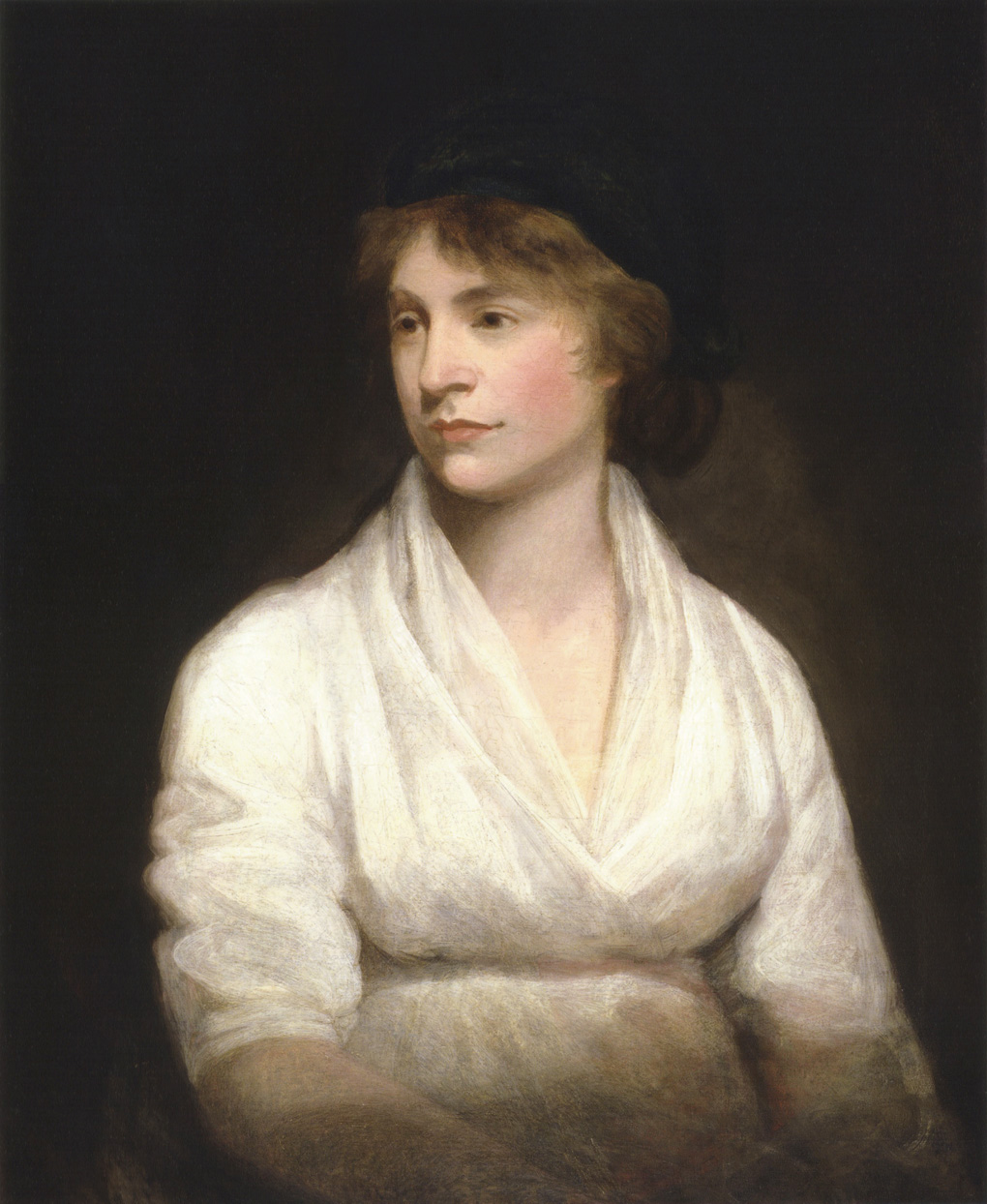 I am mulling over Waiting for Godot while listening to Max Richter’s The Blue Notebooks, and watching the snow fall outside the window. A combination which seems destined to produce an upwelling of emotion if ever there was one. But instead of writing on either Beckett or Richter at the moment – I am going to focus on Mary Wollstonecraft’s Letters written in Sweden, Norway, and Denmark. (Side note: if you have never listened to Richter I highly advise it, he is on my top list of composers in the modern classical genre).
“Travellers who require that every nation should resemble their native country, had better stay at home.” Letter I
Wollstonecraft’s Lettters, written during a trip to Scandinavia in 1795 and revised for publications afterwards, is a far more engaging affair than one might think at first glance (I’m not much of a collected letters fan to start with). For not only does it reveal some remarkable insights about that region of the world naturally and socially, but it gives the reader a glimpse of the indomitable spirit that Wollstonecraft possessed. Her purpose for the journey is to track down a missing ship loaded with silver which her lover Gilbert Imlay had commissioned in support of the French Revolution – and so directed – this woman demonstrates a courage nothing short of amazing. At the very start we are treated to a description of arguing a ship’s captain into allowing her a boat to drop Mary, her infant daughter, and her maidservant off on a desolate lighthouse station islet where she negotiates a pair of lighthouse keepers to take her to mainland Norway. (This so she doesn’t miss the port which she must stop in to collect information about the whereabouts of the ship.) Throughout the book we are treated to these kinds of scenes involving very difficult and mostly solitary travel in countries of (according to her) hospitable but rough cultures.
What is probably most important about this collection – in addition to the ethnographic sketch of Scandinavian life during this pre-industrial period – is Wollstonecraft’s exploration of the sublime developed in her poetic reflections on the rugged natural landscapes she traveled through.
Where Vindication of the Rights of Women (which we read last semester) relied solely on rationalist argument to establish the truth as Wollstonecraft believed it (that is that women had inalienable rights just as men did) – Letters is much more in touch with the felt-sense, and the emotional truths that Mary saw reflected in stone and sea. Notable about this journey is that the author was undergoing a significant heartbreak at the time, had just survived a suicide attempt not long before, and also makes frequent reference to being in a weakened health state due to her recent pregnancy and labour. This would have been a time that Wollstonecraft’s interior emotion matcher her external viewpoint on the world exquisitely (and painfully) – giving rise to some beautifully emotional passages.
She describes some of her struggle in Letter I thus:
How frequently has melancholy and even mysanthropy taken possession of me, when the world has disgusted me, and friends have proved unkind, I have then considered myself as a particle broken off from the grand mass of mankind; — I was alone, til some involuntary sympathetic emotion, like the attraction of adhesion, made me feel that I was still a part of a mighty whole from which I could not sever myself — by snapping the thread of an existence which loses its charms in proportion as the cruel experience of life stops or poisons the current of the heart.
And we can see her personal fear of emotional exposure in this following passage on nature in Letter VI:
Nature is the nurse of sentiment, — the true source of taste; — yet what misery, as well as rapture, is produced by a quick perception of the beautiful and sublime, when it is exercised in observing animated nature, when every beauteous feeling and emotion excites responsive sympathy, and the harmonized soul sinks into melancholy, or rises to extasy, just as the chords are touched like the aeolian harp agitated by the changing wing. But how dangerous is it to foster these sentiments in such an imperfect state of existence; and how difficult to eradicate them when an affection for mankind, a passion for an individual, is but the unfolding of that love which embraces all that is great and beautiful.
Passages like these give us a connection to writer locked in intimate struggle with herself and others – and picking our way through her carefully chosen words, one can’t help but acknowledge the universality of what she reflects on. “How dangerous it is to foster these sentiments in such an imperfect state of existence” exhibits that very real fear we live in when we wonder if our hearts and lives have been placed into the wrong hands for safekeeping. When we hinge ourselves to another in love – how frightening that is. And the more open we are to the beauties and marvels of the world – provoked by nature – the more open we are to her miseries and dangers as well.
As she worries aloud for her daughter so she worries for herself: “I dread lest she should be forced to sacrifice her heart to her principles, or principles to her heart.”
And in several passages, Wollstonecraft shows us the solitude, the sovereignty in which she finds her peace:
Here I have frequently strayed, sovereign of the waste, I seldom met any human creature; and sometimes, reclining on the mossy down, under the shelter of a rock, the prattling of the sea amongst the pebbles has lulled me to sleep — no fear of any rude satyr’s approaching to interrupt my repose. Balmy were the slumbers, and soft the gales, that refreshed me, when I awoke to follow, with an eye vaguely curious, the white sails, as they turned the cliffs or seemed to take shelter under the pines which covered the little islands that so gracefully rose to render the terrific ocean beautiful.”
This peaceful solitude in which reason is used to reflect on the emotional responses demonstrates the counterbalance to Wollstonecraft’s depression and angst about the current state of her affairs back in England (where her lover was now carrying on a new romance unbeknown to her – though probably suspected). Separated from society and yet bound to it by a thread, there is the comforting hand of the natural order writ large on the landscape.
Of course she does not skimp on her cultural and political observations, her reflections on the lot of women in society, and the possibilities for revolution – giving the modern day reader a portal through which to understand the history we shared with Mary and the world we have built since then. Her book went on to great critical acclaim and was one of the most influential works in the budding Romantic movement – in particular Wordsworth, Coleridge and her second daughter’s future husband Percy Shelley. For all the fraught musings of her journey, this proved to be one of Wollstonecraft’s most influential works.
Design Notebook: A red dress
 See this dress? This is a lovely ModCloth number which has inspired me to make my own version for an upcoming sewing challenge. I just bought three metres of wool crepe at DressSew and an absolutely perfect button at Button Button. I also bought a little bit of red satin for the facing and the sleeve binding.
Now I just have to modify the pattern from this week’s dress to make less of a v-neck and I’m good to go. (I am not going for the gathers on the bustline – busty girls don’t need extra fabric bunching around that part of the body).
I am just finishing a jacket at the moment (well half-way done, not quite at finishing) as part of a “button” challenge. That should be done by Sunday, latest. Then I get to cut into the red wool crepe. I plan to have this new dress in time for Chinese New Year and my birthday. Fingers crossed that it works out – I don’t have a decent red dress in my wardrobe (and you know what they say about women who wear red dresses!).
Job and the problem of evil.
(My classes start again tonight and I am really looking forward to being the first presenter of the semester. What follows is my presentation on Job to lead discussion).
The Book of Job appears in the Bible’s Old Testament and is written in the form of a didactic poem set in between a prose prologue and epilogue. As Northrop Frye points out, it is neither a comedy or tragedy in the classical sense, but instead takes the form of a Platonic Symposium whereby a problem (in this case the question – “why do bad things happen to good people” or “why does evil exist n the world”) is approached through a number of perspectives represented by the different speakers. Because of its poetic form, the Book of Job is believed to be an earlier literary work, probably 4th or 6th century BCE, later inserted in the bible.
While the Book of Job asks a single obvious question, the themes it deals with are complex and include challenges to concepts of the nature of evil, free will, faith, compassion, blame and innocence, and the nature of God. Trial imagery is very prevalent throughout – Satan translated literally to “the adversary” and not the Devil of the later Judeo-Christian tradition – Job frequently relies on the language of justice in pleading his case to whoever is listening.
So back to the central question, the Book of Job is one of the most widely-known texts in the western tradition to explore the whys of suffering in the world. For, as Epicurus postulated in his riddle – if we are to perceive God as good, and all-powerful, how do we reconcile this with the suffering that happens in the world and the evil that befalls each of us. Logically broken down it looks like: 1) If an all-powerful and perfectly good god exists, then evil does not. 2) There is evil in the world. 3) Therefore, an all-powerful and perfectly good god does not exist.
Philosophically there are several possible answers to this – as Voltaire explores in Candide, the doctrine of Optimism is one such answer. That is, while something might appear evil in our narrow and immediate view, in the broadest possible context it will turn out to be the best possible thing that could happen. We see some of this perspective among Job’s friends who come to debate with him the meaning of his struggle. Another way of dealing with this question is to recognize that God is not the most powerful being and that the forces of evil are at least as powerful. But in the story of Job it is clear that his suffering only happens because God allows it — he gives permission to satan and sets limits on what he is allowed to do to Job as part of a wager. A third possible way to deal with this conundrum is to allow for the possibility that God is not omnibenevolent and/or constrained by human morality. That is, God may contain both good and evil, which is significant because it confers in humans the very significant gift of free will. Evil gives humans the ability to make moral choices and thus engage with the world as free beings. Of course, this falls apart to some degree when considering those things over which humans have no choice (such as natural disasters or the calamities which befall Job) but at the same time we can see these things as tests, and it is in our free-choice responses to privation and hardship that our morality is tested.
This, I think is the underlying message of the Book of Job – this third option.
The discussion questions I created for this reading (below) correspond to a number of thoughts I have had while reading the text and so I would like to go through some of the key passages quickly which correspond to these questions.
Chapter One: This is the central challenge to free will. Satan essentially saying to God that men do not submit to faith of their own free will but only do so out of fear or desire for reward. This is a challenge that God can not let rest, and it is on this which the story of Job is predicated.
Chapter Three: Job’s lament begins and I think we need to recognize that Job does not suffer quietly throughout his tale. He questions. He complains. He exhibits all the characteristics of a free being. And without this questioning, there would be no revelation at the end of Job. Essentially I think this points to doubt being integral to true faith and true choice of one’s religious following.
Chapter Four: Here we find the question – “can any mortal be righteous before God?” – according to Genesis and the Garden of Eden story – no. This is one of the questions for discussion.
Chapter Thirteen: Job challenges the faith of his friends. “Do you believe that by parroting what you believe to be God’s will you deceive him as to your own faith?”
Chapter Sixteen: Job asserts that we can not understand nor judge the sufferings, nor the lives of others. “If I were in your place I could do to you what you are doing to me easily.”
Chapter Twenty-two: I have some questions about this chapter – are these accusations against Job or examples of sins all men commit when Eli’phaz says “Is not your wickedness great? There is no end to your iniquities. For you have exacted pledges of your brothers for nothing, and stripped the naked of their clothing. You have given no water to the weary to drink, and you have withheld bread from the hungry. The man with power possessed the land, and the favored man dwelt in it. You have sent widows away empty, and the arms of the fatherless were crushed.” If these are accusations, Job never counters them except….
Chapter Twenty-four: This is where we find the universalizing of suffering and Job speaks to the suffering of all men, those much worse off than he has been in his life. This is an essential leap to morality – that is empathy and compassion for others even in the midst of the most terrible suffering to the self. This is fully realizing humanity, this is the moral response.
Chapter Thirty-One: Here Job says If I have done this sin or that sin let me be judged. The list includes falsity, adultery, lack of empathy for the suffering of others, worship of money and material things, disrespect and contempt of others and mistreatment and theft of land. I again have questions about this – is Job saying that these are the central sins, or is he saying that each of us sin in small and large ways that we are not aware of all the time?
Chapter Thirty-Eight: Here we have the appearance of God whose voice speaks from a whirlwind. Essentially he says “do you have any idea what it is like to be me?” He speaks to creation and the beauty and cruelty that exists throughout nature in Chapter 39. Finally in Chapter 41 he speaks about the creation of and ability to control Leviathan, a most fearsome monster described in some detail.
Discussion Questions:
- At the beginning of the Book of Job there is some question as to whether humanity is able to exercise free will in relation to God and faith. Satan essentially says that there is no such thing if people live in fear or desire for reward – and so Job is tested. What does this story ultimately tell us about free will?
- How are God and satan distinguished in their punishments of Job?
- Is Job “innocent”? Does anyone live a “blameless” life?
- How is Job’s test like Abraham’s from Genesis? How does it differ?
- In Chapter 31 Job carries out a long list of sins “If I have” – basically asking to be punished if he has committed any of them. What is the purpose of this as he is not acknowledging that he has committed any of them. Is he suggesting that these are the central sins for which we might be judged by God? Is he suggesting that everyone carries out these sins in small ways and might not recognize what they have done?
- What is Leviathan meant to represent at the end of the book. Obviously he is a fearful sea creature, but why does God go on at length about his ability to invoke this monster?


 Red Cedar