Red Cedar
More apocalypse, less angst
Fragments.
I have been quite busy in the last couple of weeks, the happenings of which have encroached into my brainspace in a way that has made it difficult to separate and write anything of length. Not reading reflections nor secret poems, not essay starts or even long-winded comments. Not even anything. I find myself with insomnia, dreaming about strange new career paths and what my root fear of leaving my government job might be (besides the whole not being able to pay the mortgage aspect). I can’t read with the focused intent required for taking in course material while commuting by morning bus. It’s just one of those times. But one which should be up soon!
So in lieu of anything complete – here are the scattered thoughts of the week:
1) Our neighbourhood BIA has apparently chosen a new name for our shopping district and will heretofore be known as “The East Village” which seems a bit pretentious given that we are nothing like the East Village in New York, and also that rather than improve over the past three years, our business district has actually got more run-down and boarded up. While there are some absolutely fantastic concerns in our neighbourhood – Donald’s Market, Baad Anna’s, Ugo and Joe’s, Miscellany, the Wheelhouse and Como Market (to name a few) – we are still overly-populated with dollar-stores, betting establishments and cheque-cashing places. We don’t have a hardware store, a bookstore, or even a late-night cafe (Laughing Bean is lovely but closes at 7) – and because of the proposed London Drugs development, a whole block is empty at the moment and will likely remain that way for some time to come. But perhaps the biggest problem that we face is that Hastings Street runs right through our commercial strip – which is like having a highway in your market district. I’m not sure if these problems can be addressed over time – but it’s not very East Village like at the moment.
2) I think we need a Home Hardware at the corner of Hastings and Nanaimo, where the discount store just moved out of. I would so prefer being able to walk to purchase my small hardware supplies rather than driving to the closest Rona.
3) This nasty blogger Andrew Breitbart died the day before yesterday of apparent heart failure. Apparently a man of hatred and vitriol with an insecurity complex a mile wide – I can’t help but note that in every photo he looks aged beyond his years. He was 43 when he died – but judging from this photo he looks to be in his middle fifties. Perhaps that’s what carrying around a lot of amped up negative emotion does to you. In any case, I’m not at all sorry that he’s gone.
4) Brian and I finished reading the last book in the Wicked Years series last night – or rather I should say that I finished reading it to him. At almost six hundred pages, this was a two-month affair – and finishing it seems like an accomplishment in not just reading, but intimacy. This reading together, which we have been doing now for almost two years, is one of my favourite aspects of our relationship and just one more way that we maintain closeness to one another. Sometimes it’s only 15 minutes a night, sometimes we read longer – but whatever the length and content, we always feel closer because of it. Entering a fictional world together, moving in the same pace and inflection, and finally finishing a read at the same time – all of these things help to remove us from our everyday worries and into some world out of time.
5) In a class discussion this week, one of my classmates asked of Virginia Woolf’s To the Lighthouse, “Why does Woolf write this way? Why can’t she write some other way? Isn’t this an elitist way of writing?” which – bless him for his honest reaction – strikes me as a gendered response. I have never heard anyone suggest that Joyce should write differently, even among those who hate him. And of all the “elitist” writers we are encountering in grad school, why pick on Woolf because she writes in lyrical prose? I mean, I get that some of the reading is difficult, but this line of inquiry really made me wonder if some people still give women short shrift when it comes to taking them as seriously as men. An example I used with one of my classmates afterwards was Margaret Atwood – one of Canada’s literary greats – and yet still when her name comes up I hear people kvetching about Surfacing or The Edible Woman which were her early novels, written in the sixties. Do we do that for male writers also? Hold them to something they wrote forty years ago as if this is their whole problem? Or do we have an active disdain for women – particularly feminist writers? How does this manifest?
6) And also – this is totally amazing: http://www.brainpickings.org/index.ph/2012/03/02/dr-seuss-seven-lady-godivas/.
Pesky Science!
No time for a decent post today because I’ve got an all-day union meeting to attend, with a social afterward and then dinner – so I leave you with this amusing short from Rick Mercer. Grains of truth? Oh yes. You have no idea.
Oh. Canada……
I have to say – watching this Robocall scandal and the Conservatives response to it is like watching a case study from the PR handbook – that would be a case study in what *not* to do in the event of a crisis. Rather than staying on message about an Elections Canada investigation and a public inquiry, Harper and co have consistently swayed into territory that is not only insulting to the other political parties, but to any Canadian who cares about the democratic tradition. Today’s tactic? Calling everyone else “sore losers”. *Sigh* Oh, Canada – whatever is becoming of you?
Another productive Monday
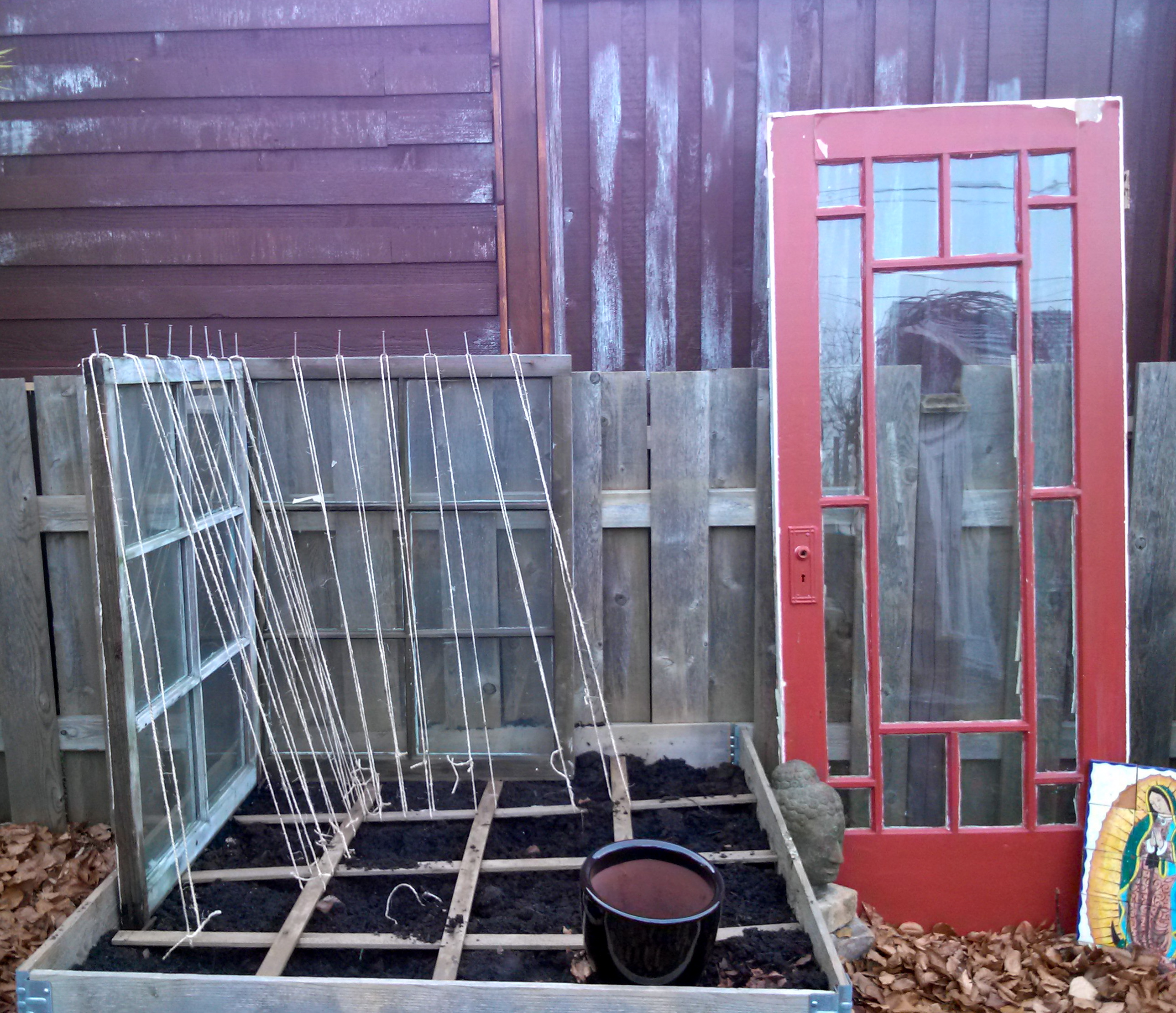
To my door for vertical planting, I have added two windows, fished out from behind our garden bench where I stashed them ages ago after they were removed from our house. Purpose? A new pea trellis! And possibly a cucumber trellis after peas are done. I topped up the bed today also with compost and mushroom manure since this bed is a tad shady in the spring and I want to give those peas all the help they can get.
One nice thing about the neighbour’s ugly fence is that I no longer worry about doing things which are aesthetically unpleasing to him.
Also today, I built a little plot for Fava Beans out of some cheap edging from Re-Store:
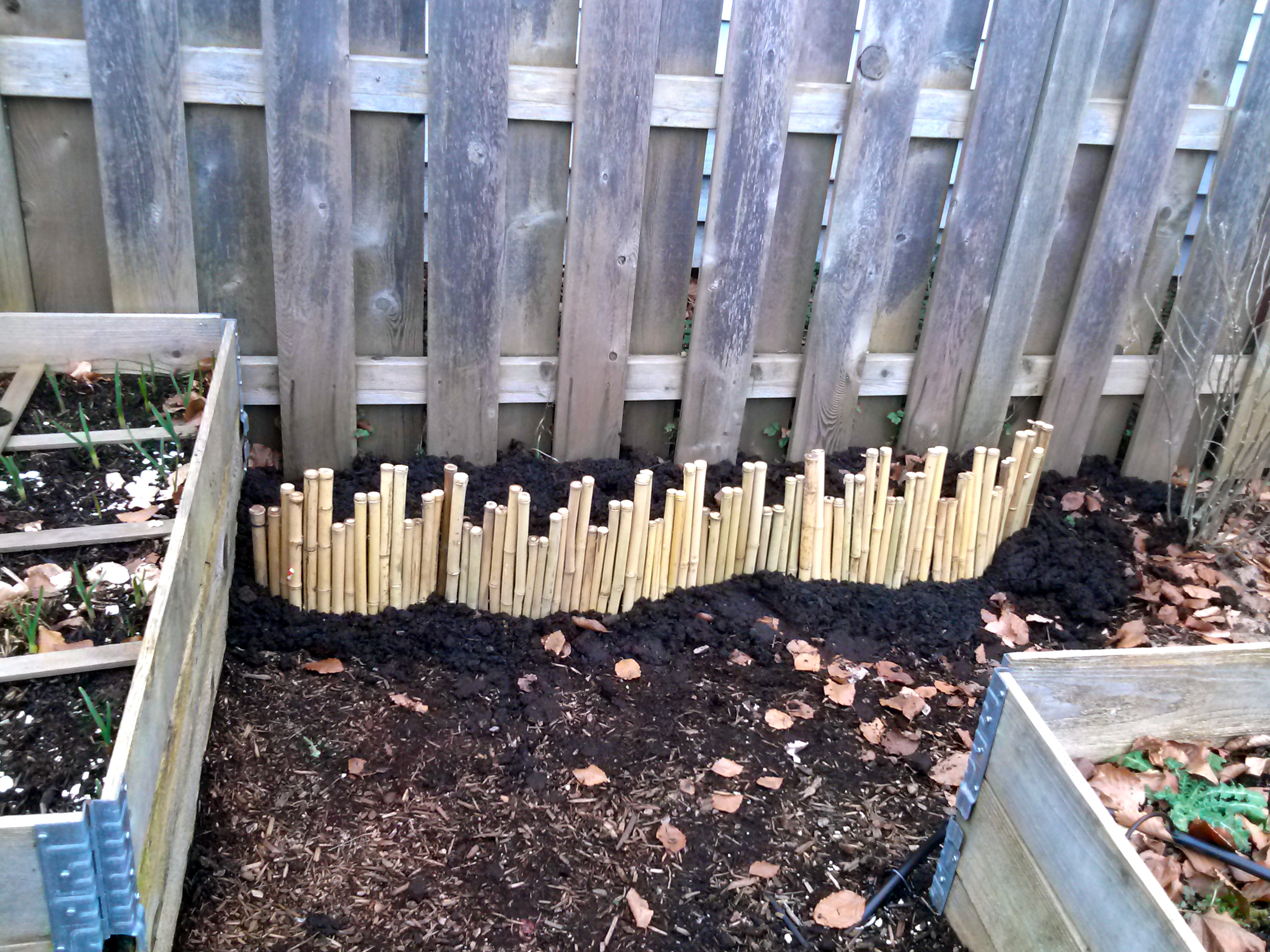
I totally forgot about the awesomeness of Re-store until today when I went in and got 2 large terracotta garden planters, 2 5-foot long pieces of bamboo edging, 5 burlap coffee bags and some tile for $30. Plus, it’s all stuff that’s saved from going into landfills, and it supports a good cause!
Right now, in these last days of February, the yard looks like this:
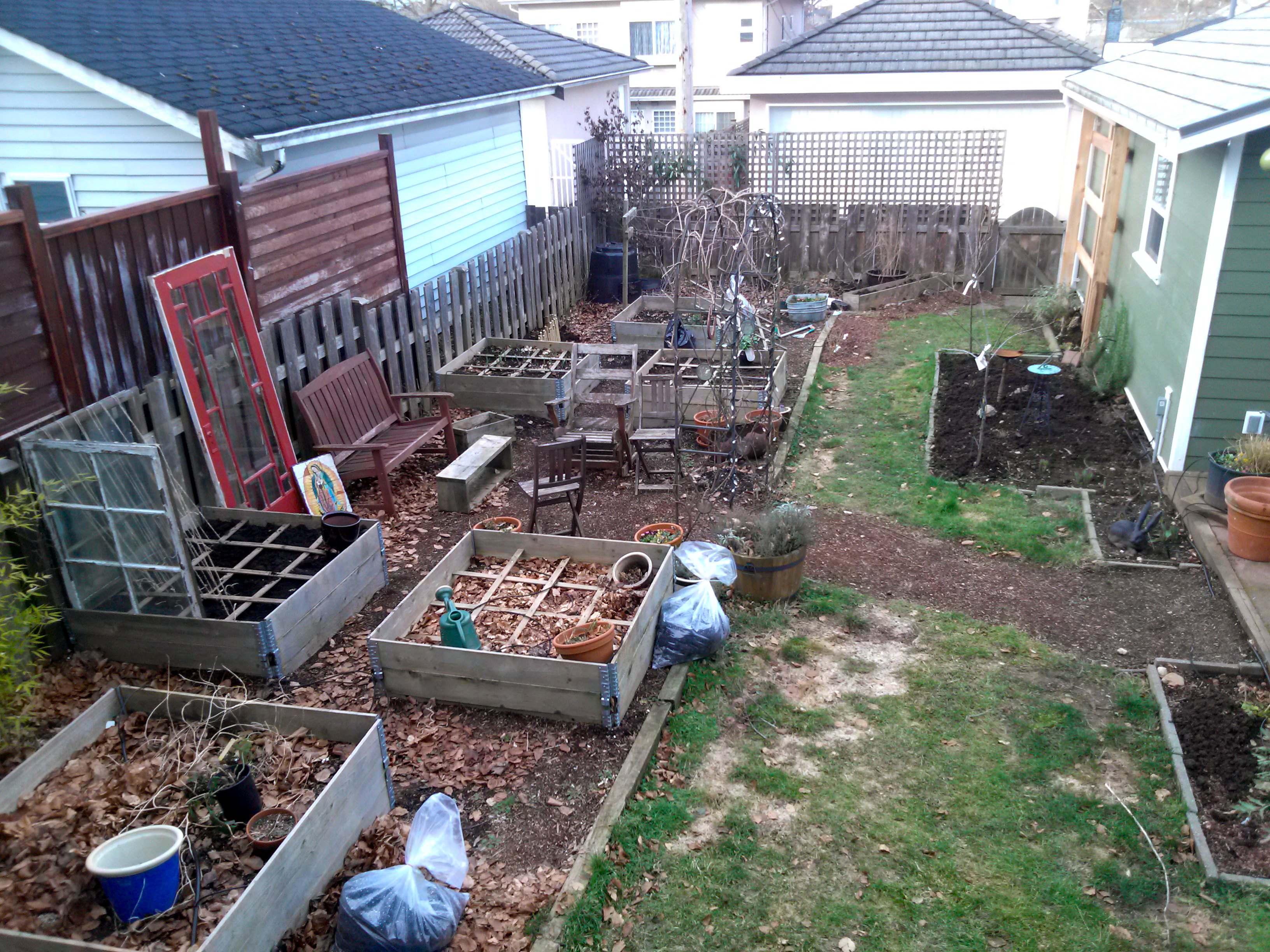
…which is somewhat better than it looked two weeks ago, but I still have a *long* way to go before it’s in any sense done for the summer. 3 more boxes to top up, plus some support for the other beds, planters to plant, seeds to go in, vertical gardening projects to be finished, etc. etc. etc. And the front yard! Well, I think I will hire a friend’s company to build a bit more structure into which will help out a lot – but still, it needs a lot of labour on our end to finish what we started last year.
Besides all that hard work – made even harder by the fact the ground was frozen today – I managed to pickle eleven jars of red cabbage, and made my way to a demo in support of teachers. Tonight it’s burgers and D&D with friends – and I am again grateful for this decision to go down to 4 days a week at work. My Mondays are so productive!
Signs of life
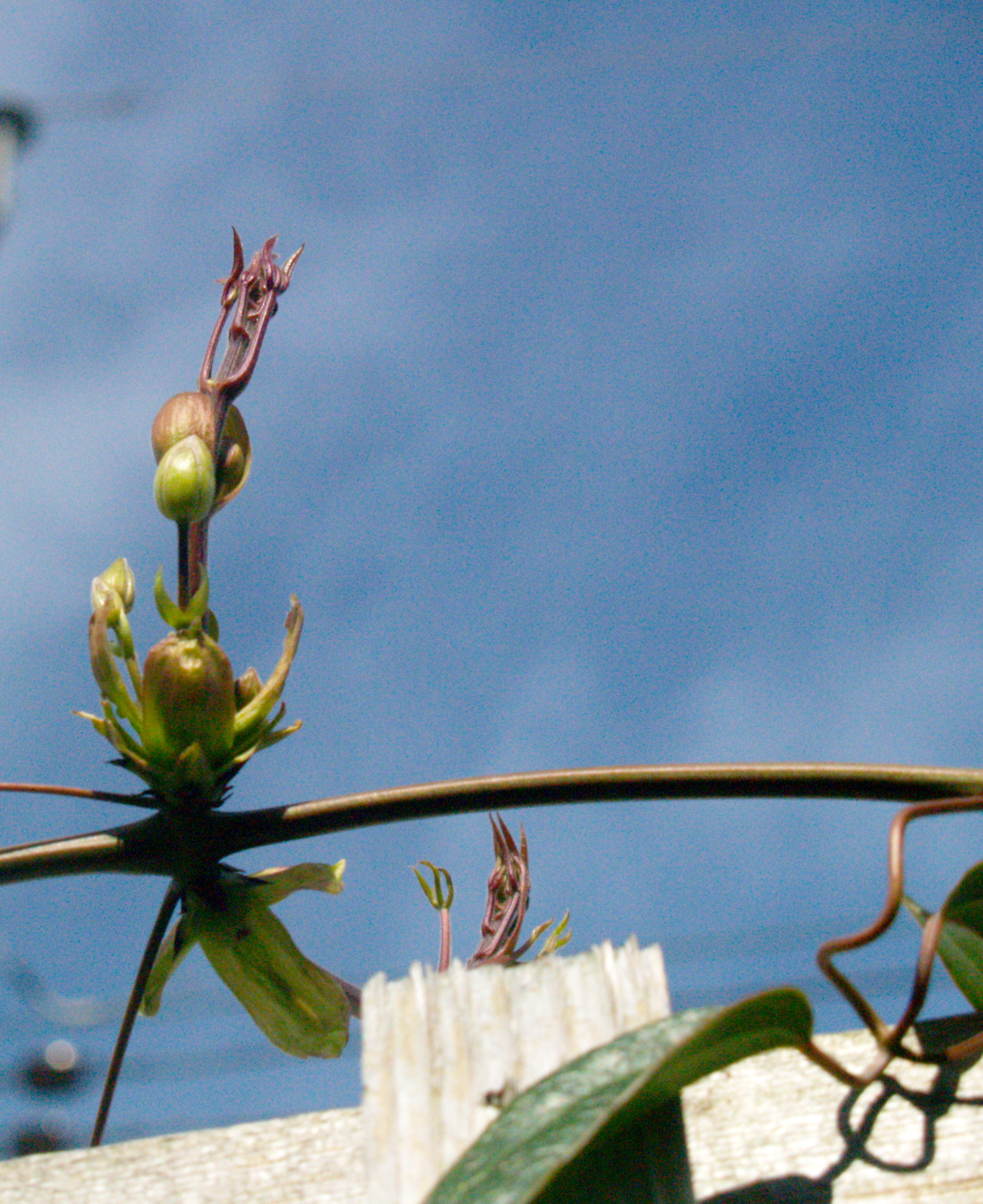 Things come alive in fits and starts once the days get longer. My evergreen clematis is making signs of flower for the first time.
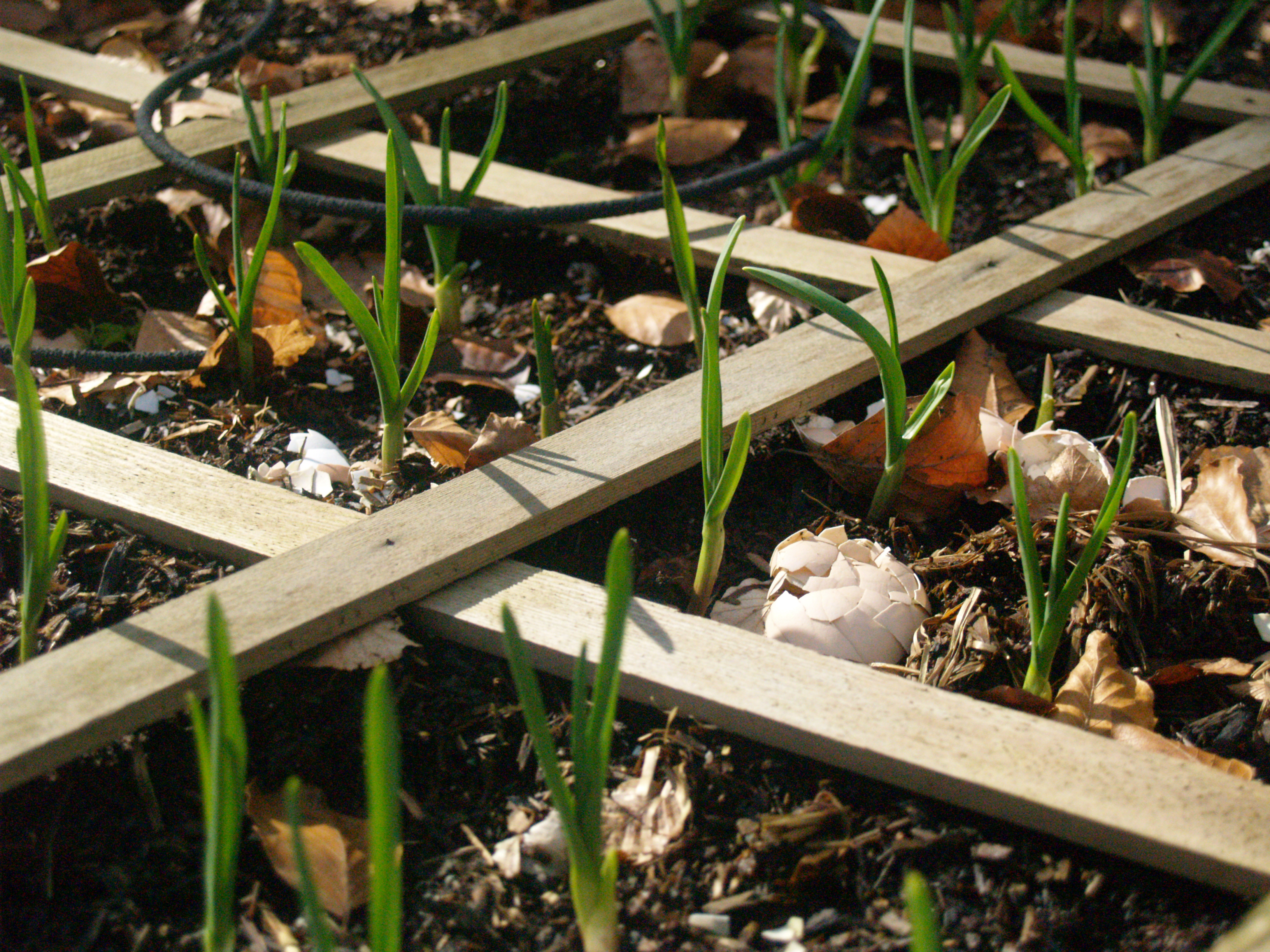 Garlic is the first edible to show itself, in time with other bulbing plants which foreshadow the true spring weather.
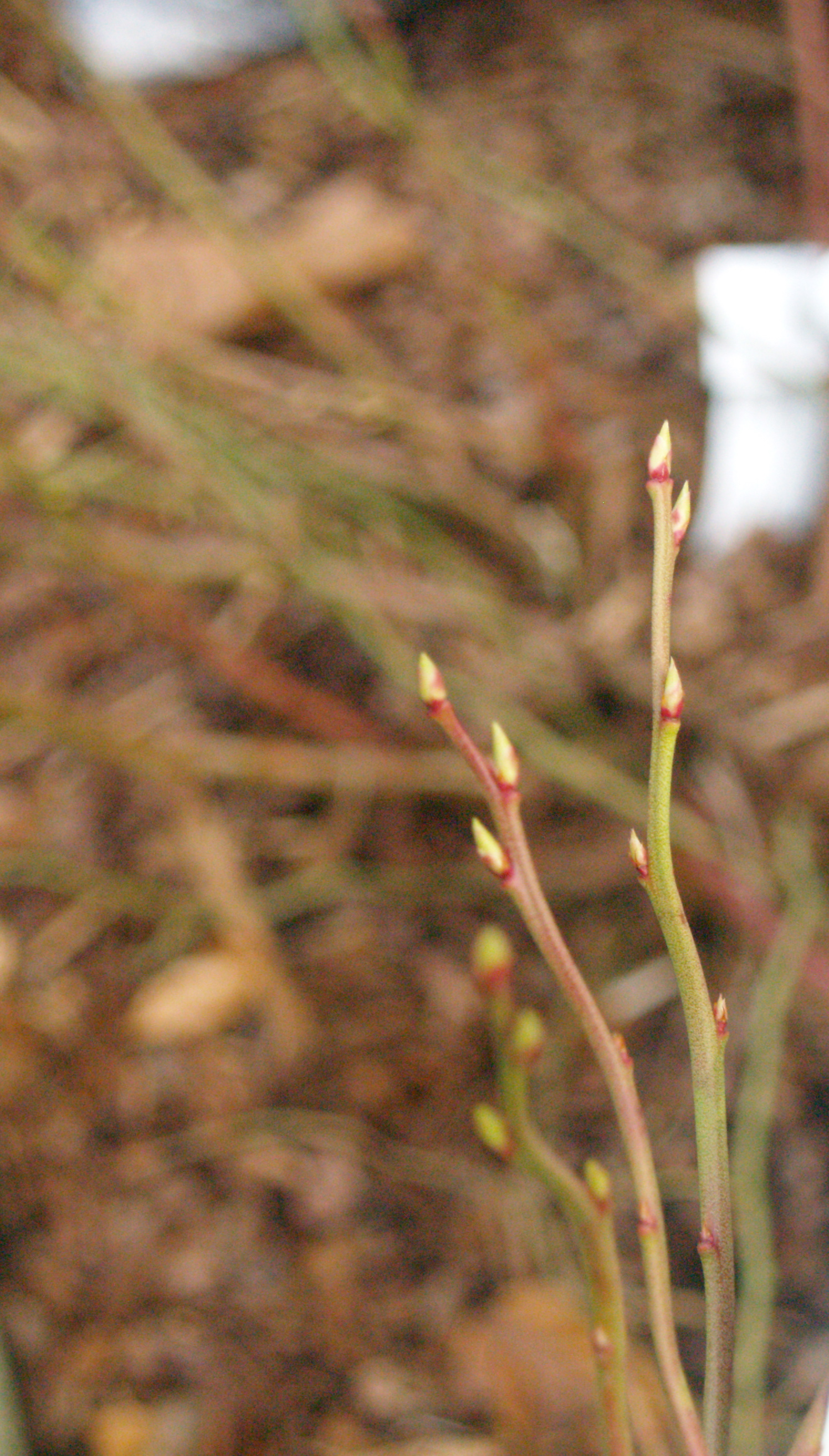
Blueberry growth like arrows pointing upwards to new life after a winter of sleep.

And the rhizome of rhubarb births new leaves, drinking water from the sky to replenish its roots towards a new year.


