Red Cedar
More apocalypse, less angst
Post #2075: We never stand still
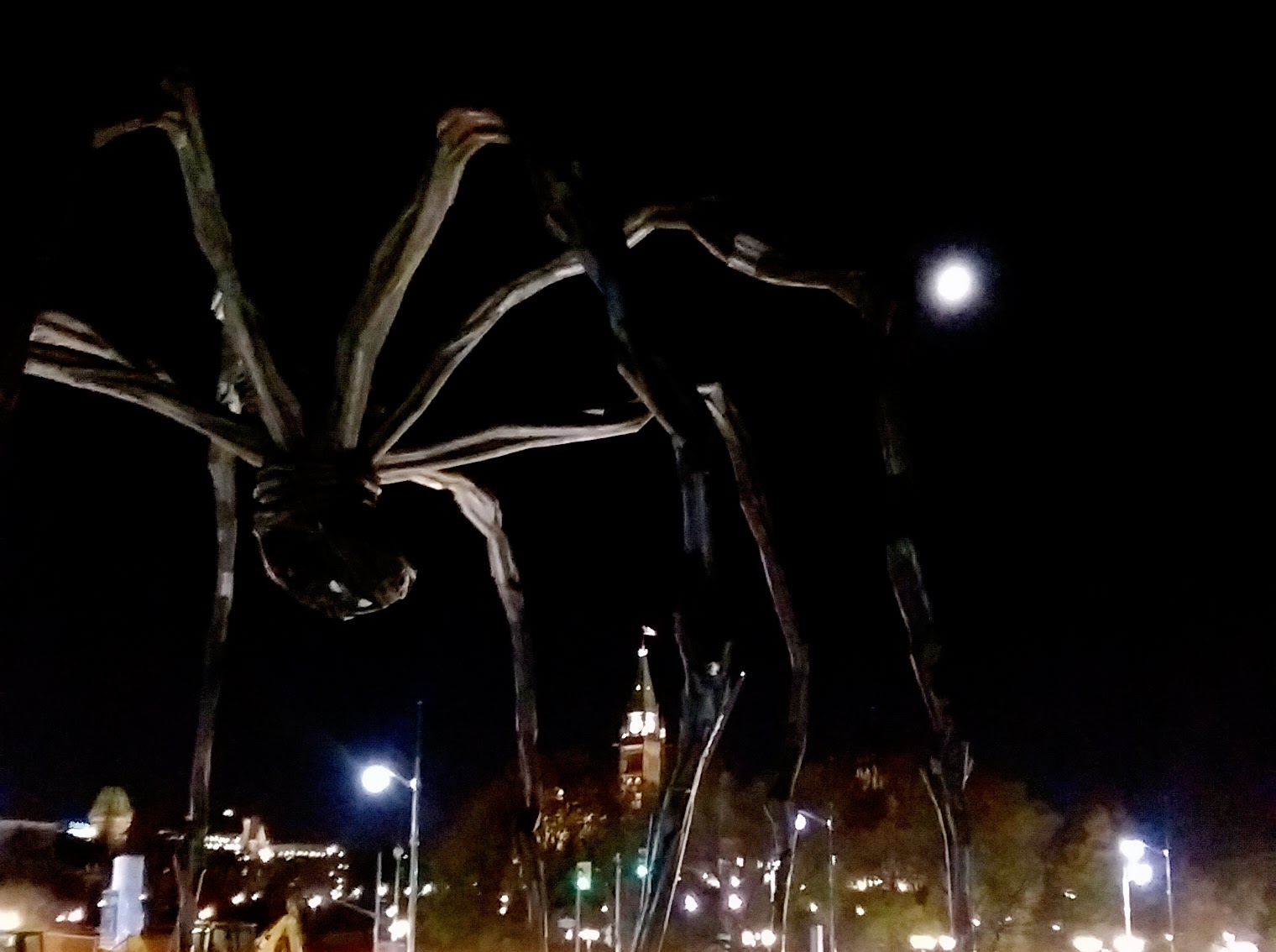
I have been away from my life most of the last two weeks – first in meditation retreat, and then I left almost straight for Gatineau (the lesser cousin to Ottawa) where I post from now. It feels like forever that I have been gone, and I’m reminded of the years in which I lived like this non-stop. The years before I met Brian and we made a home together, when I didn’t mind whether I was home or in a hotel.
That it makes such a difference to me now speaks to how my life has changed in the last eight years. I remember telling Brian when I met him that he was just going to have to live with the fact that I was on the road all the time. And he was totally willing to accept that! But as it turned out….. I wasn’t. The last significant period of travel for me – when I was on the road for about three months solid – came to a close five years ago this month (I remember, because I’ve got a date on my collective agreement that proves it).
We are so often faced with moments that remind us of where we have been, and where we belong now. I am having one of them tonight – lonely in a Ramada in the wasteland of a casino district, processing another loss from my past, thinking about how easy it is to fail to notice what’s important, how we are conditioned to forget to awaken to our lives before they are over.
While I make no pretenses to having discovered my true nature, I do take some comfort in a life that is more settled now than it was ten years ago – and a love that has built a home where I would far rather spend my days than in the hotels of *any* country.
Post #2074: Dear World…..
I went away to meditate for seven days, and in his remarks closing the retreat, our teacher Norman Fischer said “Kindness is the only response that makes any sense”. And then we emerged from that silence by the lake to find a world the same as we left it, torn apart by violence and riddled with fear. But also still a world that contains the possibility for change, and a hope that we can do better. Since coming home on Friday I have felt that growing in me, an impossible shoot coming up through the cracks on the concrete – a steady and flowering need to do something positive in this suffering world.
And so I will. I will do what I can in this world right now to meet life with an open heart. I’m not entirely sure what that looks like yet – but as I figure it out I’ll post more here.
Post #2073: Back from the cabin with a progress report

The cabin at Link Lake now has siding *and* soffits *and* insulation. And if I do say so myself, it looks fabulous (and in need of a paint job next summer). More importantly, it retains heat. No more open rafters with birds flying in – this is the real deal, now that it can be used all-season.
We went up on Friday morning, driving to Keremeos first to pick up a secondhand spinning wheel (more on that in a future post), and some beets and apples for canning ($16 for 20 pounds of beets, $8 for 10 pounds of apples). Since we were already stopped at Sanderson’s fruit market, we decided that this trip was the time to try out their adjunct Indian restaurant – Samosa Gardens – for a late lunch. Let me just say that *by far* this is the best restaurant in Keremeos – and for Indian food it is on par with anything I’ve eaten in Vancouver. For $13 each, Brian and I were so full that we couldn’t even finish the naan bread – and we love naan! Also, they are building a new facility out back of the store and restaurant in order to process their own cherry and apple juice which is now for sale at the fruit stand year round. I just can’t say enough good things about this fruit stand and the family who run it.
 Anyhow – after a pretty great day driving around and eating Indian food on Friday, we spent the rest of the weekend at the cabin – luxuriating in the newly-sealed environment, cooking on the wood stove, and hiking up above our place. I did some mushroom hunting on Saturday and found what I think were Pine mushrooms and Sweet Tooths. Since I am no mushroom expert, I decided to forgo eating them until I learn more – but this was my first step in learning what grows around our place that is edible. I left a couple of interior BC plant books up there for future foraging endeavours.
I also took a lot of flora photographs, since the weather up there is definitely turning towards winter, and the bareness of things in the mountains makes for some stark beauty. The trail up the hillside above our cabin is most certainly not used by other people (we see no human traces besides ours) – giving both a delicious and desolate feeling at this time of year. We are never alone when we are out there though, for the tracks and evidence of animal life are everywhere. Black bears, moose, deer, and the occasional grizzly all roam close by.
We had a couple small financial hiccups related to the cabin last week, just a couple days before we went up – so as we headed out, my stress levels were high around the whole enterprise. But as usual, being at the cabin is the reminder of *why* we are engaged in this project – expensive and a little precarious for us – but something that we both deeply felt the need for in our lives. It’s a place to go and be quiet, to work on, to build for ourselves and our friends, and to give home to ourselves outside of the city. When I am there, I don’t want to leave, and I am forever plotting free weekends to make the drive up. Even now that it’s started to snow in the passes (Sunday morning, we were one of the first vehicles caught driving in the surprise snow storm!) – I’m determined to get good with winter driving so that I can take my snowshoes and head into the hills as often as my schedule allows. It’s not that I want to live out there, but the possibility of escape is a great comfort when work is getting me down.
Post #2072: Finished items and new projects – from knitting to radio.

That up there is a picture of me wearing the Beacon Shawl to work yesterday. That is my third finished object from the materials documented in the top left photo below (which I blogged about back here in September) :
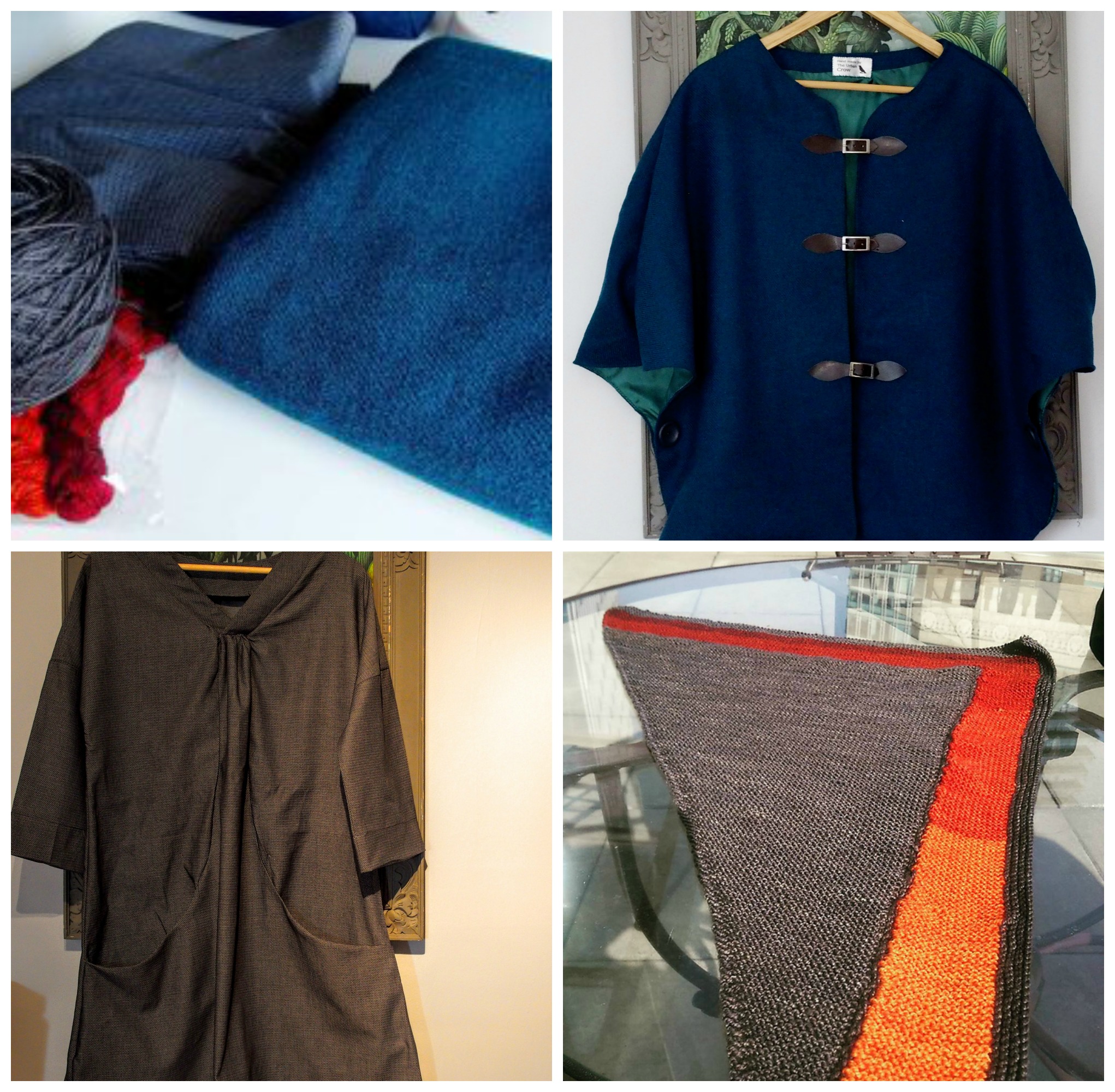
For the record, the above items are a Woodland Stroll Cape, a Cappuccino Dress, and the Beacon Shawl. All three have now been worn – the first two on more than one occasion. Although we still have six more weeks of fall – this feels like the culmination of my autumn projects and that everything afterwards constitutes winter. This is probably true in that my current WIPs probably won’t be finished until winter officially starts in December!
Since the dress, my sewing has been at a bit of a standstill, though my knitting continues apace. On the needles currently are a Paulie Sweater (I’m halfway done the second sleeve!), a Christmas gift cowl, and the Cowichan-style vest that I blogged about a couple of posts ago. I’ve got a very busy travel schedule coming up and so I am not starting any new sewing projects – and really am not interested in anything that isn’t portable at this point.
In other project-y news, after some recent realizations about radio-worthiness, Brian and I are embarking on a new project together – the Live from the Urban Crow podcast. While we still have to figure out how to make our recording devices work (we own two, and a mixing board, plus computers – but have never made a serious study of audio) – we’ve got some big plans for a bi-weekly show featuring a lot of what this blog covers: making, recipes, how-tos, interviews, throwing great parties – and so on. The difference will be that you get to hear Brian and I in conversation about these topics, which might be hilarious (or not). So far we’ve got a bunch of segment ideas plotted, so stay tuned and when we learn how to use our equipment I’ll let you know.
It’s been awhile since we did a new project together (if you don’t count the fact that our whole life is a project together) – and while I have thought about doing a podcast before, I never thought of asking Brian if he would be interested in doing something like that with me. Turns out, he is very interested – and when we canvassed our friends for subject-matter yesterday, we realized that they are also excited by the idea. So I’m encouraged that this might actually happen, and soon.
We’re headed to the cabin tomorrow – and I’m really looking forward to seeing (and sharing) all the work that’s been done this fall.
Post #2071: I am no zombie expert, but I make a mean pickle….
It has come time to let you know that if you want to hear my voice, and my friend Garth’s take on the connection between community activism, capitalist collapse, colonization, and the zombie apocalypse – there is now an Ideas Documentary that covers all of that. Click on the image below to go to the CBC page on the show, and then click listen to hear a bunch of smart, and sometimes funny, people talk. I think that I come across as relatively sane, if a little too focused on food storage. Anyhow – the whole thing is worth a listen:



 Red Cedar