Red Cedar
More apocalypse, less angst
Heading out.
Heading out to California this evening. Offline until I return Tuesday night so don’t fret that I’m not blogging or responding to emails.
Will have photos upon my return 🙂
From Canada to Colombia: Stories and Solidarity
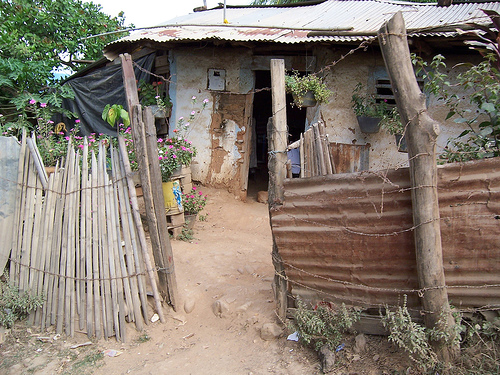
Yes, again. Onto the fourth piece I have written about Colombia upon my return – this one for our internal newsletter at work. It’s not nobel material – but the short, digestible version of things.
From Canada to Colombia: Stories and Solidarity
In the dripping heat, dust from the air settling on sweating skin, we fan ourselves and watch the most recent graduates of the NOMADESC Human Rights training program receive their diplomas after several weeks of education in the 3-walled schoolroom where we now sit. Here in Neiva, a small town in the heart of Colombian paramilitary territory, we are two days into our tour supporting the struggling movement for human rights in Colombia, and a lifetime away from our comfortable Vancouver homes. In the courtyard behind us a huge pot of meat, rice, yucca and potatoes cooks over an open fire stoked by two of the men who volunteer at this community school – for when the certificates are handed out we will eat a traditional meal before being taken on a tour of the area.
NOMADESC is one of the many organizations that members of the Public Service Alliance of Canada (PSAC) and other BC unions visited during a 12-day tour to Colombia in July, 2006. Teaching people about their human rights in the country with the worst human rights record in the western hemisphere is no small challenge, and many of the people in the program tell us stories of the assassinated friends and family that spurred their involvement. This becomes a familiar narrative as we make our way through the country. In every place we visit – Bogota, Neiva, Cali, Medellin, La Maria, La Cruz, and Suarez – we hear from people displaced and terrorized by the government and government-sponsored paramilitary organizations. Although every story is cut from the same painful pattern of a 40-year internal conflict, each has its own flourish or detail that makes it unique to the individuals with whom we speak.
Canadian labour unions have a long history of supporting trade union and non-profit organizations in Colombia – notable for being the most dangerous place in the world to be a trade unionist. Mainly support is in the form of donations to organizations advancing the human rights agenda, and the sponsorship of speakers to come north and address our members on issues of rights, union justice, and privatization of public services. This tour was a rare occurrence, but the people we have worked with for the last decade have impressed upon us the need for Canadian organizers to come down there and witness their conditions first-hand. Not only does our presence provide a small measure of protection for them, but they recognize that international attention is essential to their quest to build a democratic and civil society.
During our travels, we met with at least a dozen organizations, the UN High Commission on Human Rights and officials from the Canadian Consulate, to form a picture of the situation to bring home with us. At all places we were greeted with warmth and hospitality – and together we found ways to build hope into our discussions – as conditions in that country continue to evolve. As the largest union representing federal government employees in Canada, The PSAC has committed to continuing its partnership with public sector trade unions in Colombia in order to advance both human rights and public services abroad and at home. A rare experience, I was honoured to participate with other Canadian labour activists in sharing stories and solidarity from north to south.
(Sidebar)
In Colombia:
- More than a half a million people have been murdered for political reasons over the past 25 years.
- Ten people are killed, two people are disappeared, and one massacre takes place each day on average – all politically motivated.
- More trade union activists are killed there each year than in the rest of the world combined.
- More than 20,000 popular leaders have been extra-judicially executed in the past ten years.
- Over 600 trade union organizations have disappeared in the past five years (many due to contracting out of jobs and privatization).
- The official number of people displaced from their land due to political conflict is 2-3 million. This number if probably double when taking into account those not assisted by the government.
- 63 per cent of people live in poverty.
Megan Adam traveled with the Frontline Colombia Tour as part of PSAC’s Social Justice Fund program. Other unions represented on the tour included the BCGEU, CUPE, and CUPW – to a total of 12 delegates. For more information and a formal report on the experience please visit www.psacbc.com/2007/01/15…-colombia/.
Bullets and reminders.

- I slept a lot over the weekend. Exhaustion set in shortly after touching down Friday afternoon – and I spent a lot of the weekend in my house sleeping, or just meandering about with friends – which was a very good thing. I forget how wearing it can be, this flying back and forth – and since December, I have barely been home. After the 13th, I will be home for most of March and April and the first half of May – other than the occasional local trips on the weekends….
- I’ve been dreaming a lot lately. A lot about men in my life and the need to leave some of them behind. They have been vivid dreams, but I suspect that’s what I’ve needed to get the point. I want to clean the house now, I want to pare out the exes and lovers who never did give me priority and stick with those who have proven their friendship over years of rebuilding trust instead. Darren stays (he’s worked on our friendship with me since our separation 5 years ago) but others must go.
- I have been distracted too often in recent months. And this is partly why I need to pare out that which doesn’t matter and focus on that which does (and those who do), including the need boiling up in me to start writing more seriously and play more music with other people. I’m not going to go into some bullshit analysis about how it’s too hard on my psyche to write and therefore I distract myself instead. The reality is, I’m lazy when it comes to doing difficult things, and I find writing anything other than a blogpost a somewhat painful and difficult process. Perhaps I just need to disconect my ADSL. Or at least disable Adium a better portion of the time.
- I feel pretty good most of the time. Yeah, really. Other than being a bit tired, and occasionally stretched, I feel like I’m generally on the right track. The worst of the stuff with the green scare is quickly coming to an end. Even the self-righteous anarchist emails have all but died off, and I feel the for the first time in many years, I have my life to myself and I don’t owe any person or movement anything. I feel less fraught with personal and political struggle in general, even as I continue to engage with the things I always thought mattered. And I’m proud of myself for not losing my shit entirely last year.
- I am at a turning point. But what I am turning into I am not sure. It’s exciting, and I feel open again. And it’s okay to not know how things will turn out, and to just enjoy adventuring there. At least, that’s how I feel right now – and I haven’t felt that in a *long* time – since way before the arrests and everything fell apart. I think it’s going to be okay. I really do.
Glamour.
When I’m in meetings all day, the time and energy to write dwindle and my blogpostings become a mite more sparse. Even worse when I’m in meetings that are confidential – as all union negotiation meetings are – I can’t even write much about what I’m doing! Then again, it wouldn’t be that interesting to those outside the process – so I’m probably sparing you all a whole lot of boredom.
I am in Hull at the moment, which I can never quite bring myself to believe is Quebec except that people address you in French first, unlike on the other side of the river. We have been put in a Holiday Inn through some unfortunate series of events, and have been further promised that this will not happen again as Holiday Inns are notoriously shabby and often not clean (at least, that’s been my experience in the three I’ve stayed in). It’s not like any of us expect the Chateau Laurier – but clean and with a kitchenette would be a good start when we’re going to be here at least one week of every month for the next year.
Oh – the glamorous life of the union – airplanes and angry members, bad food, iffy politics and too much to drink. On one hand I understand why people don’t get involved (who wants to give up this much of their life and free time?) but on the other, it’s always a bit of an adventure. Who knew I would find the heart of darkness at the Sea Raven motel in Queen Charlotte City while pursuing a union case? Or that I was cut out to be some kindof political leader? Not me. That’s for sure.
I suspect that blogging like this for too long will only get me in trouble – so from here on out I’m going to find more interesting topics than my role in the union to write about. I suppose that means I’m going to have to drink less and write more in my offtime. Perhaps I could finish one of those books I’ve got started if I did.
Sometimes I get a little hopeful.

Despite my inability to focus for the past couple of days (and my low work-output for the week), I’m feeling pretty good at the moment. For those of you who aren’t on my tribe, I should point you to the photos I took last Saturday in Victoria which are posted on my flickr account under the People-Victoria album. The colour is much truer on a Mac (as usual – what is it with colour correction on PC monitors?).
I have a ton of writing crammed up in my head at the moment, but been having trouble finding the time to put pen to paper in the midst of work and social and political life. In a way, the upcoming trip to Ottawa feels like a bit of a respite as my evenings will be largely free – so perhaps I’ll get myself caught up while I’m there. I’m also going to start taking my camera on these trips as the weather warms up and hopefully find some time to practice in the evenings. I have been besotted with HDR techniques lately and think the Parliament buildings would make an excellent subject to experiment with. I’m also working on a birthday present for Darren which consists of photos of East Van since he’s pining to return at the moment.
Last night I went to the CCPA fundraiser where Naomi Klein was speaking – my union is a supporter and thus bought some tickets to the sold-out event. Talk about a packed house – I saw most of the labour folks I know and ran into people I haven’t seen for years. And of course Naomi’s talk about the rise of disaster capitalism was excellent. Mostly though, I was glad to go and see that at least there is some left alive here and that we are still coming together to support our institutions even in the face of the Campbells and Harpers of the country. No – it’s not radical – but it’s people talking to each other, and doing the work of upholding basic civil society institutions, and making sure that kids get educated and sick people get health care, and that workers still have rights. And it’s good to go sit in a room with those people once and awhile because it reminds me that our work is not only relevant but essential.
This morning the national news is leading with the story of the Supreme Court striking down the security certificate process in Canada as unconstitutional. The unanimous decision will bring an end to the secret courts and illegal/indefinite detainments of suspected “terrorists” unless the government re-writes the law (and I highly doubt any re-writing of the law will pass Charter scrutiny in any case). While the mere fact that this country allowed such a law into place is an embarassment, it is heartening in a small way that we’ve come to our senses. Or at least our courts saw right through it. No wonder Harper is trying to exercise more control over judicial selection.
It is scary, this world and where it’s going, and every day I struggle a bit with this reality – sometimes more than others. I don’t think though that it’s naive to find small hope over reforms or wins – and I’m trying to cultivate that where it appears.


 Red Cedar