Red Cedar
More apocalypse, less angst
Broken in between.
(A story about contentment)
Lying on a beach log propping up a broken ankle, covered in mud from ankle to hip, watching the sun go down and the tide come up while waiting for rescue to arrive. It’s hard to imagine being content in a moment like this, but as I’ve discovered, the way an experience goes down emotionally has so much more to do with the people you end up with than the events themselves.
My friend Aaron has been in my life since fall 2002 when we met at a gathering of anarchist techies in Seattle, Washington. You know those people you just hit it off with? He’s one of mine. The first time we met we sat up all night on the steps of the Emma Goldman Finishing School (a commune in Beacon Hill), drank beers, and compared our histories in cultish communist organizations. I won’t go into all the particulars of how we became actual friends despite the distance (he lived in Washington, DC and I lived in Vancouver, BC at the time) because it’s not really important to this story – except that we did and still are.
One of the things we share is a love of backpacking and camping, something I only got into in the late nineties but Aaron has been pursuing his whole life. Given this, it wasn’t long before we decided on a camping trip in my corner of the northwest – particularly since Aaron had never been to BC and the coastal terrain here is nothing short of amazing. Tall cedars, sand and boulder beaches, the scrag and bluff of previously cut forests overlooking a sea stretched out to Japan: that’s the west coast of Vancouver Island at its most enticing. From the trail options we chose the Juan de Fuca Marine Trail from Jordan River to Port Renfrew which clocks in at 50 kilometres over five days. For those of you who don’t hike, this is a perfectly reasonable distance to cover in a day without overdoing it, even over rough terrain. It means lots of time for breaks, swimming, eating and chilling out – which as far as I’m concerned are the main reasons for doing a camping trip in the first place. (The hiking is just a means to an end.)
So we set out on this trip as planned – our first three days spent hiking on boulders, up and down the switchbacked forest trails, eating starchy camping food and sleeping on beaches. Of those days, the second day was the hardest – a full 12 kilometres of nothing but switchbacks and stairs, but the third day was an easy seven to Sombrio Beach where we swam and slept in the warm sand of an August afternoon. That night we watched the sun set and moon rise adjacent to each other in a perfect arc and built a pathetic fire to talk beside until the night was fully black.
On the fourth morning we decided that rather than hike to the Parkinson Creek campsite, we would push a couple of kilometres further to Payzant Creek. This meant a shorter hike to Botanical Beach on the last day, and given the fact that the weather was threatening rain, it made sense to get the most kilometres in on a “good” day. After the beautiful and strenuous two days prior, the hike between Sombrio and Parkinson was pretty unexciting; a great deal of it winds through heavily logged areas that are taking their time to regenerate. We ate a late lunch about an hour before stumbling on the Parkinson parking lot (which connects up to logging roads and then the highway) and then followed the trail down to the creek where we rested again. It really was one of those unexceptional hiking days for both Aaron and myself as we counted down the kilometres to dinner and pitching the tent again.
To get from Parkinson to Payzant Creek, there is a kilometre of beach-hiking and then the trail turns back up into the forest for another short jog. It was at the intersection of beach and forest leaving Parkinson that our trip took a decided turn for disaster. Aaron was slightly ahead of me, stepping from rock ledge to log and then to beach boulder. All short steps, nothing except balance required, and I prepared to follow him. Before I could take a step however, Aaron turned around and asked me if I was sure we were going the right way, and so I stopped there on the rock ledge and looked up from my feet to give him an answer. Really, what comes next is a jumble until I’m clinging to a log propping myself off the weight of my leg and telling Aaron that “something is really fucking wrong”. What I pieced together shortly afterwards is that the moss on which I was standing slipped under my feet from a slight mud river running beneath it, and when I came down it was with my foot wedged between rock ledge and log. With my foot caught hard, all my weight plus a 30 pound backpack came down on it and in the confused moment of the accident itself something wet sounding had snapped somewhere deep inside my body.
Even Aaron watching the whole thing had a hard time explaining what happened – it was so quick – and I wasn’t moving in a way that should have made me trip or fall. But as I held myself off my ankle, my body now wedged where my ankle had been just seconds before, he could see the colour drain from my face as I told him I was badly hurt. He came behind me and removed my pack which allowed me to breathe again, and without communicating anything to him – I plotted to move myself under rather than over the log. I couldn’t stand the idea of being lifted up for some reason, and so as he turned to put my pack back on the ledge I swung myself down and through a tiny space between the log and the beach – hollering at full volume the whole time. Truly one of the most painful moments of my life, and I ended up on the other side covered in black mud and crying.
To this day I’m not sure if I was crying because I was hurt or because I was muddy. Moments of trauma are like that, a confusion between the essential and the merely annoying. I had managed to get myself into a sitting position on a large log with my injured ankle (right) propped up in front of me and when Aaron came around the first thing I showed him was my muddy hands which he promptly washed with his water bottle. And here is a tip about first aid that I learned in that moment: unless someone is actively dying and it’s all you can do to save them right now, attending to little comforts go a long way in making an injured person feel better. As soon as my hands were clean I started feeling much more in control and asked Aaron for my sweater, some Advil, my water bottle and a cigarette from my pack. I knew my body was going into mild shock and I would get cold, and I also knew that taking an anti-inflammatory before doing anything else would help keep the pain at bay until we got me…. somewhere…. So we got sorted with meeting my immediate needs which involved taking off my hiking boot so I could examine the swelling.
We had a cel phone, but no reception on the beach, and at first there was some confusion about who to call until we realized that 911 was probably our best bet even if they had to send search and rescue services as opposed to just an ambulance. At this point I was well situated with a sleeping bag, my favourite sweater, water and some padding behind my head so I could just lie back while Aaron ran to the top of the bluff where there was reception for the phone. Again, there was some confusion on the part of the operator, but in the end she said that since we were only 1 or 2 km from the Parkinson Creek parking lot they would send an ambulance instead of an airlift. (On the West Coast trail the only way out is airlift). By this point it was about six in the evening and the sun was starting its slow summer descent.
So we settled in to wait, Aaron and I – his first reaction after having finished with the logistics being to bury his face in my sweater and have a bit of a cry himself on my behalf. I was dreadfully apologetic about the whole thing and how I’d ruined our camping trip, and he was reassuring – and then instead of dwelling on the situation we were actually in we started to talk about other things. Smoking cigarettes and watching the sunset from the beach, it was as though we were simply winding down from a regular day of hiking. I was cozy in my sweater and sleeping bag with my friend leaning against me, slightly high from the endorphins and emotionally more connected to Aaron than I had been to anybody in a long time. We told each other stories from our lives for almost two hours and when the paramedics showed up (one of whom I knew) I was laughing at something Aaron had just said and felt a palpable disappointment in being rescued at all. It’s not that I wanted to spend the night out in the forest with broken bones, but I also never wanted that moment of perfect bonding and friendship to end either.
Even now, years later, I can dwell there where the evening sun warmed us on a solitary west coast beach and we hung onto each other in the trauma of that moment and others, giving way through our sharing to the comfort of bonding. Of friendship. And it’s golden still, that my state of mind could so far overtake my wrecked physical self – that my friend could share with me those hours in between one state and another. It seemed to me prefect then and still does, those two hours between accident and rescue, as though there was no place I could ever be than right there.
Of course there is a story that follows this, or rescue and hospital and surgery – and perhaps those are the tradeoff for the idyll which Aaron and I found in each other – but I won’t tell it here, for I’ve reached the point at which I want to end.
Lazy writing.
I started this blog almost four years ago as a way to regularize and improve my writing practice. You know: just me and my personal thoughts (and the rest of the world reading them). And why? Because I largely need an audience to motivate me – whether that is work, music, writing, or pretty much anything else – something in my psychological make-up demands it. (And believe me, I have enough insight at this point to know where that particular quirk likely came from).
I feel like I’ve achieved some of what I wanted through blogging. My writing has improved, I am a lot more confident about it and I have been pretty constant in this space. But I’m at the point now where I’m not pushing myself much, or at all – and not only does that make for an uninteresting blog, but it also fails to serve my purpose of being a better writer – and in particular a better story-teller.
So I am proposing to myself a couple of exercises in this space over the next little while. One is to resurrect the one-word essays I wrote a few of a couple years ago. I really liked those and forcing oneself to write out of random word choices pretty much demands some creative thought process. But in terms of story-telling, I am thinking to write stories based on emotions (ie: A story about happiness, a story about pity etc.) both fictional and non. After the cut I’ve included a pretty complete list of emotional states for handy reference as well as a link to a random word generator.
This being April 1st, I am going to set a two-week goal. One story or essay per day from either exercise. That takes me up to my union convention and bargaining which will put me out of commission for a couple of weeks – so it seems reasonable to set the bar there. Let’s see how disciplined I can be between now and then.
A few things.
Too many snippets and no coherent narrative. It’s bullet points at 3 pm.
- I think I’m officially a shop steward at my worksite again. Not really intentionally, but some cases are just too good to turn up – and now I’ve got two in which I’m officially on the side of righteousness so how can I say no? Can’t. That’s how.
- I discovered yet again last night that federal politicians get really uncomfortable around federal employees. I literally killed conversation at a fancy dinner-thing last night by simply mentioning to a Liberal MP that we were currently in collective bargaining. Like what? Should we all be marked with a scarlet letter F just so that we can be easily avoided?
- Rather than be mortified at the fact I managed to make said politician uncomfortable, Brian celebrated it. He called it a “great moment” in an evening that was otherwise a bit dull.
- I’ve got my campaign materials pretty much done and am taking them to Kinkos tomorrow for copying. This weekend I get to stuff 150 envelopes – all in the hopes of being elected to a position that doesn’t even pay! I’m finding it hard to believe I’ve become a person who thinks about her political future three to five years in advance. But hell, I told someone in a bar the other night that my occupation was “union leader” so I suppose it’s too late to turn back.
- I can not believe that Fidelio has had good reviews in the Straight, the Sun and other papers. It makes me think that the reviewers are scared of giving a bad review in case they get called on to defend their position. As I mentioned yesterday, the audience response was tepid and other people expressed similar reactions to ours – so why do the reviewers love it? And no, the answer isn’t that they understand culture better than Saturday’s audience.
- I had a gratifying work moment yesterday when someone confessed on a conference call that he was having trouble with his part of the project because he hadn’t done a specific thing. That specific thing was something I had raised on a previous call and he scoffed at (actually blew me off totally). I got to say “nyah nyah – told ya so” in my head at least.
- Oh, and since I updated my Facebook “relationship status” on the weekend- I might as well also say it here: I’m in love. Yes, really. I forgot how amazing and weird that can be.
There’s more. There’s always more – but I’m a bit brain-scrambled today (two late nights with alcohol in a row will do that you). Suffice to say I am living well at the moment, stressed out about my election in three weeks but otherwise feeling like I can navigate the rest of it.
Fidelio: An unintentional farce.

Coming back from the long weekend, there’s lots to reflect on, but mostly I am itching to review the production of Fidelio that Brian and I saw on Saturday night. Not because it was good, mind you, but because it was so bad as to amuse on a whole different level. In all areas – direction, casting, artistic vision, political message – this production didn’t manage to do a single thing right. A remarkable feat for an opera company with some experience, it’s hard to know exactly what they were thinking when they made the choices that lead to this production.
Beethoven’s Fidelio is based on the true story of a woman during the French revolution who dressed as a man in order to get work as a prison guard and thus free her husband held in captivity. The composer resets the story in Spain, creating a work that powerfully indicts the abuse of authority and champions the human right to liberation of ideas and of person. It’s an unusual opera to start with – given the propensity for actual spoken dialogue throughout and the fact that the protaganist doesn’t even appear until the second act – and I can imagine was considered very radical in its time.
However, rather than explore that piece for the power it could have (particularly in these violent and complex times) Director Dejan Miladinovic instead chose to re-interpret it in a way that becomes increasingly incoherent throughout and by the end of the second act was (quite literally) laughable. The choice? Recasting the story in East Germany 1989 – which put the lyrics and the setting completely at odds with each other throughout. The protaganist in this tale is a photojournalist (Florestan) who is arrested by the Stasi and imprisoned for taking photographs at a demonstration. His wife (Lenore/Fidelio) discovers his arrest and in the first Act we come upon her dressed as a prison guard while the machinations to kill her husband are at work around her.
Just why Florestan is so hated (in particular by one Comrade Pizarro) is never reconciled in this version of the opera – though in the original story Florestan and Pizarro are actual political rivals for the same position of power. Having not seen the original telling, I can only guess that at least one number was removed from Miladnivoic’s disaster because otherwise the story is very incomplete. And thus, with no explanation Pizarro sings at length about his hatred of Florestan, his desire to starve him to death, to stab him in the heart, to humiliate him in death etc. Which is totally bizarre. I mean, Florestan is a photojournalist – not a political leader, not a radical – and for some reason a high general in the Communist party wants to stab him in the heart?
It gets even worse in the second act when Pizarro and Florestan finally meet face to face in the dungeon and Pizarro sings about how Florestan tried to cheat him and screw him and wasn’t going to get away with it! ??? Again, what? The dude took some photographs!
This is what I mean about lyrical inconsistency. Almost as bad as that is the continual beseeching of God for help by all the characters in the prison. Not that there is anything wrong with prayer asking for help but given that we’re talking about Communist East Germany (Germany not being the most religious of countries even before the war that halved the country), it just comes off as odd.
And in the final scene (which I’ll discuss in more detail momentarily) the wall comes down between east and west and instead of singing about the liberation of the country, the chorus final number instead celebrates Lenore, the valiant wife who saved her husband. Of course this is the original score and it makes sense in the original telling – but if you are going to reset this in the last days of East Germany then you are risking inconsistency problems like this. End result? The lyrics are often so mismatched that it’s comedic. And this is not a comic opera.
Getting away from the core problem of the whole piece, I questioned most of the artistic choices made thereafter. One area that I found very difficult to understand was the photographic direction. In order to tell parts of the story (which as I mentioned you can’t do with the lyrics being what they are), photographic images are flashed on “the wall”. This could have been effective if there was any consistency or overarching artistic purpose defined by the director. In the beginning, the photos were used to create a demonstration scene that was somewhat convincing (even if Florestan as photojournalist was not, he seems to be quite hapless in his wanderings and photo-taking until the Stasi circle him on bicycles and arrest him). But by the middle of Act 1, during Lenore’s solo in particular – the photos quickly lost their charm for me. During this solo Florestan and Lenore are projected onto the wall in their happier times – literally frolicking in Stanley Park for some not-quite-professional photographer. The photos themselves are an uninspired version of romance, and the two actors are clearly not comfortable with each other or for the camera – giving each post a staged or forced happiness that is creepy rather than endearing.
After this point there are several more odd slides that appear in Act 1 – at one point a drawing of Marx, Engles and Lenin – at another point a slide that I think was supposed to depict two Stasi officers but looked like a child’s drawing. And at the end, the depiction of the wall coming down is through photograph but rather than choosing powerful images from that time (I remember tremendously gripping pictures coming across the television in 1989), a bland melange of crowd shots that depict very little is used instead. Honestly, it’s hard to know what the thought process was behind the image choices. And since the images are central to the telling of the story – there is no diverting one’s attention from them.
In any case, nothing was more ludicrous than the artistic choices made at the very end, once Florestan is freed and General Pizarro is arrested (not by men in Stasi uniforms, but by men in suits and ties!) – the new Governor (who is dressed like a federal suit and tie bureaucrat) takes to the stage and literally sings “Rejoice! I am your new head of state!”. This, is ridiculous enough as the people walk through the crack in the wall – but when Florestan is wheeled out in a hospital bed by a doctor and a nurse to deliver his finale (with Lenore at his side) – well this was truly the moment at which I started to laugh and could not stop. I was polite about it of course, but poor Brian had to sit there while I tried desperately not to erupt in to fits while at the same time trying to maintain his own composure. Really – there ought to be a rule: never, ever pair a suit-n-tie bureaucrat with a man in a hospital bed to lead a chorus in a closing finale.
The chorus itself – who was supposedly celebrating the fall of the wall and Lenore at the same time – was choreographed into “celebration pose” which consisted of some rather wooden boogeying and some stilted smiling. It was a bit like watching robots get happy but not really. I don’t blame the chorus members themselves, cause someone told them to act that way – and whoever that was shouldn’t be allowed to direct another VOS opera.
And if all that crappy direction wasn’t enough? Other than Ferando there wasn’t a single stellar performer on the stage. Not only were the voices weak in many cases (the skinny soprano – always a gamble) but there was very little charisma pouring out from them. Did they know they were performing in a dud of an opera? It sure seemed that way to me.
While I’m the first to admit that I don’t know much about opera – I will say that the reception by the audience was the most lacklustre I’ve seen ever at the Queen E. and as we left at the end (people seemed to be rushing to get the hell away from that travesty) we picked up on other people who had equally strong (negative) reactions to the piece. So it wasn’t just us.
At the end of it all Brian said that he was glad we had gone to see Fidelio even though we weren’t sure what we were in for. It’s bizarre enough to make something worth retelling at parties, and besides that we laughed all the way home and for hours afterwards – which you know is a good thing even if it wasn’t the intent of the work itself.
A minor photo credit
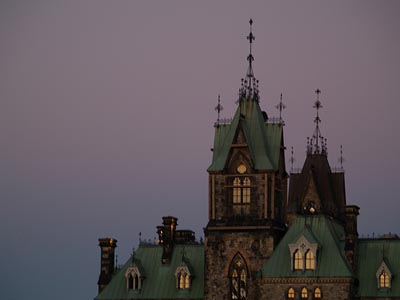
This photo was selected for schmap.com which you can see by following this link. A minor photography credit, but one that counts right?


 Red Cedar
