Red Cedar
More apocalypse, less angst
Painful plant tending – lemons and limes
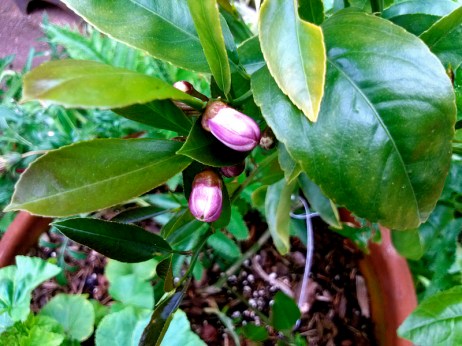
As regular readers here know, this is my first year at growing potted meyer lemon and bearss lime trees in my north-facing backyard. I started out in March with trees from Bob Dunan on Vancouver Island, and other than an early slug-attack my plants are doing quite well. So well, in fact, that they have started producing flowers in the last week – lots of them. Because I want my plants to focus on strong root development this year, I went outside last night and pinched them all off my plants. Painful! Necessary though because I don’t want one weak fruit at the expense of a hardy plant. By next summer I expect my trees will be developed enough to let them mature to fruit-growing…. but for this year I’m just going to have to enjoy them for their foliage.
My Top Eleven BC Trips (Part Two)
Picking up from Part One yesterday – here are destinations 6-11 in my Top Eleven BC Trips for summer.

Slocan Valley: From where you leave Highway 3 before Nelson to Revelstoke, the Number 6 winds through the valley and the communities of Slocan City, New Denver, Silverton, Crescent Valley, Slocan Park, Passmore, Vallican, Winlaw, Appledale, Perry Siding, Lemon Creek, Rosebury, and Hills. Some of these are towns, some of them are not. Side trips along the way allow for poking around in the ghost town of Sandon (among others – but Sandon has a lot of historical significance as the first electrified town in North America, plus a lot of buildings are still there), visits to hot springs, and lots of great camping along river and lakesides. If you’ve never done any of the Kootenays, I would recommend taking a couple of days (or more) and exploring this area – the Arrow Lakes and mountains around are gorgeous, and there are plenty of forest service roads in the area to access the back country. Beautiful area and friendly communities!
Tags: Road trip, backcountry, hot springs, historic sites, hiking, swimming
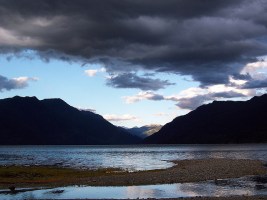
The Sechelt Inlet: I lived up on the Sunshine Coast for a few years, and while I was there I made three trips on the Sechelt Inlet. One five-day canoe trip, one day-long kayaking trip, and one three day trip to Storm Bay. While the inlet trips are not only beautiful, but easily accessible from Vancouver, I should mention that this is a *working* inlet with fish farms, fishing, logging, and salvage activity – so this is not exactly an untouched paradise. On the other hand, the marine park at Tzoonie Narrows is nothing short of magical (across from an old homestead and not far past Storm Bay), and the paddling is relatively easy because it is an inland waterway. The marine park campgrounds are spaced out around the inlet, so you can choose a short overnight or a multiday trip. Canoe and kayak rentals are readily available in the area, and the amount of activity on the inlet means that you are never far from help (as I discovered when the motorboat we took to Storm Bay broke down in the middle of the Inlet on our way back). Great fishing in the sheltered bays. Incredible phospheresence up here in the summer. See my canoe trip photos on flickr.
Tags: Camping, canoeing, kayaking, fishing, shellfish gathering, wildlife viewing
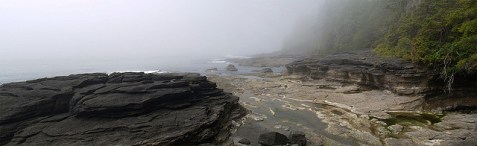
Juan de Fuca Marine Trail: If you have thought about doing the West Coast Trail but you missed booking on time (or don’t want to pay the big fee), I would highly recommend that you do its conjoining sister the Juan de Fuca Marine Trail. Not as famous, but just as challenging, the JFMT connects Jordan River and Port Renfrew and wends across Mystic, Bear, China, Sombrio and Botanical Beaches. This is a fairly challenging trail, but well-maintained and the campsites are mostly in the beach areas which means campfires (at least most of the time). This is a very wet trail, with mudholes and so forth – it’s the west coast of the island too so it can be foggy anytime of year – so pick a dry time to do it. We did it in a really dry August and the mudholes were still pretty mucky! The scenery is incredible with much bluff and beach hiking along the way. Nearly 50 kilometres from start to finish – good waterproof gear is necessary if you are to enjoy the trip.
Tags: Backpacking, hiking, camping
Nicomen Lake Trail: Also nearly 50 kilometres from start to finish, this trail starts at the Manning Park lookout, and winds down to Nicomen Lake in the sub-alpine terrain of the park. You can actually take this hike all the way down to the highway (if you have cars on both ends), but I have only ever done a hike-in/out so I don’t know how the trail continues after Nicomen Lake. What’s great about this backpacking trip is that you get all the benefit of the sub-alpine without actually having to hike into it (a bit like Cathedral Lakes) since you drive to a very high point before setting out. This is one of the reasons why the hike is marked as “moderate” – and it has no technical challenges – but there is still quite a lot of elevation change on the trip. Sadly, the last time I did this trip I was still recovering from a broken ankle (see Juan de Fuca Marine Trail above) and I really struggled with physical pain and swelling. Despite that, I was capable of making it the whole way in and back over four days and Nicomen Lake is a mountain jewel not to be missed. By August the lake is swimmable, and wilderness campsites are mostly lakeside. This trail can get pretty busy on weekends, so if you have the option I would recommend a Monday-Friday trip – otherwise bring good hiking poles! You will want them for the descent to the lake.
Tags: Backpacking, hiking, camping
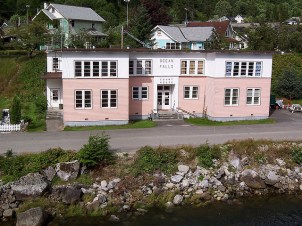
Bella Coola to Port Hardy by boat (24 hour version): If you are not into hiking I have the circle tour for you! The drive is long, and the ferries aren’t cheap – but this trip takes you through many of BC’s climactic and geographical areas, ending with a trip to an almost-ghost town and an overnight sleep on the deck of a BC Ferry. I mean that’s BC! The Bella Coola trip out of Vancouver takes you along the #1 into the interior and then north and back out to the west coast on the 97 – in a minimum time of 15 hours of some mostly easy driving (until you get to the “Freedom Highway” which is also known as “The Hill” – a road built by locals in the 1950s when the government refused to build a land connection). I would suggest this trip takes two days and a good halfway point is either 100 mile hour or Williams Lake. There is lots of great hiking and wildlife viewing in Bella Coola – so it’s definitely worth checking out for a couple of days – and then the ferry ride home begins! Seriously, you have to reserve your spot on the ferry, and make sure you take the 24 hour route because otherwise you are totally missing the point of treating BC Ferries like your very own cruise ship. When you get on the ferry, you must go upstairs to the plexi-glass covered deck and immediately put your sleeping things down where you want to sleep. If you wait too long, you won’t get sleeping space on the deck and you will be forced to sleep in one of the barcolounger chairs inside. If you are really adventurous, the crew will let you pitch your tent on an outside deck later on. The 24-version of this trip leaves Bella Coola Harbour under the towering presence of mountains and glaciers, and meanders through the fjords to the communities of Bella Bella, Ocean Falls and later, Shearwater. In Ocean Falls, there is a three-hour stopover where you can explore the almost-ghost-town that still has about forty people living in it. Creepy and amazing, there are old logging roads and trails to explore – and also a “museum” operating out of the old grocery co-op if you want to see some of the town’s refuse in a dark warehouse (I did, and it was worth it in an odd sort of way). Once you get back on the ferry (don’t miss it! they don’t come that often), they have a salmon bbq and they sell beer, and it’s a bit of a party. As the ferry leaves Shearwater, the sun will be setting and about the time you bed down, the boat hits open ocean in its crossing to Port Hardy.
Tags: Ferry, road trip, historic sites, hiking, wildlife viewing

Yoho National Park: While I find the whole national park thing to be a bit expensive (you have to pay to have your vehicle in the park, plus camping fees which ends up being double what you would pay to camp in a provincial park) – it wouldn’t be a BC Top Ten without including at least some of the Rockies. Yoho National Park and surrounding environs are definitely worth the drive out from the coast (about ten hours from Vancouver on a good traffic day). Campsites are well-serviced, federal parks staff are excellent, hiking trails are well-kept and of course Yoho is home to not only historic sites (such as the Twin Falls Chalet, accessed via an 8 km hike one way), but some truly impressive peaks and waterfalls. Our recommended camping destination is the Takakkaw Falls, which requires walking your gear in (about half a kilometre and the park supplies carts), but affords incredible views of the falls and as close to drive-in camping you can get without the RVs and generators. There is lots to do in the area, depending on your interests – but we mostly stuck to hiking in Yoho and also at Kicking Horse down near Golden. This trip was my first real Rockies adventure (other than driving through) and it has whetted my appetite for more in the future. Highly recommended as a family camping trip.
Tags: Backpacking, hiking, camping, road trip, wildlife viewing, historic sites
I hope if you live here, these suggestions inspire you to check out more of the province, and if you don’t live here you can consider them insider tips from a local. Even though I grew up in BC, I never get tired of the wild spaces and history that make up our province – and I believe that to keep much of our home out of the hands of destructive developers (aka run of the river power projects, enbridge and the like) we need to lay claim to our home by occupying it both figuratively and literally. Please join me in getting to know this great home, and please let me know what your favourite BC Trips are so I can add them to my own list of “next-to-explore”.

My Top Eleven BC Trips (Part One)
Damn. Just like that the kid’s out of school and holiday season is upon us! Brian and I have been making our plans over the last few weeks and thus far we have a cabin booked on Hornby Island, a hot springs overnight, a week long trip to Wells Gray park, a family visit to Victoria, and a campsite reserved at Porteau Cove in early fall. I’m hoping to also jam in another weekend trip or two – depending on how much time I can effectively wriggle away from work.
I’m not much of an international traveller – partly for environmental and economic reasons – but also because I am so comfortable on the backroads of my home province and I haven’t seen all there is to see in BC (it’s big). As it is, you will notice that my top eleven are very “southern” which is only a tiny fraction of BC travelling.
I have spent a great deal of time zipping around and checking things out close to home – and (I think) I’ve got some good spots to offer in terms of vacation possibilities for those of you who haven’t yet planned your holidays. Because this post started to get quite long, I’ve split it into two parts – the second of which will air tomorrow. And in the comments, would you mind telling me – where are your favourite BC Destinations? I need to add more possibilities to my list!
Where to go? Destinations 1-5
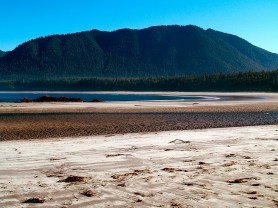
Flores Island: Just a 45-minute water taxi from Tofino (west coast of Vancouver Island), you will find the island that time forgot. 16,000 hectares of old-growth forest, white sand beaches, and often (during the week especially no one else in sight once you leave the village of Ahousat. This rates as the best camping trip I have ever done, and while we hiked the wild side trail, you can also kayak into Cow Bay or charter a boat directly into prime camping spots that straddle the forest and the beach. In five days (Mon-Friday) Brian and I saw a total of three people up close. It’s also where we decided to get married. Check out my travelogue here, and my flickr set here. More info on the Wild Side Trail here.
Tags: hiking, camping, backpacking, wildlife viewing, kayaking
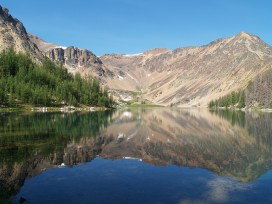
Cathedral Lakes Provincial Park: We liked this trip so much we did it two years in a row, though after last year’s early July experience I would definitely recommend going later in the season rather than earlier. Cathedral Lakes PP Core Area is reached either by hiking in on 16 km of trail and logging road, or you can catch a ride with the Cathedral Lakes Lodge Unimog three times a day (round trip costs $100 per adult and must be pre-booked). The hiking up there is unparallelled and if you have two days of hiking I would recommend the Rim trail as well as the Goat Lake trail (this one is really overlooked, but takes you into a spectacular lake basin). There are three walk-in campgrounds on lakes quite close to the lodge drop-off point and several back-country camping areas in the park. But if you don’t want to camp? I notice that the Lodge has a great deal on their new kitchenette cabins if you book before July 1st. Stay in a cabin, and experience some of the best hiking in the world? Sounds pretty good to me! (Note, the wildflower season in August is so beautiful it will make you weep for the joy of it all). Interested in more? Please see my travelogue here. And my flickr sets from year one and year two here.
Tags: hiking, camping, backpacking, wildlife viewing, fishing
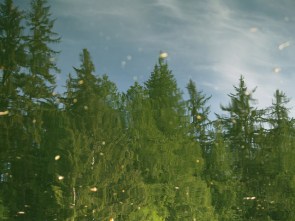
Carmanah Valley/Walbran: Better known than the above two places because of epic logging fights in the eighties, I can honestly say that the Carmanah Valley changed my life at the age of sixteen. This place was my introduction to both the horror of industrial forestry, as well as the deep magic of BC’s old growth. As a result of that battle for some of the last of the island’s old growth, a provincial park was established in the heart of the valley a number of years ago. While I can not speak to the park facilities (I have never camped in any of the walk in areas), I do know that this is place most people fall deeply in love with as the primeval forest is still alive and well here (despite the massive cutting that has taken place around it). Hiking trails are rough, and you can hike from the valley out to the west coast of the island and hook up with the West Coast Trail.
Tags: hiking, camping, backpacking, wildlife viewing
Hurley River FSR: I have to admit that I have only driven the Hurley River Forest Service Road in its entirety one time – but the trip was so strange and magnificent that I have long wanted to do it again. Hurley Creek FSR connects Pemberton and Lillooet on one side as Duffy Lake Road does on the other (See a loop tour suggestion that takes you over both roads here). Though one of the road’s highlights – Meager Creek hotsprings – was shut by a mudslide a couple of years ago, there are still other hotsprings to be discovered, plus the mining towns of Bralorne and Gold Bridge, and the new South Chilcotin Provincial Park (established in 2010) along the way. Mining resumed in Bralorne last year, so I expect it is less ghosty than it was a decade ago when I was last through. This is definitely an area worth taking some time in – for camping, hunting, fishing, ghost towns, and hiking opportunities abound (plus a bunch of really weird history). It’s really worth checking out this strange meander into the backwoods of BC’s history, and those roads are damned fun to drive!
Tags: Road trip, historic sites, wildlife, hunting, fishing, camping
Keremeos (and Hedley): Probably not on my top eleven as stand-alone places to visit but we drive to or through here every summer just the same. Why is that? Cheap fruit! Keremeos is probably the cheapest place to buy in-season produce for canning that I know of, and at only five hours from Vancouver this is feasibly a day trip – though we frequently just tack it on to another holiday (as we will this year on our way back from Wells Gray). While Keremeos has fruit going for it, the ex-mining town of Hedley is just all kinds of weird. Despite being a bit of a ramshackle town, it’s got a great restaurant – The Hitching Post which is where we usually eat. It’s also got this slightly odd (but kinda cool) black light museum which someone has posted a video of on YouTube here:
[youtube:http://www.youtube.com/watch?v=2kfdo5SP91Y%5DHaving been to the blacklight museum a couple of years ago, I will tell you that this video is very representative of the experience. And also, there is no sign for the museum, you just have to track Rod down.
Tags: Road trip, historic sites, wildlife, camping, bed and breakfasting, food touring
Stay-tuned tomorrow for destinations 6-11 to wet your travelling whistle!
Featuring: Atwater Ceramics
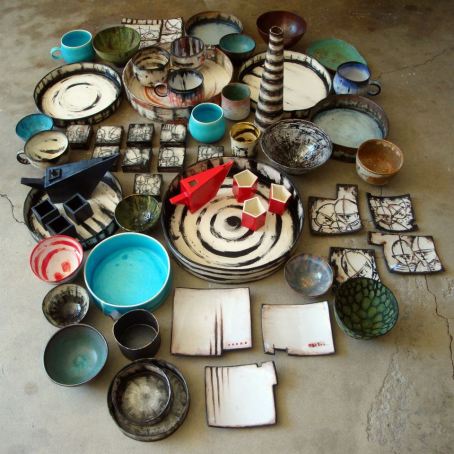
A little while back, our household received a remarkable gift in the mail which I have been meaning to share with you:
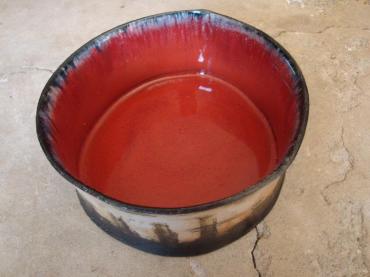
Incredible yes? And we think so too, which is why I wanted to let you all know about my friend Olia’s Etsy shop Atwater Ceramics.
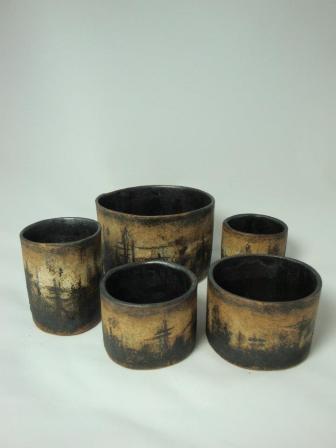
I am the first to acknowledge that I don’t know much about the world of ceramic arts, but what I do know is urban and post-apocalyptic aesthetics which these pieces balance with beautiful finishing and unusual colour. My favourite recurring pattern in her autumn collection (which is where my bowl originated) is perhaps seen best in this photo of one of her platters:

This edge detail reminiscent of a city skyline, though cut and blurred, organic skyscrapers melting back into the base from which they appear to grow. Her work from this recent spring brings back this distinctive imagery:
But also adds other themes, colours and styles to the mix:
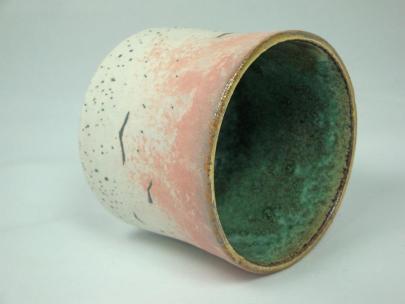
Olia is a new ceramic artist, but her work speaks of her much longer practice with creative work – specifically textile work. The fact that Olia brings a lot of attention to whatever she engages in shines through with the quality of her ceramics – these are solid pieces with strong glazing and good finishing throughout. All manner of her work – bowls, platters, planters, mugs, vases – make for distinctive gifts… And on top of that? Her prices are very reasonable, and her packaging for shipping is nearly indestructible.
Can I encourage you again to take a look at her work? It’s Atwater Ceramics on Etsy and I hope you find this as much of a pleasure to look at as I do!
Complaining about the weather

I make a real effort not to indulge in Vancouver’s favourite pasttime of complaining about the weather. Even when it rains all June. Even when a good attitude towards the wet is seen as “pollyanna-ish” (thanks nasty co-worker!)
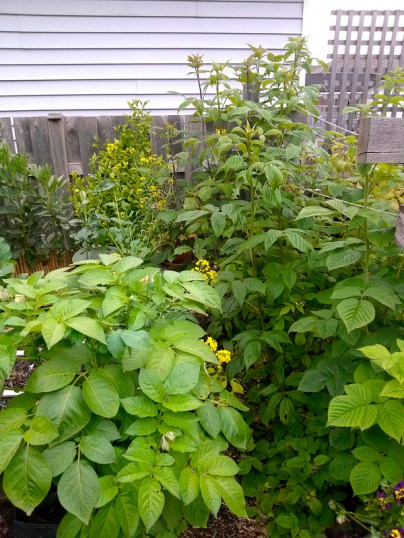
Not only is it futile, weather being an unchangeable element, but endless complaint is a drag on everyone. Rain is simply a major factor in a rainforest, and it’s also the reason my garden is doing so swimmingly (pardon the pun) this summer. The combination of mild temperatures and wet weather has created what you see above. Also – here’s a close-up of the potatoes and raspberries. I can’t remember any year in the last three when the growth has been this manic in June:
Anyhow – back to my original point. There seems to be this increasingly prevalent attitude that rain impedes us from getting outside or actually enjoying outdoor activities – which is totally not how I grew up. As a kid, I remember many days of gardening when it was raining, hiking and camping on the Oregon Coast in fog and mist, and hours of tromping around in wet underbrush and forest out back of my parents’ place. And it’s not like we had fancy rain gear either! Maybe some rubber boots, but otherwise there was this notion that you could get soaking wet in any activity, as long as you had a place to get dry afterwards. Be that campfire, home or weird-little-rv-type-thing…. being a wimp about the water just got you laughed at in those later environs.
Now, I will acknowledge that I do not like to be camping in a downpour – especially with my small ultra-light tent. I have become remarkably good at keeping dry with it, but still, who wants to be cooking in a nylon vestibule with mud running down underneath? On the other hand, I’m afraid that weather fears have kept me indoors more often than I would like over the last few summers – as I have developed the Vancouver phobia of getting wet.
Two things have reminded me recently of just how foolish (and limiting) that is. The first of those is the hunting planning we have been doing which involves trips into the late fall. This of course risks rain and cold, but with our recent gear investment, and some good planning I know that we can make a dry and beautiful camp in most conditions and I find myself excited to be outdoors in any weather again. The second is a gardening excursion Brian and I took on Saturday to dig up some free plants in Strathcona. This involved digging up two mature trees in the wet, and then replanting them (and some other odds and ends in my front yard). By the end of the hole-digging and replanting, I was muddy, soaked and totally acclimatized to both.
So much of being comfortable in any weather is spending time outside in any weather – a therapist friend of mine once described to me how we can develop our nervous system to withstand cold winters, which apparently is a traditional practice which explains how people lived through bad winters without central heating (longhouse fires notwithstanding). This involves exposing the body to extreme hot and cold during the first snow of the season…. (much like the Finnish Sauna) which then builds up resilience to cold for the rest of the winter. Over here at another blog I read, the writer talks about heat acclimation in the South which operates on a similar principle. That is, exposure and lots of it, plus working through the discomfort – something we don’t like to have to do in our modern city.
And perhaps this is where the increase in weather-related complaints comes from – a rise in the media-fed attitude that one should *never* be uncomfortable in a world of such consumer product availability. In Vancouver I would suggest this is compounded by the sense that a city this expensive to live in should at least have good weather. But all the shoulds and haves in the world don’t make it so, and personally I am more than a little glad to be in a region not experiencing an early forest-fire season like most of North America seems to be. Humidex in the high-thirties? That sounds freakin’ miserable to me, being a west-coaster and all.
So I’m going to redouble my efforts to remain positive as we round-out this wet June, and try to carry that into the fall and winter again. Key to my well-being in the winter months is actually getting out in the woods, where the grey is masked by a sparkling green, fed by the water which sustains us.


 Red Cedar