Red Cedar
More apocalypse, less angst
Post #3322: Five weeks (and how I ended up in seminary)
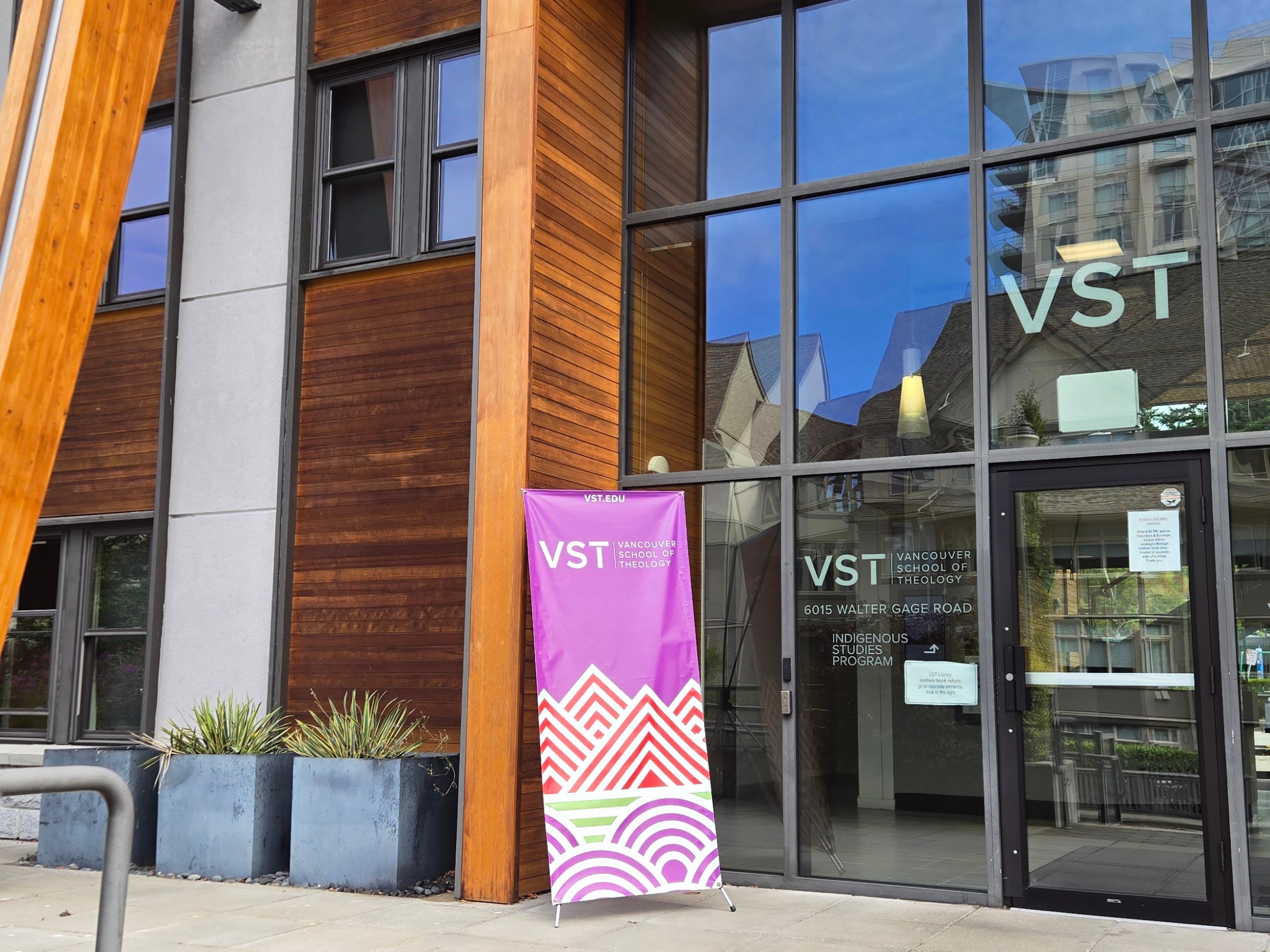
I am five, very busy, weeks away from retirement. My last day of work is October 20th and my first day of grad school is tomorrow. In between now and the 20th I have an in-person school intensive, several board meetings, a visit with family, a camping weekend, and a meditation retreat marking the beginning of fall practice period.
It’s a lot, but once work is removed from the equation it will feel like a massive relief–allowing me to focus on just the stuff that matters to *me* for the first time in my adult life. Other than a 4-week period on EI, and a couple of school semesters, I have never not worked since I was fifteen. I can feel the burden slipping off my shoulders already, even though I still have just over a month to get through.
Last week I spent three days on the Vancouver School of Theology/UBC campus where I am starting a Masters degree in Public and Pastoral Leadership with a specialization in Spiritual Care. My eventual goal, should I be able to get through both course and practical work, is to become certified as a chaplain, or spiritual care provider, and perform this role within my rural community. Besides seeking a certification from the Canadian Association of Spiritual Care, I will also be looking for recognition in my Zen Buddhist order so that I am formally recognized in a religious tradition.
I have been thinking about Buddhist and interfaith chaplaincy for a number of years, and had planned to attend Upaya in New Mexico after retirement. Joan Halifax leads an accredited Buddhist Chaplaincy program there that incorporates a number of elements that particularly interest me, and it comes highly recommended by people I know who have attended. But alas! I have become a total refusenik when it comes to the United States. Not only will I not enter the country, I try very hard not to spend any money in its economy.
And so, when it comes to Buddhist-specific chaplaincy education, my options are limited. I am aware of only one such program in Canada, at Emmanuel in Toronto, while international online options are either very limited, don’t provide the accreditation I need, or are prohibitively expensive. Fortunately, the Vancouver School of Theology, while founded on Christian affiliations and principles, has made increasing room in recent years for Indigenous and interfaith studies – and back in March they accepted me into graduate studies starting this week.
So far I am enrolled in only one semester-long class (History of Christianity in Ancient Greece and Rome) which is online, and two in-person intensives (Intro to Buddhism, Intro to Judaism). I am marginally terrified of the History class as it promises to be a lot of work, but glad for the intensives which mean being in-person with others in my program. One thing that was apparent to me in the orientation last week is that I miss being in a classroom with other students, and will definitely make sure I am doing at least some of my work on campus for this degree.
The other component to this education is a practical piece of three units of internship in hospital chaplaincy. This will require in-person attendance and at the moment the only advertised options are in Vancouver, but I am hopeful after hearing a rumour that there may be a program in development on Vancouver Island. In any case, I won’t start the practical education component until next fall at the earliest so there is time to figure it out.
All-in, I expect to spend four or five years walking this educational path as I won’t be attending full-time and I have find ways to make the practical education piece work for myself and my family. Additionally, I am building in more time in my own spiritual community as part of deeper education in my tradition of Zen Buddhism.
So I am standing at the edge of a fairly remarkable transition: leaving the job that has defined my adult life, beginning graduate school, and committing myself more deeply to a spiritual practice that has been part of my life for many years. There is a lot of uncertainty in it, but also a surprising sense of spaciousness.
I don’t need to know exactly where this path leads. Five years is a long time, and I expect both the work and I will change along the way. For now, it is enough to take the next step: into the classroom, into practice, into community, and eventually, I hope, into a form of service that feels like a natural expression of the life I have been trying to build through my years of hosting, music, art, and general being-ness in the world.
The most important thing is simply to begin, I suppose, and see where I end up – which is all we can ever do.
One Comment on “Post #3322: Five weeks (and how I ended up in seminary)”
Leave a Reply


I imagine that the dojo and the zendo have this in common: the reasons to begin are rarely the reasons to continue; and both sets of reasons are real.