Red Cedar
More apocalypse, less angst
Post 3044: Light time, night time

I don’t feel like working today. So much so, that I briefly considered calling in sick, even though I work from my home studio on Mondays and arriving here is as simple as getting out of bed and crossing the driveway. I’m not really sick at the moment though, I’m just fuzzy and I would like more sleep, so I kicked myself out from under the covers and here I sit, watching the light rise around me. From my desk at home I have a clear view to the ocean, enough so that I can tell whether it’s a calm day out there or a choppy one, enough so that I can see the colour of the sunrise as it spreads across the sea.
Over the weekend it became apparent that with the summer foliage gone, we can glimpse the ocean from pretty much every room in our house during the wintertime. We can stand on our deck in the night and see the ferries sail by, lights blazing – and the cold air of winter carries the dark water in it.
When I moved here, a friend (who was about to get a divorce but didn’t know it yet), told me that the worst thing about living on Gabriola was the darkness of winter here. There are no street lights, and houses are set back from the road and surrounded by trees. The power goes off on the regular (it went out last night for two hours) due to windstorms and aging hydro infrastructure, and the coast is always cloudy in the wintertime. She moved off the island a month after I moved onto it, and I wondered then how much the darkness would affect me. Even in Gibsons, there was quite a bit of ambient light both from the town and from the city of Vancouver – which is not the case on our side of the island – it gets really dark here.
Thus far, all I can report is that I sleep more deeply, that a wool blanket has never been more welcome in my life, and that stocking the wood for the stove during daylight is essential if you don’t want to be scared by a raccoon in the woodshed at night. Granted, this is our first winter here, perhaps I will grow to dislike all these things immensely. Maybe the awareness of light or its absence will prove to be too much, and I’ll long for the city again. I’m counting on that not being the case, but it could be.
Yesterday I went to a place called the Net Loft for a meditation gathering that happens every Sunday. An incredible spot, with windows to the ocean in a perfect and protected bay – I entered, bowed before the altar before sitting, and for an hour my knees touched the floor in the silence of becoming. It is true that the nights here are very dark, but the light from the water is always buoyant.
Post 3043: Living with a little discomfort
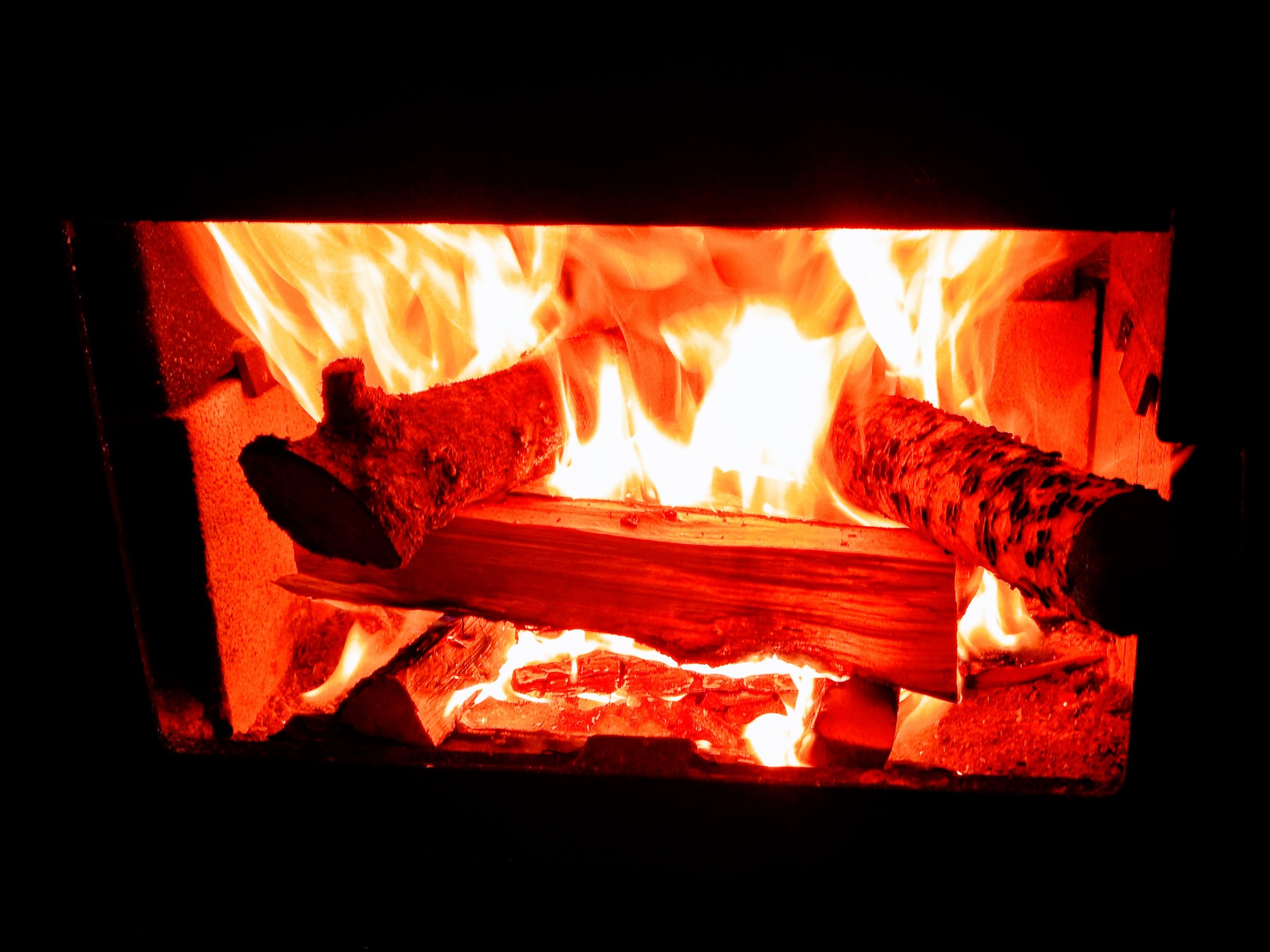
I am writing this post sitting on the floor in front of the wood stove, waiting for the house to heat up. It’s about ten degrees (celsius) inside at the moment – same temperature as outside. I was away working for two days and so the house hasn’t been heated since Tuesday night. Turns out, the furnace at our new place doesn’t really work and now I’m not sure if I want to get it fixed or not.
So I’m practicing living without central heat, at least for a few weeks, to see what that’s like for us. We have a wood stove that if run all day, actually does heat things up fairly well. When run only in the evening, it heats the downstairs, but we’ve got hot water bottles and a space heater for the bedroom. The way I figure, it makes no sense to heat 2400 square feet with forced air electric, when it’s just Brian and I – and often (like this weekend) just me alone. We spend all of our main time in the living room with the stove, which means really, the only other room we would like heat in is the bedroom, about an hour before we go to bed and about an hour before we wake up. Everything else seems wasteful, not to mention the noise of the forced air fans going on and off all the time.
I’m experimenting here, not only with our heating bill, but with a little bit of discomfort.
Do you ever watch shows about pioneers and marvel, like I do, at how cold people must have been all the time before central heating? The more I learn about garment-making of all kinds, the more I realize how much the clothes of yesteryear were really artfully constructed ways of keeping the body warm in draughty and damp conditions. Those layers of garments that looked (and often were) uncomfortable, served a crucial purpose – because even a middle class home with servants could only get things so warm in coal and wood burning fireplaces. For the poor, it would have been much worse, as fuel cost money, and working homes were full of cracks and leaks of air. While many worsted-weight knitted sweaters feel like “too much” in our home environments, they would have been just the thing to keep the cold at bay while having one’s supper or doing light chores around the house.
We forget, all these decades into properly insulated and heated homes, that life has not always been like this – and in fact, it was really only been this way in the wealth of the last forty or fifty years. These days, we expect to hang out in the middle of winter while wearing only a the thinnest of t-shirts and a pair of jeans – no matter how cold it gets outside.
In meditation practice, we are often sitting with a lot of discomfort. Last week I did a six-day sesshin (zen meditation retreat) during which I went through all manner of physical and psychic malady – nothing extreme – but I will admit to coming out of the week stiff and sore all over from the act of sitting on my knees (supported by a bench) and sitting cross legged hour upon hour upon hour.
What’s amazing though, at least I always find this, is that after a couple of days of really struggling to sit through the aches and brain weasals – it always, always, gets somewhat easier. For everyone this is different, of course, but there is a point on retreats in which you can tell that the majority of the room is well and truly settled. Somewhere around day three things get very quiet and the fidgets and body shifts of the days before melt away.
For me, this practice of sitting through discomfort until it shifts and morphs into something else, has been a source of insight – as I’m sure it is for many people with regular meditation practice – for it is in these moments that we realize the ease of just letting go. That is, rather than holding onto the mind state that stakes out our misery, we find ourselves giving way to the authentic practice of “just sitting” and allowing states to rise and subside within us. It’s definitely perseverance to get to this state, but once there, we start to see the potential the practice offers us both on and off the cushion.
In a typical life, we strive for comfort at all costs. We do not walk to the store, we drive. We do not put on a sweater, we turn up the furnace. We do not cook from scratch but purchase packaged ingredients (I have to admit that the latest spin on this – the delivered to your door cooking packages with recipes – does my head in – is it really that hard to shop and cook for oneself?). This is an honest species drive, and without it we would surely have perished in the savannah never having discovered the utility of fire – so I’m not discounting all the needs we express in self-care or managing our homes, etc.
On the other hand, the loss of discomfort and the practice of working through it, robs us of the opportunity to practice equanimity in every day life. We become short-tempered over the things that really do not matter – the wait in traffic, the mixed up order in a restaurant – because we believe that in this day and age we should not have to wait, or experience even a moment where we lack the ease of the modern expectation. Even worse, we believe that while we suffer some small indignity, everyone around us is sailing by and getting what they want. The richer we get, the more comfortable, the less tolerant of any failing in the system in which we live.
I know this because I live a very wealthy life, one which has built up incrementally over the years, and I have recently seen in myself certain kinds of expectations about how the world should work.
The hole in that thinking of course is that I have become insulated – both literally and figuratively. I can have a warm home, all the food that I want, and have the white-skin privilege that insulates me from the racism and class-oppression that exists for the majority of people around me. I forget (until I am reminded) that the Canada I laud for being fair and democratic, is not the Canada that many people I know live in. And I don’t want to give up that bubble – at all – because who does? Who wants to be reminded that they are not free, they are not wealthy, they are not living in a fair society – until everyone around them is also?
I am well aware that one cannot shed privilege and it is a conceit to dress in rags and play poor in order to make a point. But I am also aware that by giving up small things that I do not need, I can turn that personal waste into wealth for others. And that each time I do one of those things I am brought back into a shared reality, out of my comfort. I can be a little bit cold, I can wait to purchase a thing, I can use a little bit less – and turn some of that extra back over.
Not only that, but every time I work with my tiny pains (and they are tiny, for I am very rich) – I make the large ones easier to bear when they do arise. That’s the theory anyway – so I’m working with this one right now, holding out on the furnace repair so that sometimes I have to be cold, haul wood, and wait for gratification in search of a better life.
Post 3042: No, it’s really not that simple.
My father is continuously angry. As he ages, his outward expressions of this have mellowed, but he still rants pretty much all the time, about everything. His main complaint is that everything and everyone is stupid, and he knows how to do it better. No matter what it is – medical system, fisheries notifications, the sale on at Canadian Tire – it’s all been set up by people who have no clue, and he knows how to fix it because he is an engineer and it’s all very simple. It’s just common sense that’s needed.
Dear old dad is not alone in this, as I’m sure you’ve noticed out in the world these days. That attitude is pretty prevalent, and to some degree it’s what got Donald Trump in power. The world is simple, and all it takes is one smart person (and no, I’m not calling Trump smart – but he sure thinks he is) to repair the damage done by intellectuals and overthinkers, etc.
Now, as someone who works in web development and user experience – I do know that there are a ton of design fixes that can happen to our websites, to our products, and to our physical and digital architectures – that do in fact, help make the world a more user-friendly place. Read Gerry McGovern, or pick up A Pattern Language, and there is no doubt that an array of well thought-out fixes is out there for governments and businesses who want to spend the money to do things right in the design phase (spoiler: no one wants to spend the money).
But go out in the real world, and it suddenly gets a lot more complex. Take fisheries management, for example. It’s true that in BC, fisheries management is incredibly complex, and to the end user – the fisherman – it’s a frustration. I hear from users all the time who have suggestions for how we could make the regs easier to understand. “Just post open or closed for a fishing area – see simple!” I might hear. But no. Because of changes over the past couple of decades to the way fisheries management is done , it is rare that in the south coast of BC a whole area is open or closed at the same time. More often we have micro-openings or closures which help with stock management while allowing for fishing opportunities. Also, in the last fifteen years we have implemented marine protected areas, sponge reef protection zones, and national marine conservation areas that impede some or all fishing activities in specific spots that are being more heavily monitored and managed. Additional to that, there is the chance of toxic algae bloom, or sanitary contamination events which impact some species and not others. Plus, on an annual basis, stocks are managed according to how they are actually doing, not how they were predicted to do – so for people trying to plan their fishing trip a year in advance (and they are legion), our refusal to post solid predictions is a regular source of complaint.
You get the idea. Managing a dynamic system has a number of inputs and many challenges. There is nothing simple about it. And while managing for all those inputs, the government still aims to give conservation high priority, and then allow for opportunities in all fishing communities – many of whom rely on fishery openings for their sustenance and survival. Simple would actually be closing all the fisheries. As long as we keep them open, the system is bound to be complex.
Even fixing the way we deliver information to the fishing communities by creating databases of decisions, a project I am currently working on, has proven to be an exercise in complex decision-making and design – way beyond my skill set. And because these types of information architecture skills are actually pretty rare (everyone thinks they know how to organize information, very few people actually do) – it costs quite of money to hire a consultant to work with us on a rational information design approach.
And then, to top all that off, there are all the internal systems of bureaucracy that are ostensibly there to eliminate graft and make things reasonable for the taxpayer. I’m not sure about how complex or simple it would be to fix those systems, but I’ll tell you that they make my job in resource management communications a lot more difficult to deliver on.
Anyhow – you get my point. Pick any large system that you think needs fixing and the same patterns will emerge:
- We live in a highly developed society so we are never starting from scratch. This means we are most often extracting information and processes out of legacy systems or hybridizing several systems rather than starting at zero.
- We’re in a risk averse business/government culture due to the potential for litigation – which means that every single thing we design or do has to be bomb-proof – security-tested, and threat-analyzed.
- In the last seventy years we’ve advanced our rights discourse to ensure that individuals and groups are protected in specific kinds of ways – which is why something like a BC-wide system of medical records, while it sounds simple, has yet to materialize.
Does this mean that I don’t believe that problems can be solved, systems can be better designed, and complex processes can’t be made simpler? No way! I am a great believer in better design, tearing things down and starting from scratch for robust builds, and the capacity of humans to think back through any set of problems and come up with different answers.
But what I also know is that to do this with any single system costs money, and it takes time – real time – in consultation with real humans to get it right. And as so often the fixing of one room of a house exposes the weaknesses of other rooms, or even the foundation – so does each process change beget a probing of all the supportive systems around it.
The danger in simplicity thinking is that it implies that any problem can be fixed cheaply and with little input from anyone. This is the message we’ve been hearing over and over in the last few months from America’s new overlord. The problems with Obamacare should be fixed by eliminating it all together. Worried about terrorism? Set up a registry for Muslims, who cares about the Bill of Rights? Don’t like a particular group or country? Send in the bombs – that’ll teach em.
This type of thinking is of course, dangerous – but even when it’s not extreme, it aims at homogenizing complex personal experience by suggesting that the world is a single place, made up of a single people with the same desires and wants. It suggests that the people who want change, are in fact, always the problem (“why should I have to call that person by the pronoun of their choice? it’s not my issue”) because they add to the complexity. The result of this is of course erasure, alienation, and a false sense of majority thinking. Those who believe they have the answers, are pretty much all of a (white, male) type – the engineers of the world who believe that they should call the shots because they are rational thinkers, and who cares how you feel or what your experience of the world (and its many systems) is?
On an existential level – this pretense additionally suggests that things are totally within our control – easy to fix. Which is of course not true on any objective level – but the suggestion is enough to calm us down isn’t it? That way we don’t have to confront the world the way it actually is, but as we would like it to be. That is, we get more and better designed service all the time without having to pay more taxes – oh, and climate change? Just put some technology on that would you?
So in case it’s not clear – I’m here to say it. The world is not that simple. Systems take more than a quick fix to get right, and everything you want (from better schools, roads, and hospitals to easier to understand government websites) costs money. The people running the show are not idiots, but fallible human beings running an ever-more-complex set of systems for a society that demands specificity and individual service but doesn’t want to pay for it. To think otherwise is dangerous, and it doesn’t advance us one whit towards the better world everyone wants – the one with full employment and good services for all. So let’s tackle those problems together, fixing the broken things bit by bit and ignoring the demagogues who lull us with a false sense of the simple (wrong) solutions they can sell us.
For every complex problem there is an answer that is clear, simple, and wrong.
H. L. Mencken
Post 3041: Wasps in autumn

Winter comes much earlier in the interior than it does on the coast. This dormant wasp’s nest was positioned by the road near our cabin, disturbed only by the paper thin wind that comes up off the lake in late October. Normally, there would be snow on the ground by now, but the last few years haven’t been like that and the lakes don’t freeze as early either. That means a lot less hunting activity in the area (which used to peak when the snow fell in October), and so we had almost the whole lake to ourselves this past weekend.
I’ve been on my own a lot lately – when I’m travelling, when Brian is in the city, even at the cabin where I took long walks alone while the guys were out hunting game – so even though things are busy, I feel like there is lots of space in which to turn myself around. When Brian returns home after a few days away, that space allows me to fully enjoy our time together and be present, which is an interesting effect of this change to our life together. I sense too that patterns that are more pronounced will emerge with the seasons as we adjust to having more than one home necessitated by work – the fall is always busy for both of us, the summers not so much. I’m observing how it all feels right now, which is that we are quietly settling into new routines while taking care to spend time with each other and match our lives up as much as possible. Our home on Gabriola is a true sanctuary for both of us – giving us an anchor – the place we both most want to return to no matter where we’ve been and what we’ve been up to.
I feel myself getting quieter with the change in weather, so even though I am out in the world alot, the days when I am home are very much about tending the fire and indulging in the treats put up in the canning cupboard this summer – not to mention long and deep sleeps in the total darkness that envelops our home at night. It’s month five since we moved and I’m sure I do not know all the ways in which this will change me, and Brian – though I do like the direction we are going together.
Post 3040: Sunday afternoon, Departure Bay

Yesterday was really insane for wildlife viewing – as I crossed over from the BC interior and onto the island – not only did I see the elk herd first thing in the morning, but on my Vancouver-Nanaimo ferry voyage I caught sight of a Humpback whale (pointed out by the ferry captain as we were nearing Departure Bay) and managed to get a shot of it breaching. It’s not the best photo because we were at a distance and it’s hard to get a whale in action (you have to predict where they are going to come up next) – but still – it’s a Humpback whale!


 Red Cedar