Red Cedar
More apocalypse, less angst
From Canada to Colombia: Stories and Solidarity
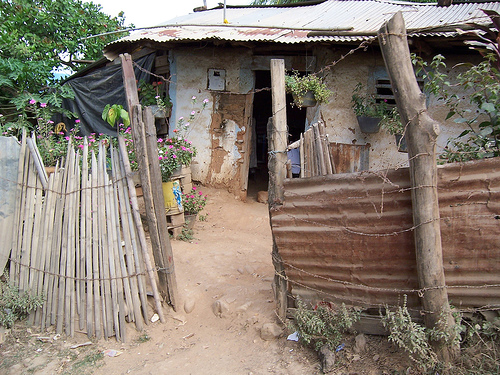
Yes, again. Onto the fourth piece I have written about Colombia upon my return – this one for our internal newsletter at work. It’s not nobel material – but the short, digestible version of things.
From Canada to Colombia: Stories and Solidarity
In the dripping heat, dust from the air settling on sweating skin, we fan ourselves and watch the most recent graduates of the NOMADESC Human Rights training program receive their diplomas after several weeks of education in the 3-walled schoolroom where we now sit. Here in Neiva, a small town in the heart of Colombian paramilitary territory, we are two days into our tour supporting the struggling movement for human rights in Colombia, and a lifetime away from our comfortable Vancouver homes. In the courtyard behind us a huge pot of meat, rice, yucca and potatoes cooks over an open fire stoked by two of the men who volunteer at this community school – for when the certificates are handed out we will eat a traditional meal before being taken on a tour of the area.
NOMADESC is one of the many organizations that members of the Public Service Alliance of Canada (PSAC) and other BC unions visited during a 12-day tour to Colombia in July, 2006. Teaching people about their human rights in the country with the worst human rights record in the western hemisphere is no small challenge, and many of the people in the program tell us stories of the assassinated friends and family that spurred their involvement. This becomes a familiar narrative as we make our way through the country. In every place we visit – Bogota, Neiva, Cali, Medellin, La Maria, La Cruz, and Suarez – we hear from people displaced and terrorized by the government and government-sponsored paramilitary organizations. Although every story is cut from the same painful pattern of a 40-year internal conflict, each has its own flourish or detail that makes it unique to the individuals with whom we speak.
Canadian labour unions have a long history of supporting trade union and non-profit organizations in Colombia – notable for being the most dangerous place in the world to be a trade unionist. Mainly support is in the form of donations to organizations advancing the human rights agenda, and the sponsorship of speakers to come north and address our members on issues of rights, union justice, and privatization of public services. This tour was a rare occurrence, but the people we have worked with for the last decade have impressed upon us the need for Canadian organizers to come down there and witness their conditions first-hand. Not only does our presence provide a small measure of protection for them, but they recognize that international attention is essential to their quest to build a democratic and civil society.
During our travels, we met with at least a dozen organizations, the UN High Commission on Human Rights and officials from the Canadian Consulate, to form a picture of the situation to bring home with us. At all places we were greeted with warmth and hospitality – and together we found ways to build hope into our discussions – as conditions in that country continue to evolve. As the largest union representing federal government employees in Canada, The PSAC has committed to continuing its partnership with public sector trade unions in Colombia in order to advance both human rights and public services abroad and at home. A rare experience, I was honoured to participate with other Canadian labour activists in sharing stories and solidarity from north to south.
(Sidebar)
In Colombia:
- More than a half a million people have been murdered for political reasons over the past 25 years.
- Ten people are killed, two people are disappeared, and one massacre takes place each day on average – all politically motivated.
- More trade union activists are killed there each year than in the rest of the world combined.
- More than 20,000 popular leaders have been extra-judicially executed in the past ten years.
- Over 600 trade union organizations have disappeared in the past five years (many due to contracting out of jobs and privatization).
- The official number of people displaced from their land due to political conflict is 2-3 million. This number if probably double when taking into account those not assisted by the government.
- 63 per cent of people live in poverty.
Megan Adam traveled with the Frontline Colombia Tour as part of PSAC’s Social Justice Fund program. Other unions represented on the tour included the BCGEU, CUPE, and CUPW – to a total of 12 delegates. For more information and a formal report on the experience please visit www.psacbc.com/2007/01/15…-colombia/.


 Red Cedar